Mari Mari: a morning in the old ways of Borneo
In a forested valley half an hour from the city, traditional houses of five Sabah peoples come to life with blowpipes, fire-making, bamboo dances and a Murut trampoline.

- Area
- Kota Kinabalu
- Start from
- Kota Kinabalu
- Distance
- about 25 km
- Time needed
- half a day
- Best season
- All year
- Difficulty
- Easy
- Transport
- Organised tour with hotel pick-up, or taxi
- Tickets & rules
- Entry fee, usually including lunch or snacks; book ahead
Why go
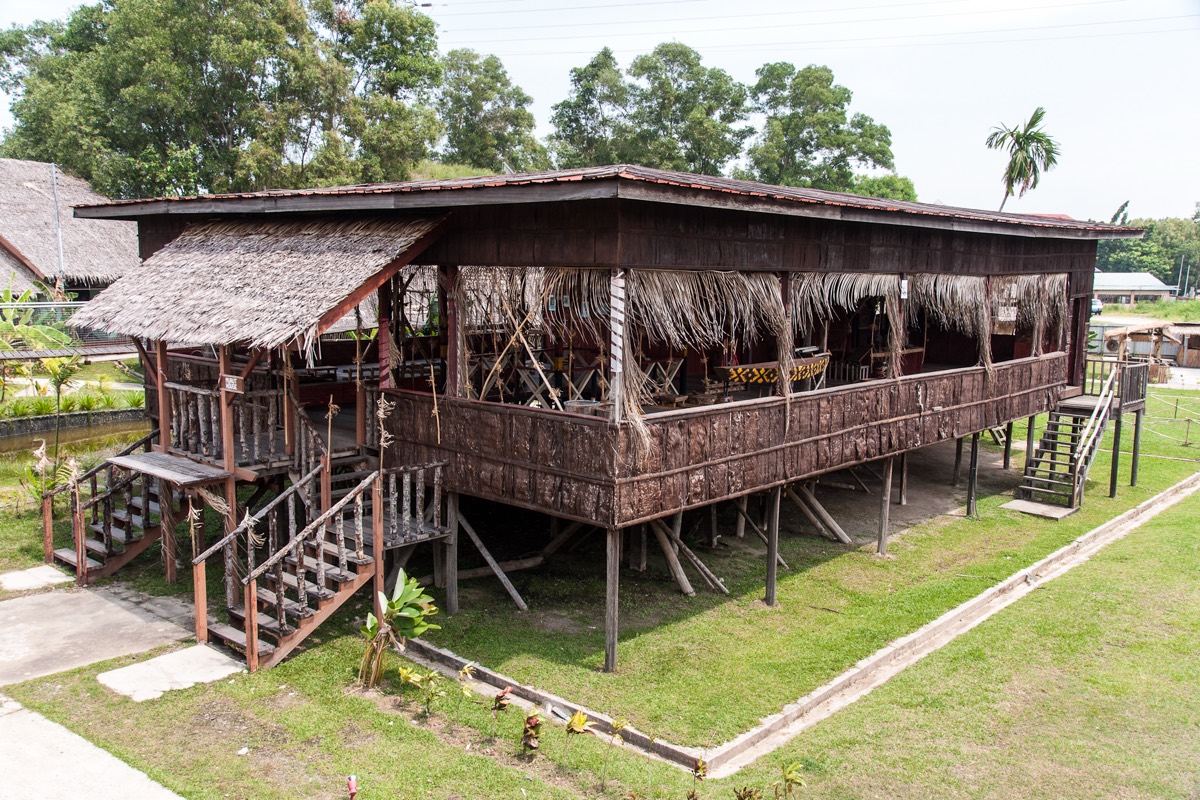
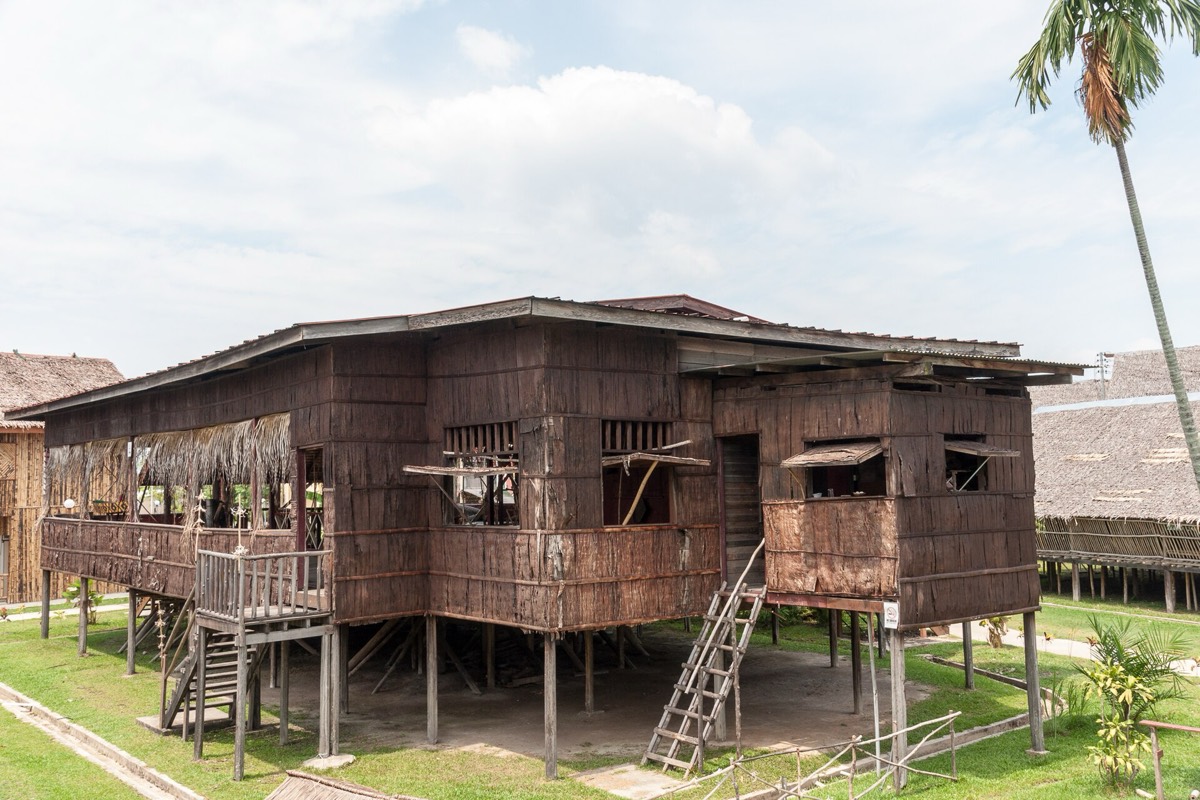
Sabah has more than thirty indigenous groups, and it is hard as a short-term visitor to see much of their traditional life. Mari Mari Cultural Village, in the hills behind Inanam, is a well-run attempt to show some of it in one morning. Guides walk you through replica houses of the Kadazandusun, Rungus, Lundayeh, Bajau and Murut, built with traditional materials beside a small river.
It is staged, of course, but done with care and humour. In each house you meet people demonstrating something: making fire with bamboo, cooking rice inside bamboo tubes, tattooing patterns, brewing rice wine, carving, weaving, using a blowpipe. You get to try a lot of it, including a sip of rice wine and a go at the blowpipe.
The visit ends with a show of dances from different groups, often including the Murut magunatip, where dancers step between clapping bamboo poles, and the lansaran, a bouncy springboard floor on which young Murut men jump to reach a prize hung high above. Then there's a simple lunch of local food.
The story
The Murut of Sabah's southern interior were, until the early twentieth century, known as headhunters, as were several other Bornean peoples. Skulls were kept in longhouses and believed to carry spiritual power; the practice ended under colonial rule and with conversion to Christianity. Today, Murut culture is celebrated in festivals like Kalimaran, and the stories are told openly, often with a smile.
The Rungus of the Kudat peninsula are known for their longhouses and for their intricate beadwork, and the Kadazandusun, Sabah's largest indigenous group, for rice farming and the bobohizan, priestesses who once led rituals in an archaic ritual language. The harvest festival Kaamatan, at the end of May, honours the rice spirit Bambaazon and is the biggest celebration of the year in the state.
The Bajau, by contrast, are people of the coast. On the west coast they became famous as horsemen; on the east, around Semporna, some still live on the water. Mari Mari tries to show that Sabah is not one culture but many, which is the real point of the visit.

Getting there
Most visitors come on the organised morning or afternoon sessions with hotel pick-up, which take around 30 to 45 minutes each way through the suburbs and up into the hills.
You can also arrange a taxi there and back, but the visit runs as a guided session, so you need to book a time slot anyway.
A suggested plan
- Morning pick-upDrive out from KK through Inanam into the forested valley.
- ArrivalCross the small suspension bridge into the village and meet your guide.
- Next 2 hoursVisit the five houses, try the fire-making, blowpipe and rice wine.
- ShowWatch the dances, join the bamboo dance if asked, and cheer for the lansaran jumpers.
- LunchEat the simple buffet of local dishes, then walk to the small waterfall before heading back.
Where to stay
There's no reason to sleep out here; base yourself in central KK and treat this as a half-day trip.
Good to know
- Wear shoes you don't mind getting muddy; the paths are damp after rain.
- Bring insect repellent.
- Tell them about food allergies when booking; lunch is a set meal.
- Pair this with an afternoon on Gaya Street or at the Sabah Museum.
- The rice wine is stronger than it tastes.
- Paths and the suspension bridge are slippery in the rain; hold the rails.