Sunset on the waterfront and the night market
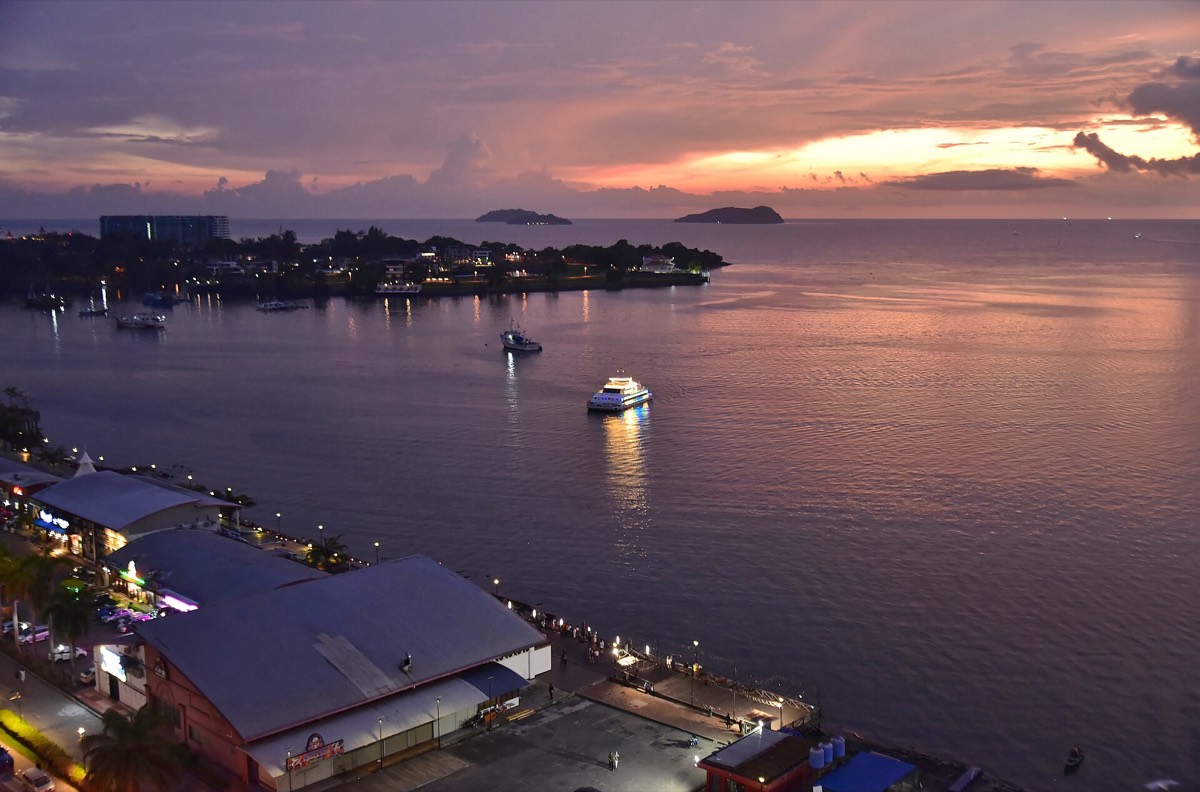
Watch the sun drop behind the islands from the KK waterfront, then follow the smoke into the night market for grilled fish, squid and a plate of rice by the sea.

- Area
- Kota Kinabalu
- Start from
- Kota Kinabalu city centre
- Distance
- about 2 km on foot
- Time needed
- an evening
- Best season
- All year; clearest sunsets roughly February – April
- Difficulty
- Easy
- Transport
- On foot
- Tickets & rules
- None
Why go
KK faces west across the South China Sea, which means a proper sunset over the water most evenings when the clouds allow it. The islands of Tunku Abdul Rahman Park sit right in the line of view, turning from green to blue to black as the sky goes orange. People come out to watch: couples on the promenade, fishermen on the breakwater, families with ice cream.
As the light goes, the stalls next to the central market light up. The night market here is less about souvenirs than about seafood. Ice beds are piled with groupers, prawns, crabs and squid; you point at what you want, it is weighed, grilled over charcoal and brought to a plastic table with rice and a bowl of sambal. Further along, other stalls sell chicken wings, satay, grilled corn and fresh fruit juice.
The Filipino handicraft market nearby is worth a slow wander too: pearls of every quality, woven bags, shells and carvings. Nothing here is precious, but it's a lively, friendly hour, and a good way to end a first day in Sabah.
The story
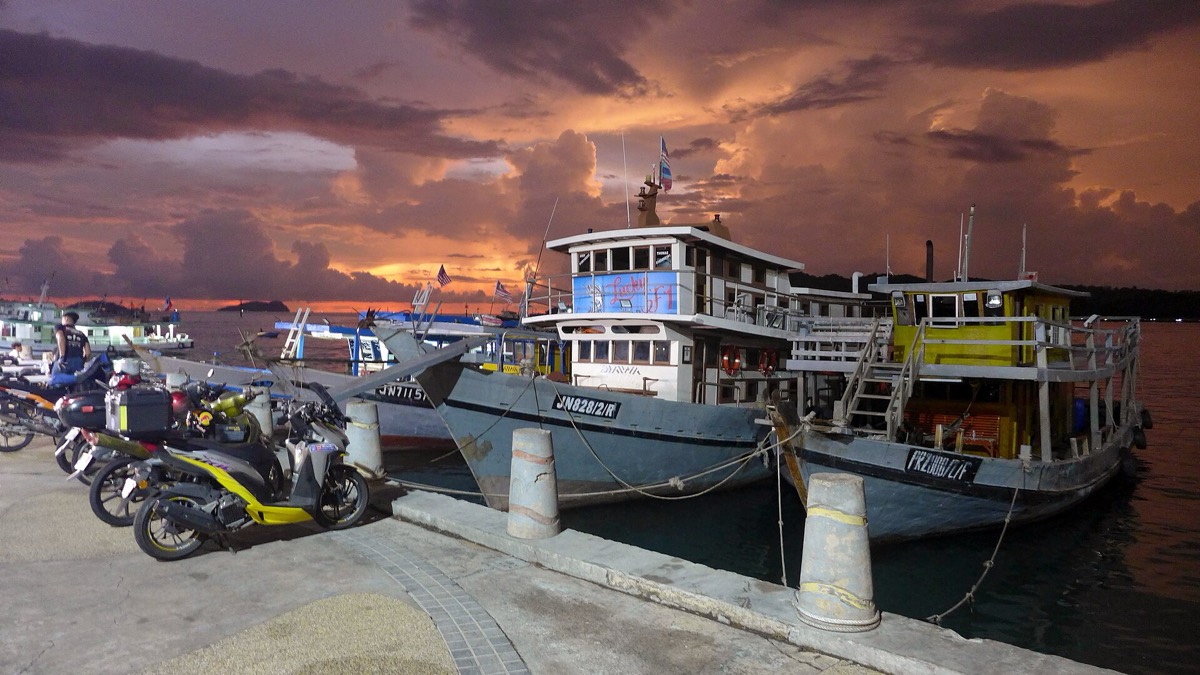
The waterfront has always been the working edge of the town. In colonial Jesselton, small steamers and trading boats tied up here, bringing rice, cloth and tinned goods, and taking rubber, timber and dried fish away. The market grew up around the jetties, and the fish market still operates in roughly the same spot.
The so-called Filipino market got its name from the many traders from the southern Philippines who settled in Sabah over the decades, particularly from the Sulu archipelago, which is only a short distance from Sabah's east coast. Sabah's population is a layered mix of Kadazandusun, Murut, Bajau, Chinese, Malay, Suluk and many other groups, and the waterfront is where that mix is easiest to see.
Further north along the shore, the reclaimed land has filled with malls and a long promenade, but the evening ritual has stayed the same: go down to the sea, eat something grilled, watch the light go. On a clear evening you may even see the silhouette of Mount Kinabalu inland, far behind the city, catching the last pink light.

Getting there
Everything here is within walking distance of the old centre. Start at the Jesselton Point ferry terminal end or at the central market; the promenade is flat and well lit.
Ride-hailing cars are easy to find in the evening if you'd rather not walk back to your hotel.
A suggested plan
- 5:30 pmWalk the waterfront promenade towards the central market as the heat drops.
- 6:15 pmFind a spot by the water for the sunset over the islands.
- 7:00 pmBrowse the Filipino handicraft market while it's still lively.
- 7:30 pmChoose seafood at the night market stalls, agree the price per weight, and eat at the tables by the sea.
- 9:00 pmA slow walk back past the lit-up shophouses, or a fruit juice by the promenade.
Where to stay
The old centre and the waterfront area are the most convenient bases for evening walks. Hotels on the waterfront itself have the best sunset views but can be noisier at night.
Good to know
- Ask the price per kilo before your fish goes on the grill; prices vary with the catch.
- The grilled stingray with sambal is a local favourite.
- Bring wet wipes; most of the night market food is eaten with your fingers.
- Check the forecast: in the wetter months, late-afternoon storms often roll in just before sunset.
- Some stalls quote one price and charge another; confirm the total before eating.
- Watch for slippery wet floors and open drains around the market.
- Pearls sold cheaply are almost never what the seller says they are.