Gaya Street on a Sunday morning
Every Sunday the old main street of Kota Kinabalu turns into a long, noisy market of orchids, puppies, durians and herbal remedies, with the colonial clock tower watching from the hill.

- Area
- Kota Kinabalu
- Start from
- Kota Kinabalu city centre
- Distance
- walking distance in town
- Time needed
- half a day
- Best season
- All year; Sunday mornings only for the market
- Difficulty
- Easy
- Transport
- On foot
- Tickets & rules
- None
Why go
If you only have one morning in KK, make it a Sunday. From around six until about midday, Gaya Street is closed to traffic and filled end to end with stalls under canvas awnings. Highland vegetables from Kundasang sit next to dried fish from the islands, potted pitcher plants, bundles of lemongrass, cheap sunglasses, kittens in cages, batik shirts and hand-woven baskets. It is the one place in the city where everybody seems to turn up: Kadazandusun grandmothers, Chinese shopkeepers, Bajau families from the water villages, office workers in flip-flops.
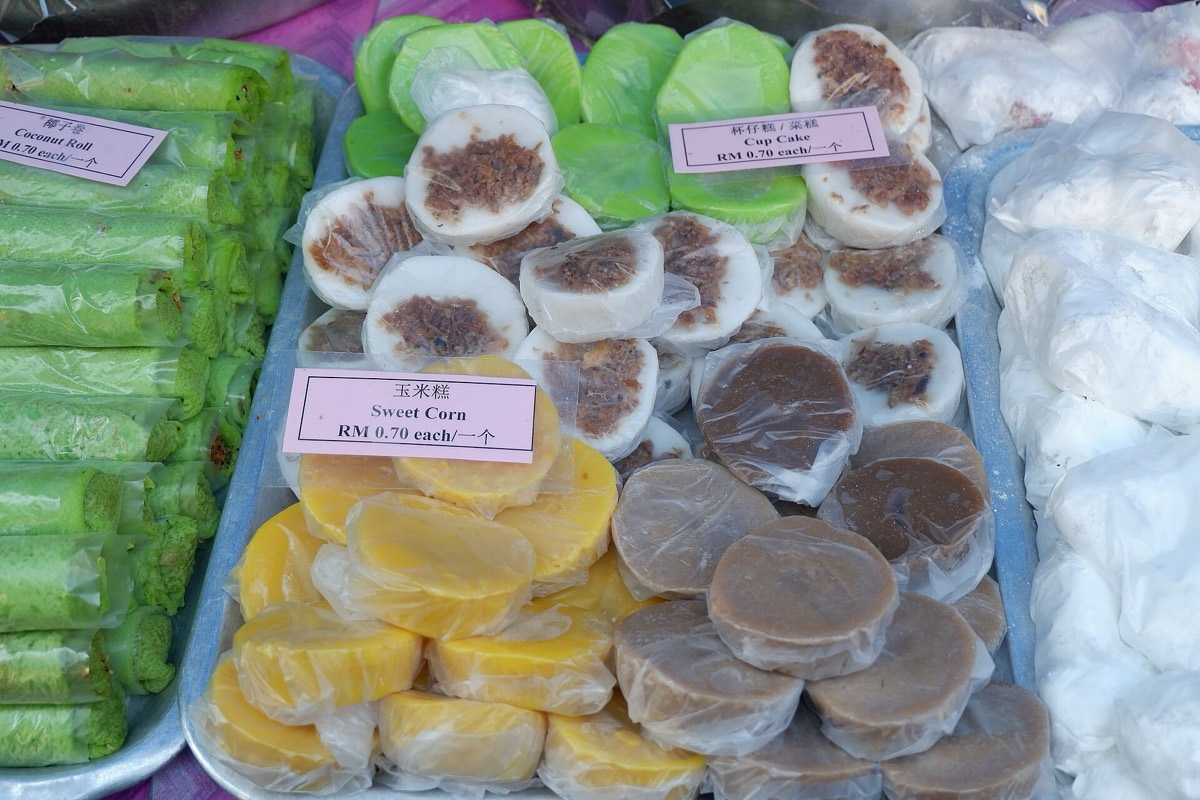
The food is a good reason by itself. Look for sticky rice parcels, fried banana fritters, coconut cakes wrapped in leaves and, if you're brave, tuhau, a pungent pickle made from the stems of a wild ginger that people in Sabah either adore or refuse to be in the same room with. Walk slowly and eat in small amounts; the street is longer than it looks.
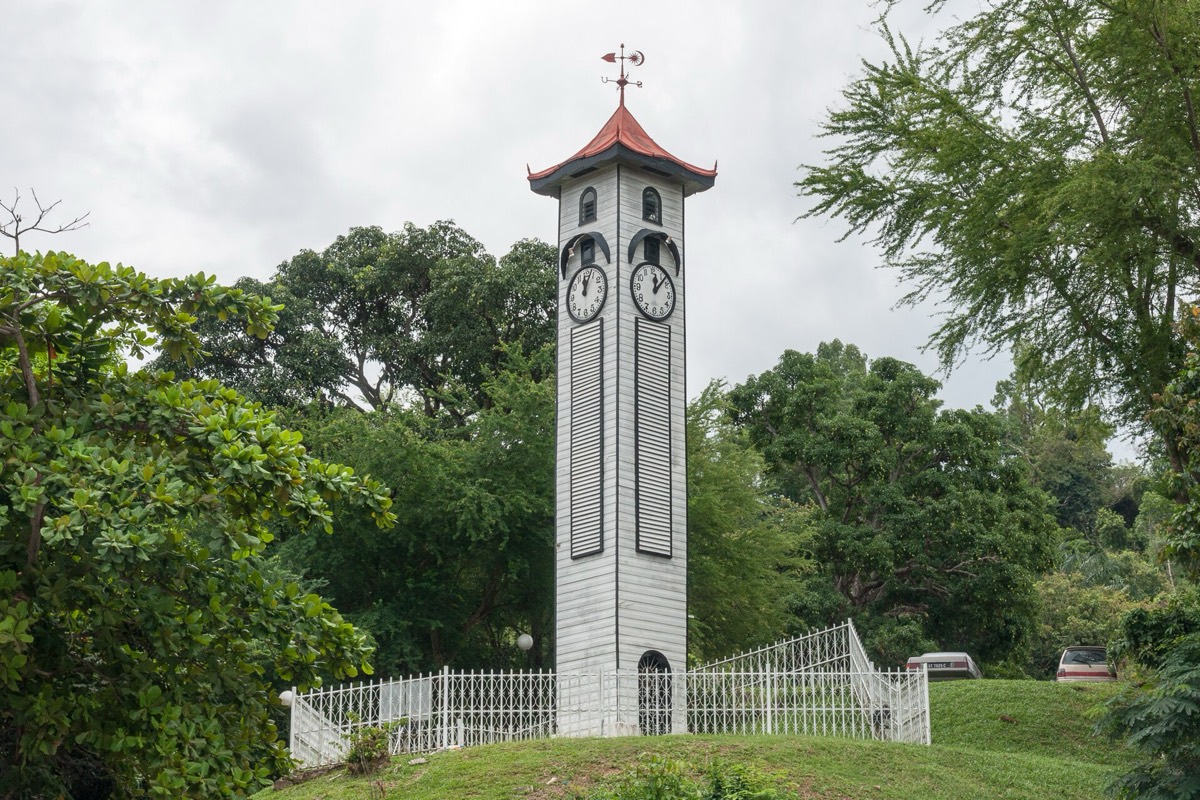
When the stalls start to thin out, climb the steps to the Atkinson Clock Tower and on up to Signal Hill. The view over the rooftops, the harbour and the islands of Tunku Abdul Rahman Park makes sense of the city in a way the street level never does.
The story
Kota Kinabalu began life in 1899 as Jesselton, a trading post of the British North Borneo Chartered Company, named after Sir Charles Jessel, one of the company's directors. It was meant to be the coastal end of a railway into the interior, and grew into a small, neat colonial town of shophouses along what is now Gaya Street.
Almost all of it was destroyed in the Second World War, first by the Japanese occupation and then by Allied bombing in 1945. One of the very few buildings that survived is the wooden Atkinson Clock Tower, completed in 1905 and named after Francis George Atkinson, the town's first district officer, who died of malaria in his late twenties. His mother paid for the clock. It still keeps time, more or less, on its little hill above the street.
After the war Jesselton replaced ruined Sandakan as the capital of North Borneo. It was renamed Kota Kinabalu in 1968, after the mountain, and became a city in 2000. The rebuilt grid of Gaya Street still follows the old colonial plan, and the Sunday market, in one form or another, has been held here for decades.

Getting there
The market runs the length of Gaya Street in the old centre, a short walk from most city hotels. Taxis and ride-hailing cars can drop you at either end; the street itself is closed to cars on Sunday mornings.
The Atkinson Clock Tower is reached by a short flight of steps off Jalan Padang. Signal Hill Observatory Platform is a steeper walk or a short taxi ride further up.
A suggested plan
- 6:30 amArrive early, when it's cooler and the produce stalls are at their best. Breakfast on kopi and a bun from one of the old coffee shops on the side streets.
- 8:00 amWalk the market end to end, then back down the other side. Buy snacks, look at the plants, haggle gently for handicrafts.
- 10:00 amClimb to the Atkinson Clock Tower, then continue up to the Signal Hill viewpoint.
- 11:30 amWalk back down through Australia Place, the small lane of cafés named after the Australian troops who camped here in 1945.
- NoonLunch on a bowl of the local noodle soup, beef or pork, in a coffee shop near the market as the stalls pack up.
Where to stay
Staying in the old centre, between Gaya Street and the waterfront, puts you within walking distance of the market, the night market and the island ferries. Quieter, greener options are around the Signal Hill area and in Tanjung Aru near the airport.
Good to know
- Bring small notes; most stalls don't take cards.
- Go before 9 am if you want photos without a crowd.
- Pitcher plants and other wild plants on sale may not be legal to take abroad; admire them, don't pack them.
- Combine the morning with the Sabah Museum in the afternoon if rain comes in.
- Pickpocketing is not common but does happen in the tight Sunday crowds; keep your phone in a front pocket.
- Some animals sold at the market are kept in poor conditions; it's better not to buy them, even out of pity.