Talat Sao and the Weaving Trail
Silk skirts, handwoven scarves and a crowded indoor market: a morning among the textiles that are Laos’s finest craft.

- Area
- Vientiane evenings & food
- Start from
- Talat Sao, Lane Xang Avenue
- Distance
- walking distance
- Time needed
- half a day
- Best season
- Year-round; good in rain
- Difficulty
- Easy
- Transport
- On foot from the centre
- Tickets & rules
- None
Why go
Talat Sao, the Morning Market, is a slightly misleading name: the old market hall is open most of the day, and most people come for its stalls of fabric, gold jewellery, clothing and electronics. For me, the reason to go is the textiles, especially the handwoven silk and cotton skirts called sinh.
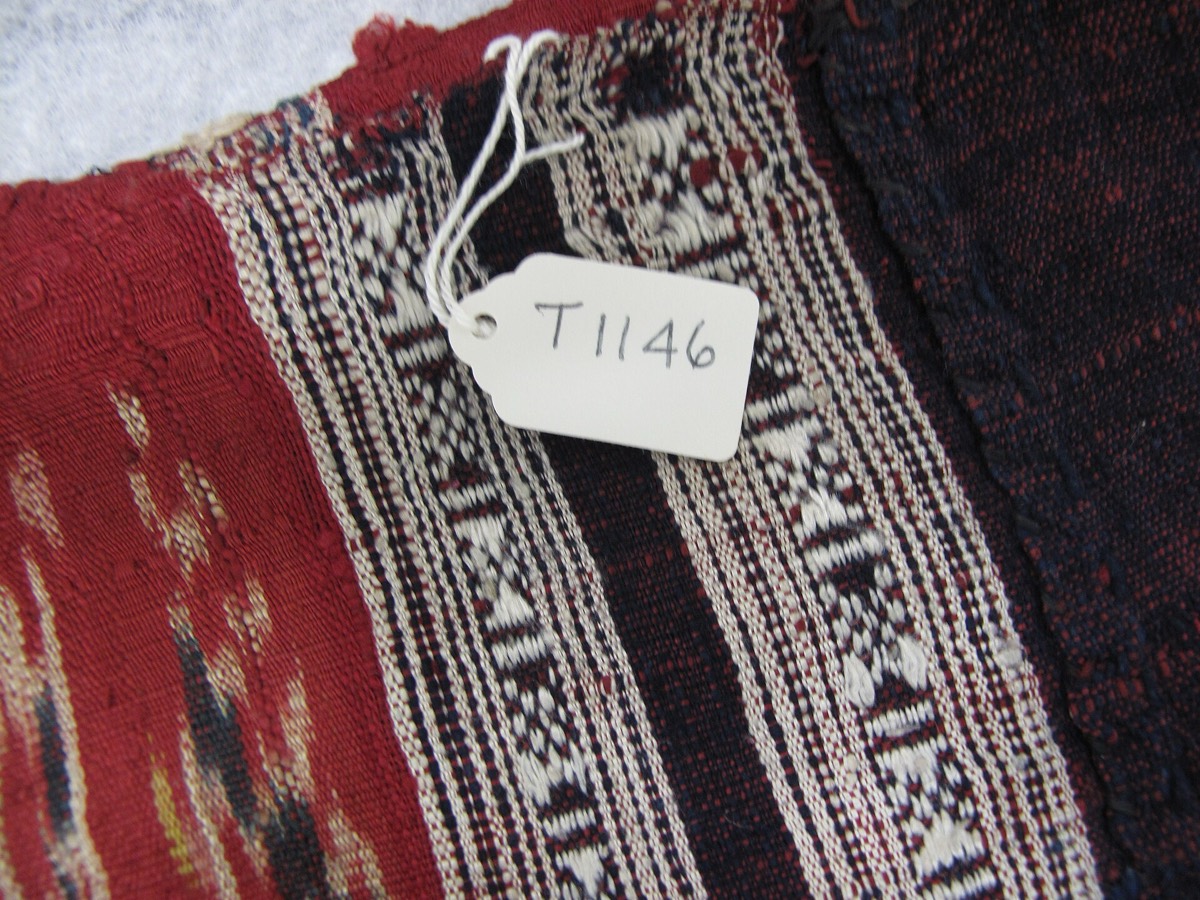
Inside the older hall, rows of small stalls are piled high with folded fabrics in deep reds, indigo, gold and green, with patterns of diamonds, birds, naga serpents and stars. Many are woven by hand in villages around the country, and each region and ethnic group has its own motifs.
It is also a perfect rainy-day route. The market is covered, the nearby streets have small textile shops and galleries, and the bus station next door is the starting point for trips to Buddha Park.
The story
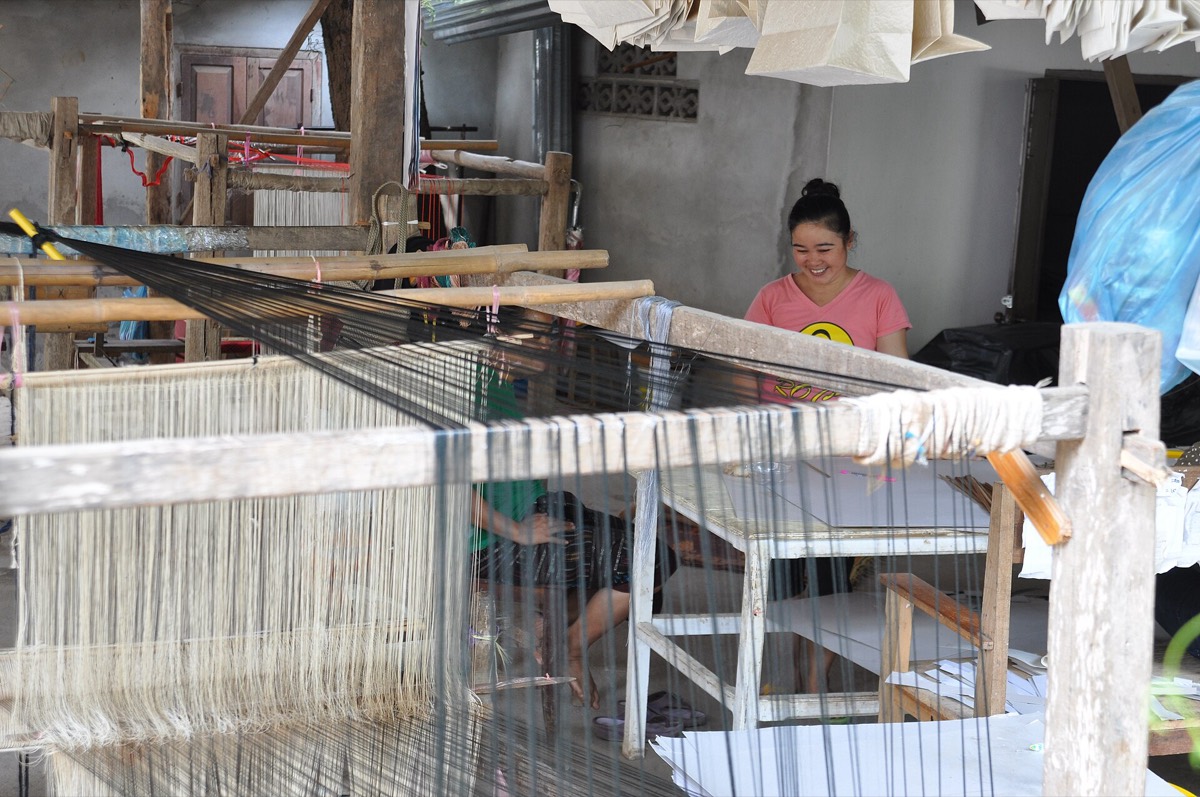
Weaving is the art of Laos. For generations, girls learned to weave on wooden looms under the stilted family house, and a woman’s skill was a matter of pride. The sinh, a wrap-around tube skirt, is still worn by women in offices, schools and temples, often with a decorated hem called the tin sinh.
Different groups of people in Laos have their own traditions. Lao Loum weavers in the lowlands are famous for silk with supplementary weft patterns, while Tai groups in the north and east weave elaborate shawls and skirts with intricate motifs. Natural dyes come from indigo, lac insects, tree bark and roots.
The naga serpent appears everywhere in the patterns. In Lao belief, the naga lives in the rivers and guards the water and the rain; weaving it into cloth is said to bring protection and good fortune.
Talat Sao has changed a lot in recent years. A large modern shopping mall has risen beside it, and part of the old market was redeveloped, but the old hall with its fabric stalls remains one of the busiest places in the city and the most convenient place to start learning about Lao textiles.

Getting there
Talat Sao is on Lane Xang Avenue at the corner of Khou Vieng Road, about 15 minutes’ walk from Nam Phou fountain. The main bus station, Talat Sao bus station, is right next to it.
The nearby Khua Din market, a short walk east, is a rougher, more local market selling fresh produce and household goods.
A suggested plan
- 9:00Arrive at Talat Sao and head into the old hall towards the fabric stalls.
- 10:00Compare silk and cotton sinh, scarves and wall hangings; ask stallholders about the regions they come from.
- 11:00Walk to Khua Din market for fruit, snacks and a look at everyday local life.
- 12:00Lunch at a food court or noodle shop around the market.
- 13:30Take a tuk-tuk to COPE nearby, or back to the river for a rest.
Where to stay
The centre is ideal; the market is close, and you can drop your purchases at your hotel before the afternoon.
Good to know
- Handwoven silk is slow work and is priced accordingly; machine-made copies are cheaper and lighter.
- Turn the fabric over: handwoven pieces have loose threads and small irregularities on the reverse.
- Bargain politely, and remember that a few thousand kip matter more to the seller than to you.
- Most stalls take only cash.
- Keep valuables in a zipped bag in the crowded aisles.
- Be wary of very cheap silk; much of it is synthetic or imported.