The Black Stupa and the City Pillar
A quiet late-afternoon walk from a mossy old stupa guarded, legend says, by a seven-headed serpent, to the busy shrine of the city’s guardian spirit.

- Area
- Vientiane evenings & food
- Start from
- That Dam, Bartholomie Road
- Distance
- about 3 km on foot
- Time needed
- a late afternoon
- Best season
- Year-round
- Difficulty
- Easy
- Transport
- On foot, or tuk-tuk to Wat Si Muang
- Tickets & rules
- None; a donation at Wat Si Muang; modest dress
Why go
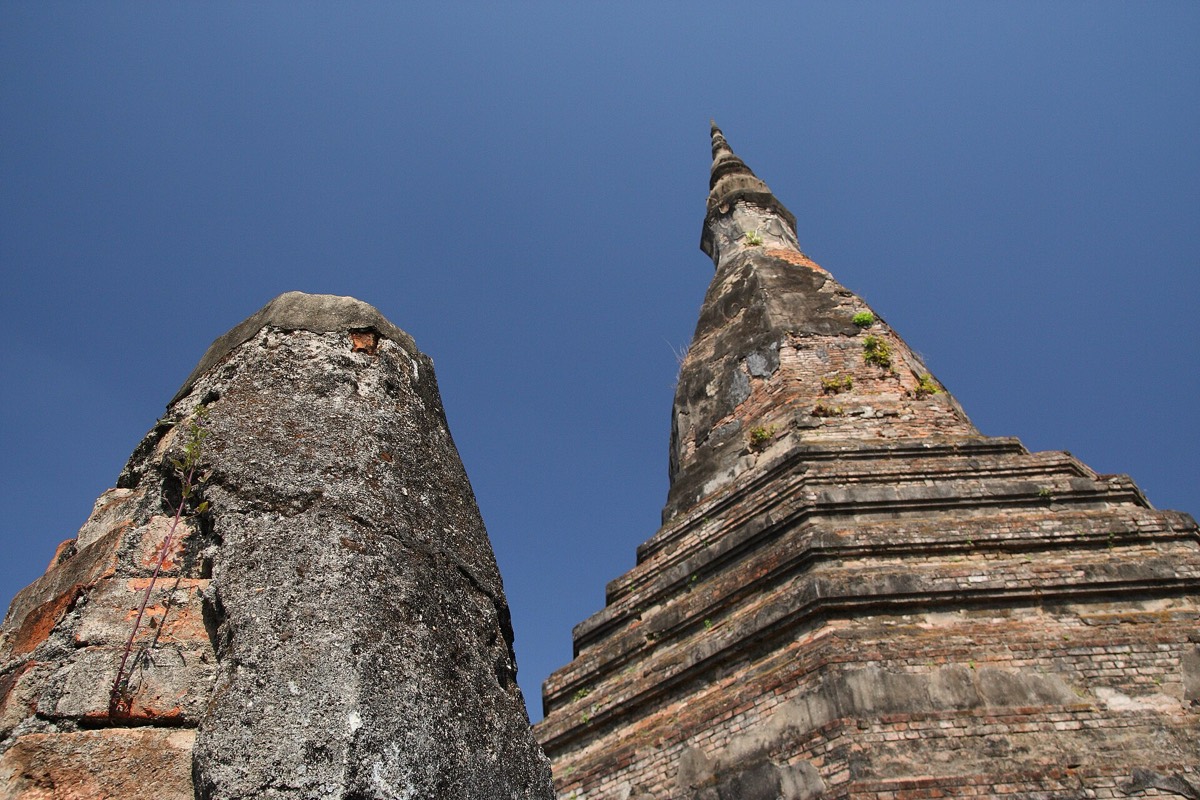
This is the Vientiane walk that most visitors miss, and it is one of my favourites. It starts at That Dam, the Black Stupa, a squat, weathered brick tower standing in the middle of a small roundabout, dark with age and furred with plants. Surrounded by cafés and old villas, it feels like a fragment of another century.
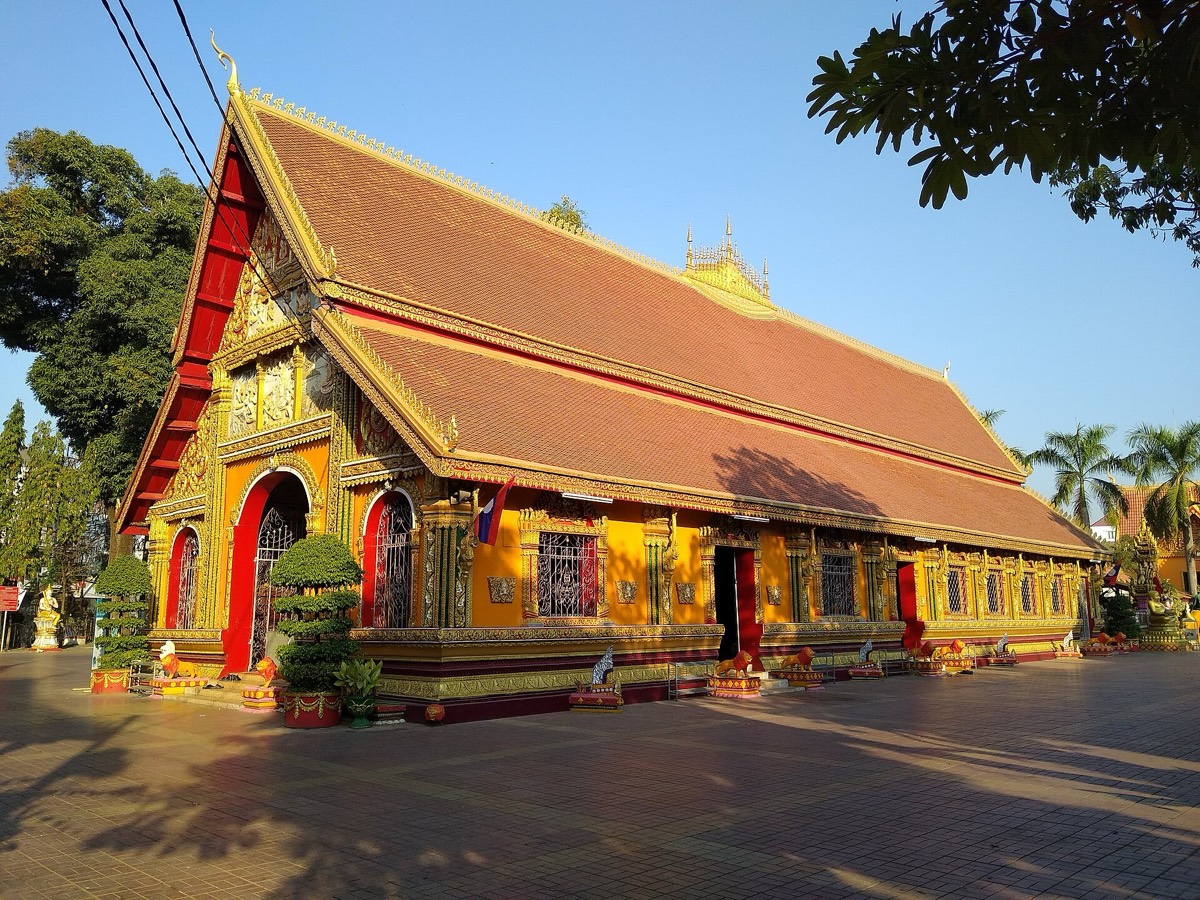
From there the walk drifts east through quiet residential streets to Wat Si Muang, which could not be more different: a lively, colourful temple where people come all day long to ask for luck, health and good exam results, carrying flowers, candles and baskets of offerings.
It is best at the end of the day, when the heat eases, the light softens on the old stupa and Wat Si Muang fills with worshippers after work.
The story
Nobody knows exactly how old That Dam is, but it is usually dated to the Lane Xang period, several hundred years ago. Local legend says it was once covered in gold, which the Siamese took away when they sacked the city in 1827–28, leaving only the dark brick beneath.
Another legend, the one people in Vientiane like best, says that a seven-headed naga, the great serpent spirit of the Mekong, lives beneath the stupa and protected the city from invaders. Some say it rose during the sack and tried in vain to defend the town.
Wat Si Muang is built around the lak muang, the city pillar, a stone believed to hold the guardian spirit of Vientiane. The story goes that when the pillar was raised in the sixteenth century, a pregnant woman named Nang Si jumped into the pit as a sacrifice, and the pillar was lowered on top of her. She is still honoured at the temple as a protective spirit.
Behind the main hall, look for a battered old Buddha image that people lift from its cushion when asking a question; if it feels light, the answer is yes. It is a lovely example of how folk belief and Buddhism mix in everyday Lao life.

Getting there
That Dam is on a small roundabout near the US embassy and the Lao Plaza area, a short walk north of Nam Phou fountain. From there it is roughly 2 km east to Wat Si Muang at the junction of Setthathirath and Samsenthai roads.
Walking the whole route takes about forty minutes without stops. A tuk-tuk can take you back to the river afterwards.
A suggested plan
- 16:00Start at That Dam and walk slowly around the old stupa in the slanting light.
- 16:30Have a coffee or fruit shake at a café overlooking the roundabout.
- 17:15Walk east along the quiet streets towards Wat Si Muang.
- 17:45Visit the temple as people arrive with offerings, and see the city pillar inside.
- 18:30Look across at the small park with a statue of King Sisavang Vong nearby, then take a tuk-tuk to the river for dinner.
Where to stay
Stay in the centre; this walk is a gentle add-on to any day in the city.
Good to know
- Offerings of flowers and candles are sold at stalls outside Wat Si Muang if you want to join in.
- The temple is busiest in the evening and on Buddhist holy days, which is when it is most atmospheric.
- Bring a light scarf for your shoulders when entering the halls.
- Sit for a while; many people come here to be quiet, not just to pray.
- Be discreet with your camera when people are praying, and do not photograph faces without asking.
- The roads near Wat Si Muang are busy; cross carefully at the junction.