Wat Si Saket and Haw Phra Kaew
Two old temples facing each other across one street, one filled with thousands of tiny Buddhas, the other a museum where the Emerald Buddha once lived.

- Area
- Vientiane
- Start from
- Presidential Palace, Setthathirath Road
- Distance
- walking distance, about 1 km in total
- Time needed
- half a day
- Best season
- Year-round; mornings are cooler
- Difficulty
- Easy
- Transport
- On foot from the riverside centre
- Tickets & rules
- Small separate tickets for each; shoulders and knees covered
Why go
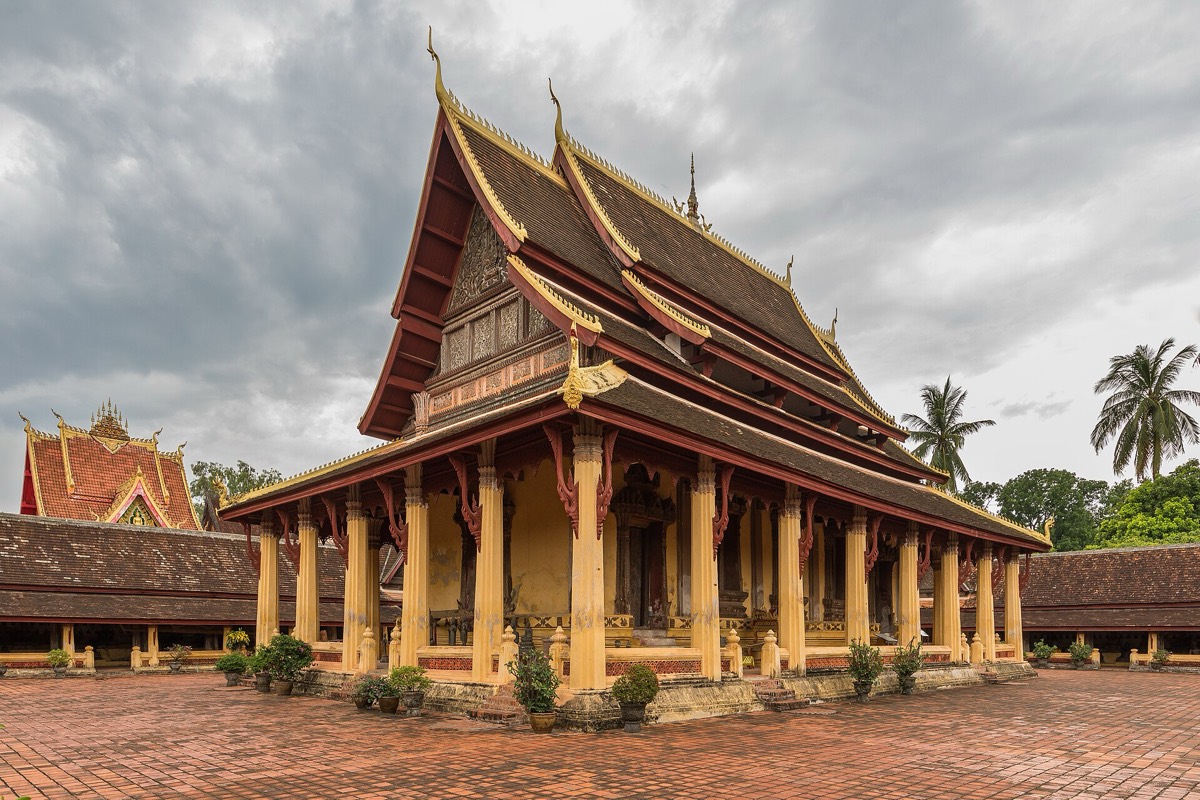
These two temples sit almost opposite each other near the presidential palace and are the best introduction to Vientiane’s turbulent history. Wat Si Saket is a quiet cloister of weathered walls, and Haw Phra Kaew is a grand former royal temple now used as a museum of religious art.
Wat Si Saket is the one that stays with me. Its square cloister is lined with niches, and in every niche sit two small Buddha images of ceramic, wood, silver or bronze. There are thousands of them, many chipped or blackened, row upon row, and walking slowly along the gallery feels like moving through a library of quiet faces.
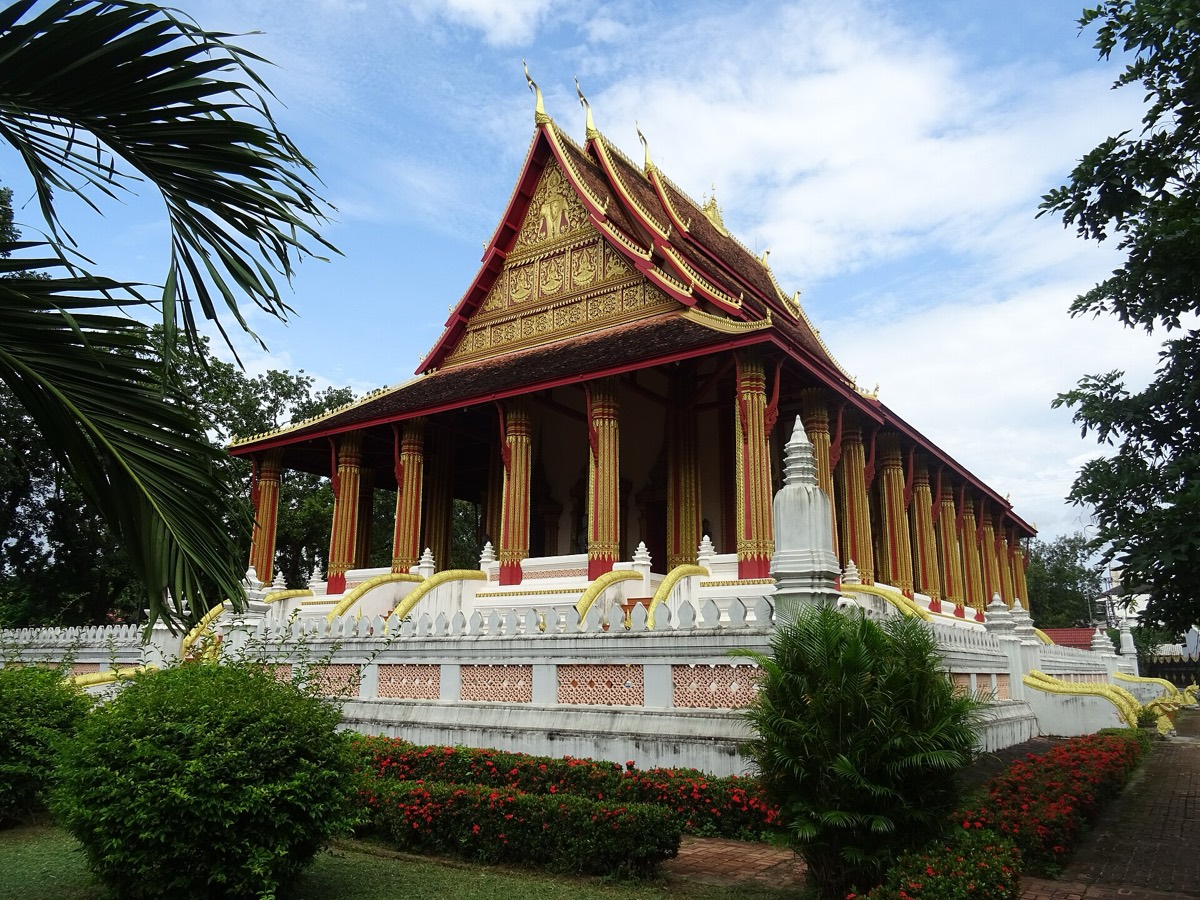
Haw Phra Kaew is a contrast: a raised hall with a sweeping roof, elaborate doors and a terrace of stone and bronze Buddhas. Inside are carved doors, old stelae and manuscripts. Together they take a couple of hours and leave you with a much better sense of the city.
The story
Haw Phra Kaew was built in the 1560s by King Setthathirath to house the Emerald Buddha, the small green jade-like image he brought from Chiang Mai when he moved his capital to Vientiane. For more than two centuries it stayed here, until Siamese forces took it in 1779. Today it sits in Wat Phra Kaew in Bangkok, the most sacred image in Thailand.
Wat Si Saket was built in 1818 by King Anouvong. When Siamese armies sacked Vientiane in 1827–28 and burned much of the city, this temple was spared, probably because its architecture was close to the Siamese style. That is why it is often called the oldest surviving temple in the city, and why its old murals and images survived when so much else was lost.
Haw Phra Kaew was not so lucky. It was destroyed in the sack, and the building you see now is a reconstruction carried out mainly between the 1930s and the 1940s under French rule. It no longer functions as a temple, and the museum collection inside brings together sculptures and objects gathered from around the country.
Inside Wat Si Saket’s sim, the main hall, faded murals cover the walls, and the ceiling is painted with floral patterns. Look for the long carved wooden candle holder shaped like a naga, the serpent spirit of the river, which appears in so many Lao temples.

Getting there
Both temples are on Setthathirath Road and Lane Xang Avenue, at the corner by the presidential palace, about ten minutes’ walk east of Nam Phou fountain. They are close enough to combine with a riverside walk or the Morning Market.
There is no need for transport, but a tuk-tuk can drop you at the corner if the heat is fierce.
A suggested plan
- 8:30Arrive at Wat Si Saket around opening, walk the cloister slowly and look at the thousands of small images.
- 9:15Step into the main hall to see the murals and the naga candle holder.
- 9:45Cross the road to Haw Phra Kaew and walk around the terrace of statues.
- 10:15Look inside the museum hall at the carved doors and stone inscriptions.
- 11:00Walk to the river for lunch, or continue to the Morning Market.
Where to stay
Anywhere in the riverside centre works. These temples are an easy walk from Nam Phou fountain and the guesthouses along Setthathirath and Fa Ngum roads.
Good to know
- Photography rules differ between buildings and sometimes inside the halls; look for signs, and ask if unsure.
- Both sites usually close for lunch and may be shut on some public holidays.
- Bring a light scarf or sarong to cover your shoulders; wraps are sometimes available to borrow at the gate.
- Combine the visit with a cold drink at one of the cafés along Setthathirath Road.
- The cloister floors are smooth and can be slippery after rain.
- Do not touch or climb on the Buddha images, however tempting the photo; it is deeply disrespectful.