Senaru: Sendang Gile and Tiu Kelep waterfalls
Two of Lombok’s most beautiful waterfalls drop out of the jungle on Rinjani’s northern slopes, a short, wet walk from the village where most trekkers start the climb.

- Area
- Rinjani & Senaru
- Start from
- Senaru village
- Distance
- about 4 km round trip on foot
- Time needed
- half a day
- Best season
- All year (most water November – April, safest paths May – October)
- Difficulty
- Moderate
- Transport
- Car or scooter to Senaru, then on foot with a local guide
- Tickets & rules
- Entrance ticket; a local guide is recommended for Tiu Kelep
Why go
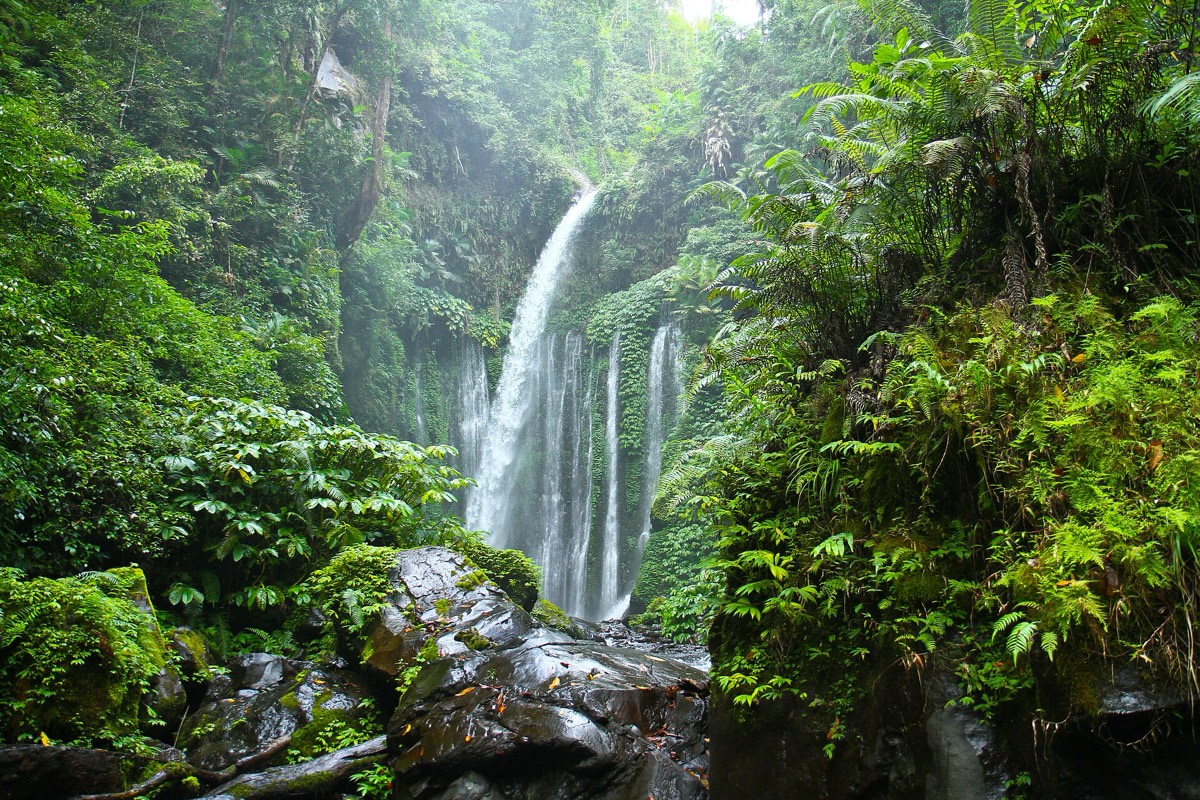
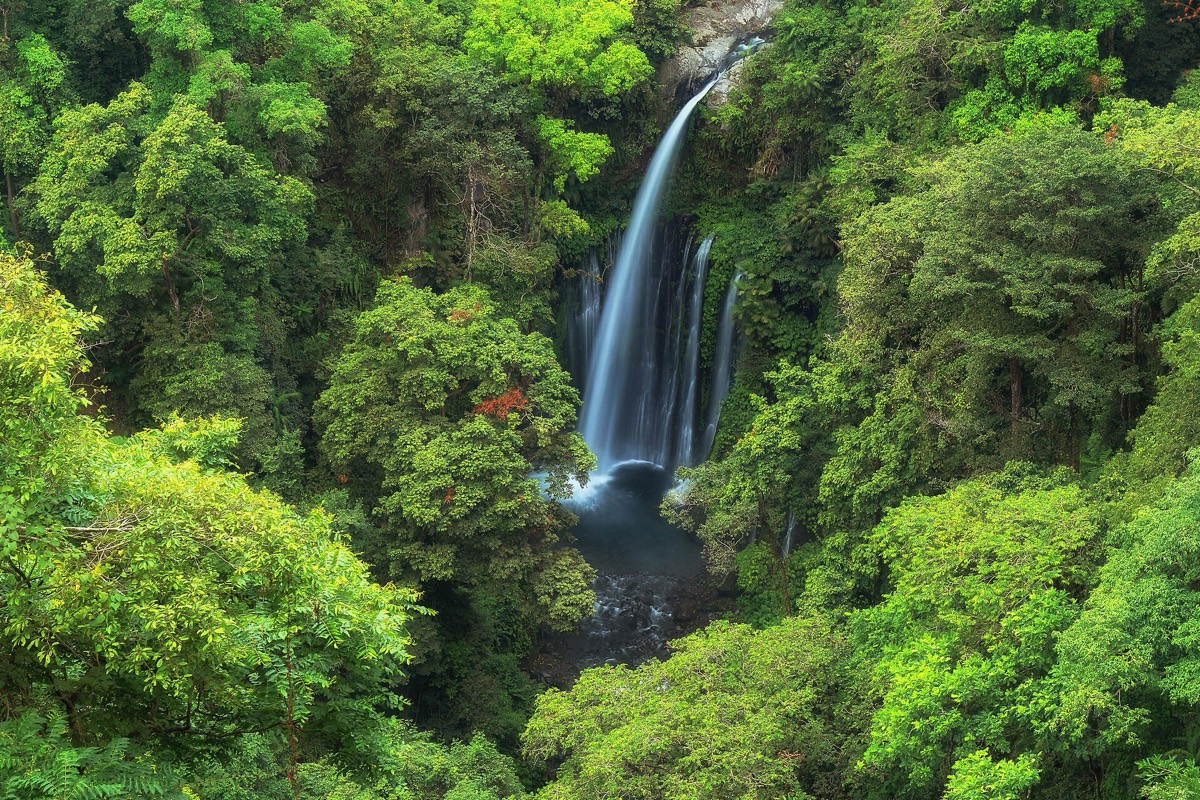
Senaru is a village strung along a ridge at about six hundred metres, on the green northern flank of Rinjani. It is cooler here than on the coast, the air smells of wet leaves and clove trees, and in the mornings cloud sits in the valleys below. From the village a staircase drops into the forest to Sendang Gile, a tall waterfall that falls in two broad streams over a mossy cliff.
Beyond it, a path continues through the jungle, along an irrigation channel and across the river, to Tiu Kelep. This is the one people remember: a wide amphitheatre of rock where dozens of streams pour out of the cliff into a turquoise pool, and the spray is so strong you are soaked before you reach the water.
The walk is not long, but it feels adventurous. You walk beside the old channel, wade through the river and scramble over wet rocks, with long-tailed macaques watching from the trees. On a hot day, standing under the falls in cold mountain water is one of the best feelings Lombok offers.
The story
The water of Senaru comes from Rinjani itself. Rain and cloud on the upper slopes, and the crater lake far above, feed springs that never run dry. Over centuries, villagers built irrigation channels to lead this water to their fields, and part of the walk to Tiu Kelep follows one of them, a narrow aqueduct cut into the hillside.
Local people say that bathing at Tiu Kelep makes you look younger, by a year for each time you stand under the falls, according to the version I heard. The name is often explained as tiu, a pool, and kelep, to fly, after the spray that flies off the rock. Explanations differ, as they tend to with names.
Senaru itself has a small traditional hamlet, Dusun Senaru, where Sasak houses with thatched roofs and earthen floors still stand inside a fence, and some residents follow Wetu Telu, the old north Lombok blend of Islam with older adat customs. If you ask, a guide can take you there and explain how the houses are arranged.
The 2018 earthquakes hit this area hard. Landslides damaged the paths to the waterfalls and the trails up Rinjani, and many houses in Senaru had to be rebuilt. The paths have since been repaired, but the slopes are steep and still move after heavy rain, which is one reason a local guide is worth having.

Getting there
Senaru is about two to three hours by road from Senggigi or the Bangsal area, along the scenic north coast road. Many drivers combine it with other northern stops. From Kuta in the south it is a long day, so it makes sense to sleep in Senaru.
The ticket office is at the top of the staircase. Guides wait here; agree on the price and what is included before setting off.
A suggested plan
- Early morningArrive at the trailhead before the day-trippers, ideally before 9am.
- MorningDescend the steps to Sendang Gile, about a quarter of an hour.
- Late morningContinue with a guide to Tiu Kelep, wading the river and following the channel, then swim.
- MiddayClimb back up to Senaru, slowly: the steps feel much longer on the way back.
- AfternoonVisit Dusun Senaru or rest in the village with a view of Rinjani’s slopes.
Where to stay
Senaru has a string of homestays and simple lodges along the main road, many with gardens looking towards the sea or the mountain. Sleeping here lets you see the waterfalls early and, if you are trekking, start the Rinjani climb the next morning.
Good to know
- Wear sandals with good grip or water shoes; you will get wet up to the knees.
- Put your phone and camera in a dry bag.
- Bring a light jacket for evenings in Senaru, which can be cool.
- Small change helps for parking, tickets and tips.
- After heavy rain the river can rise quickly; do not cross if a guide advises against it.
- Rocks are slippery and falling stones are possible under the falls; don’t stand directly under the strongest streams.
- Macaques may grab food from bags.