Narmada and Lingsar: a mountain in a garden and a shared temple
Just east of Mataram, a royal garden built as a miniature Rinjani and a temple shared by Hindus and Sasak Muslims show how layered the island’s faiths can be.

- Area
- Central Lombok
- Start from
- Mataram
- Distance
- about 25 km round trip
- Time needed
- half a day
- Best season
- All year; Perang Topat festival usually around November – December
- Difficulty
- Easy
- Transport
- Car, taxi or scooter
- Tickets & rules
- Small entrance tickets; sarong at Lingsar
Why go
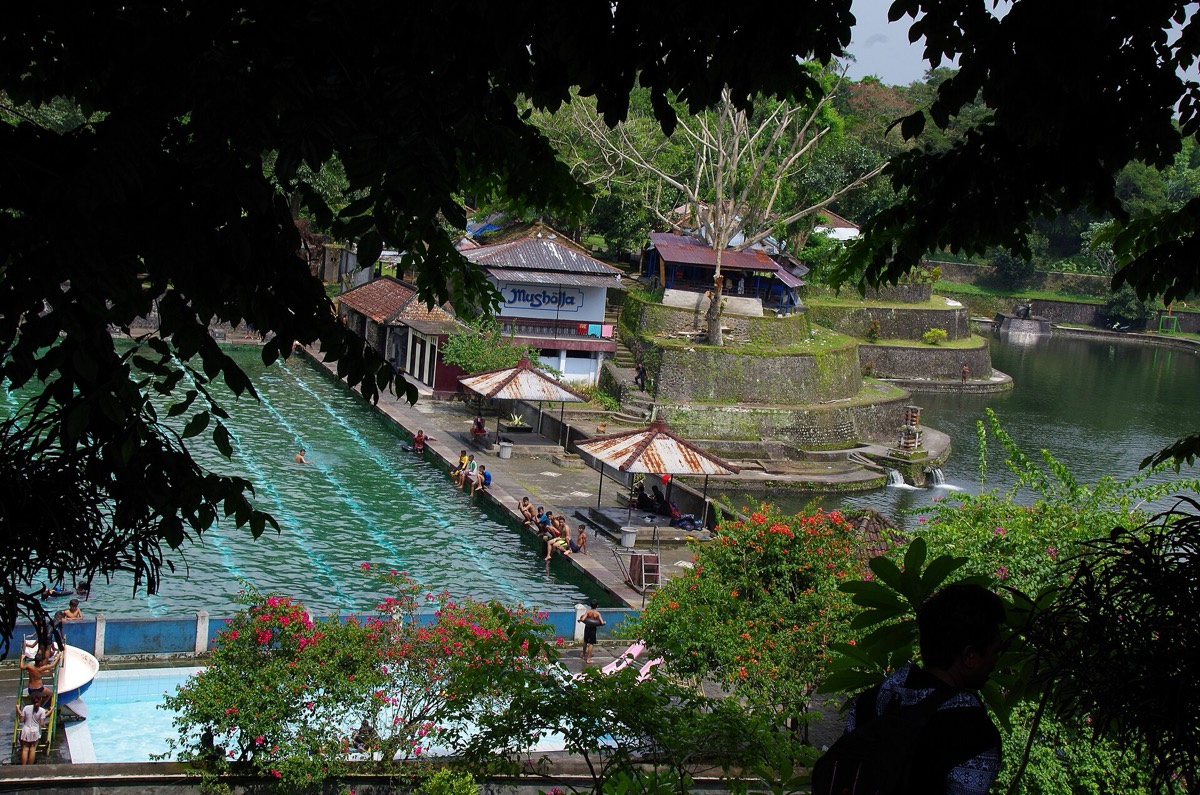
Taman Narmada is a terraced garden of pools, lawns and old frangipani trees, laid out by a Balinese king in the eighteenth century. Its centrepiece is a large pool and a stepped hill shaped, so it is said, like Rinjani, with the pool standing in for the crater lake. The king, too old to make the pilgrimage up the mountain, built a copy where he could perform the ceremonies instead.
It is now a public park and on weekends it fills with Lombok families picnicking, children swimming in the public pool and couples taking photos. A spring in the garden is said to keep you young, and people queue to drink or wash their faces in it.
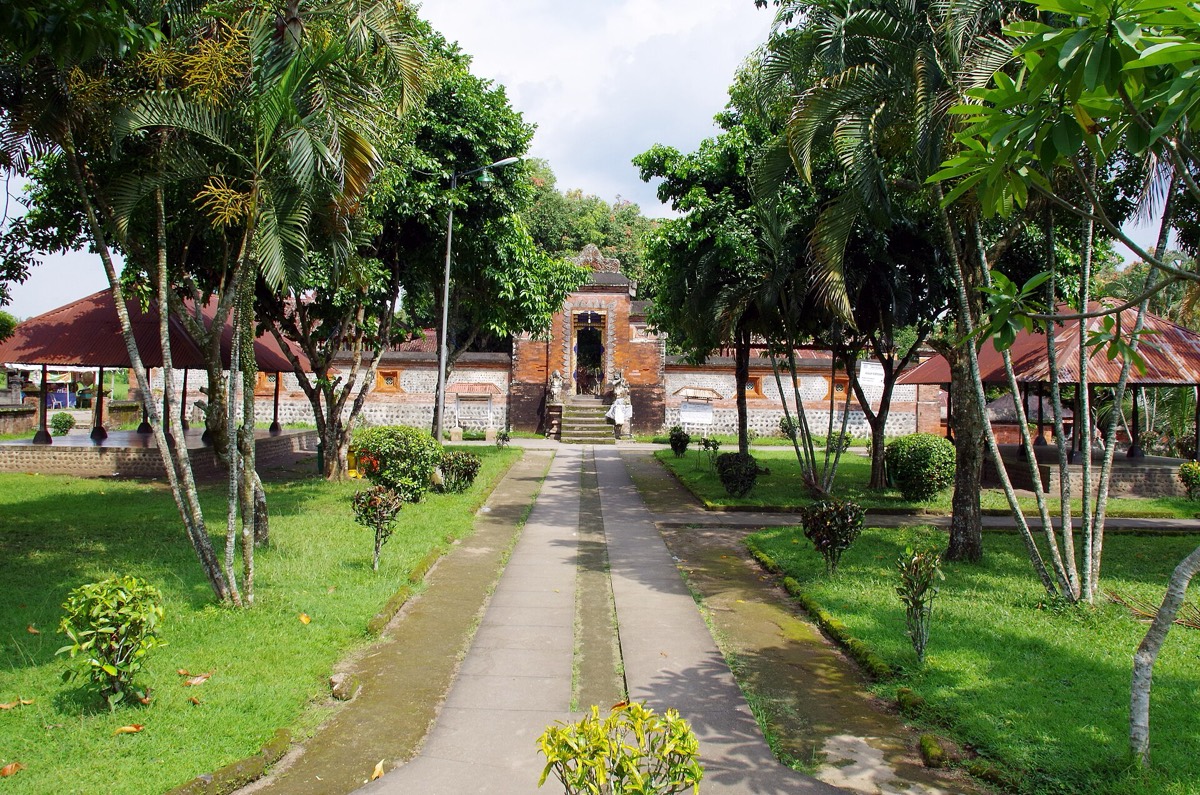
A few kilometres away, Pura Lingsar is one of the most remarkable places on the island: a temple complex used both by Balinese Hindus and by Sasak Muslims of the Wetu Telu tradition, each with their own sanctuary within the same walls. Sacred eels live in a pool, and visitors bring hard-boiled eggs to tempt them out.
The story
Narmada is generally dated to 1727, built under the Balinese rulers of west Lombok. Its name comes from the Narmada river in India, one of the sacred rivers of Hinduism. The garden includes a temple, Pura Kalasa, and the Balinese community still holds ceremonies here, including rituals linked to the Pekelan offerings at Segara Anak.
Pura Lingsar was built around 1714, near a spring that both communities regarded as sacred. The Hindu part, Pura Gaduh, is oriented towards Rinjani and Bali’s Mount Agung; the Wetu Telu part, the Kemaliq, centres on a spring and a pool. The arrangement reflects centuries of coexistence in this area.
Every year, usually around November or December at a full moon in the Sasak and Balinese calendars, Lingsar hosts the Perang Topat, the ‘war of rice cakes’. After joint prayers, Hindus and Muslims throw ketupat, small rice cakes boiled in woven palm leaves, at each other in a cheerful mock battle. The festival is tied to the start of the rains and prayers for a good harvest.
The rice cakes are later collected by farmers and scattered in their fields for luck. It is one of the most joyful public events on the island, and also a gentle statement about living together.

Getting there
Narmada is about ten kilometres east of Mataram on the main road towards East Lombok; Lingsar is a short drive north of it. Combine both with Mataram and Cakranegara in one day, or stop on the way to Tetebatu.
Ride-hailing apps work in this area, but a hired driver is easier for multiple stops.
A suggested plan
- MorningTaman Narmada: walk the terraces and see the pool shaped like Segara Anak.
- Late morningDrink from the spring of eternal youth, if you dare the queue.
- MiddayDrive to Pura Lingsar and visit both sanctuaries with a caretaker.
- AfternoonFeed the sacred eels with an egg, then return to Mataram or continue east.
Where to stay
Base yourself in Senggigi or Mataram; this is an easy half-day trip from either.
Good to know
- Weekdays are quieter at Narmada.
- Wear a sarong at Lingsar; they can be borrowed at the entrance.
- If you are in Lombok around the right full moon, ask about the Perang Topat date.
- Give a small donation to the caretaker at Lingsar.
- Respect both communities’ sanctuaries and follow the caretakers’ guidance.
- During Perang Topat the crowds are dense; keep valuables close.
- Don’t swim in sacred pools.