Wae Rebo: a night in the cloud village
Seven tall conical houses stand in a clearing high in the Manggarai mountains, reached only on foot, where guests are welcomed as family for one night.

- Area
- West Flores
- Start from
- Labuan Bajo
- Distance
- about 6–7 hours by road, then a 2–3 hour walk uphill
- Time needed
- 2–3 days
- Best season
- April – October; trails slippery in the wet season
- Difficulty
- Moderate to Hard
- Transport
- Car to the trailhead near Denge, then on foot
- Tickets & rules
- Visitor fee covering the welcome ceremony, meals and a mat in a traditional house; check current rates
Why go
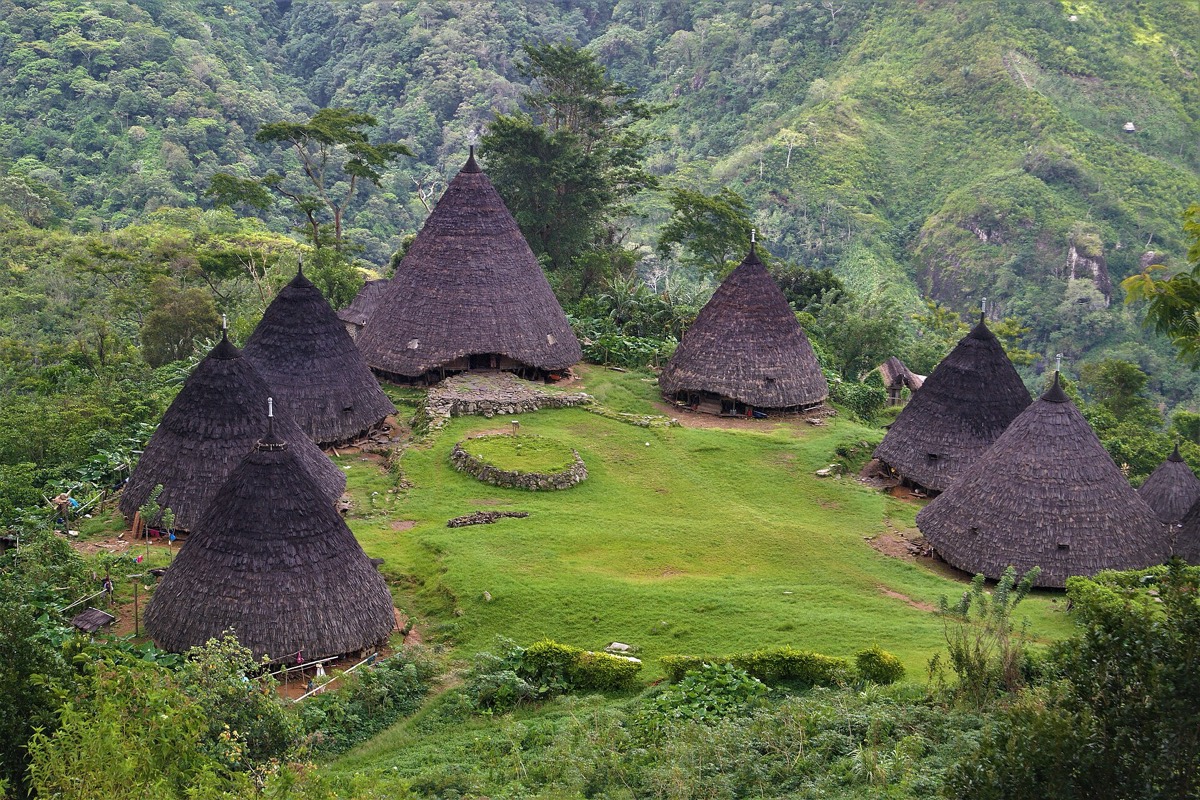
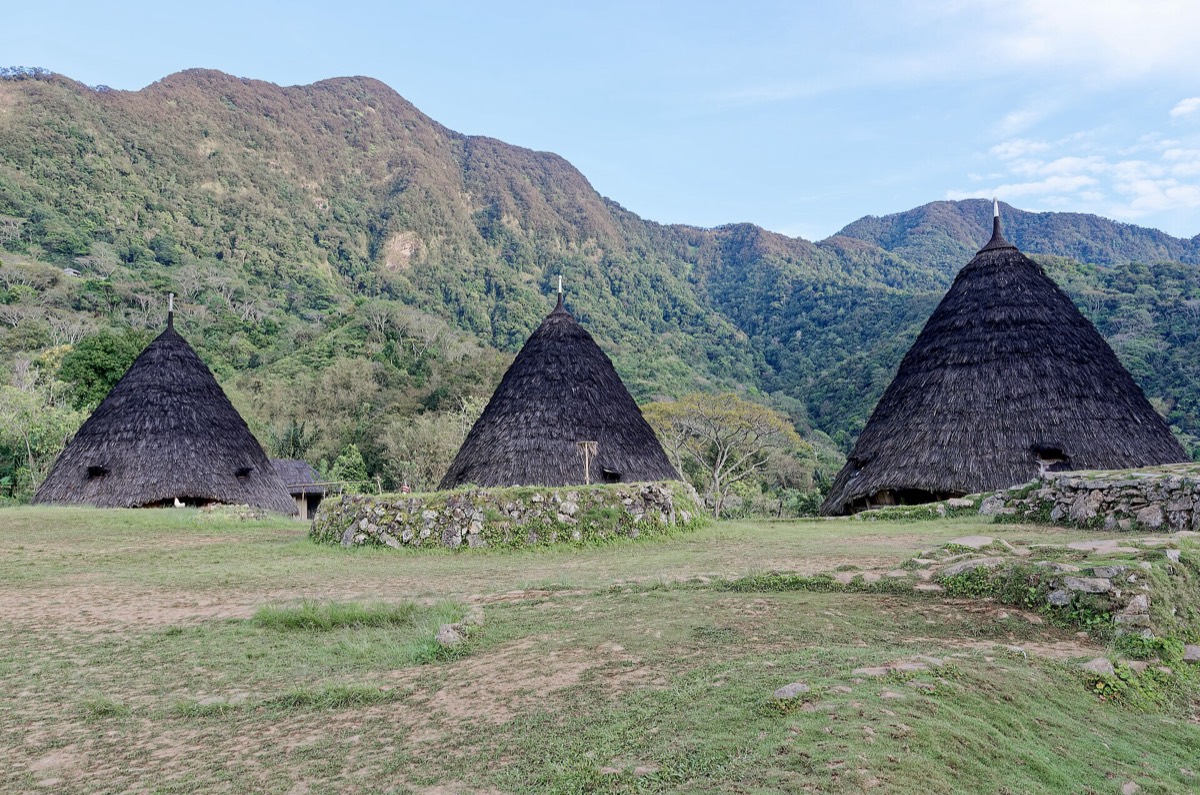
Wae Rebo is the most memorable place I stayed on Flores, and it requires effort. From the coast you drive for most of a day on winding mountain roads, then walk up through dense rainforest for two or three hours, crossing streams and climbing slippery roots, until the trees open and you see it: seven tall, cone-shaped houses arranged in a circle on a green clearing, with mist drifting over the ridges around it.
Visitors first go to the main house for a short welcome ceremony, in which an elder asks the ancestors to accept and protect the guests. After that you are free to wander, play with children, watch women weaving and drying coffee beans, and drink sweet Flores coffee grown on the surrounding slopes.
At night you sleep on mats on the floor of one of the guest houses, with dozens of others, under a roof that rises far above into darkness. Dinner is simple, rice, vegetables, some meat or fish, and the evening is quiet: talk, cards, stars. In the morning the mist hangs low, and the walk down feels like leaving another world.
The story
Wae Rebo was founded, according to oral history, by an ancestor called Empu Maro who came from Minangkabau in Sumatra some generations ago. The village has kept its traditional houses, called mbaru niang, for many generations. Each one is a tall cone of wooden beams and palm thatch with five levels: the lowest for living, then storage for food and seeds, then for offerings to the ancestors at the top.
By the late twentieth century several of the houses had fallen into disrepair. In 2008 to 2011, villagers, supported by a group of Indonesian architects and donors, rebuilt them using traditional methods and materials. The project won a UNESCO Asia-Pacific Award for Cultural Heritage Conservation in 2012, and Wae Rebo became known around the world.
Today most of the village’s families live in the lower settlement of Kombo, closer to the road and schools, and take turns staying in Wae Rebo to keep it alive and to host guests. Coffee and visitor fees are the main sources of income. It is a living village, not a museum, and visitors are guests, which is a responsibility as well as a privilege.

Getting there
From Labuan Bajo, the drive to Denge or the trailhead takes roughly six to seven hours via Ruteng or the southern road. Most people hire a car and driver for two or three days. From the end of the road the walk takes two to three hours up, a little less down.
Many visitors spend a night in Denge before and after the walk to break up the journey. Guides can be arranged there.
A suggested plan
- Day 1Drive from Labuan Bajo to Denge; overnight in a simple guesthouse.
- Day 2 morningWalk up to Wae Rebo through the forest.
- Day 2 afternoonWelcome ceremony, then explore the village and coffee gardens.
- Day 2 eveningDinner and a night in a mbaru niang.
- Day 3Sunrise in the mist, breakfast, walk down and drive on to Ruteng or back to Labuan Bajo.
Where to stay
You sleep in the village on shared mats, with simple shared bathrooms; bedding is provided. Nights are cold at this altitude, so bring warm layers. Denge has a few simple guesthouses before and after the walk.
Good to know
- Pack light for the walk; a day bag with warm layers, a headtorch and a rain jacket is enough.
- Bring a small gift such as notebooks or pencils for the school, or ask your guide what the village needs.
- Wear good shoes; the trail is muddy and slippery in places.
- Respect the welcome ceremony: don’t photograph or wander around the village before it.
- Weather changes quickly in the mountains; rain can make the trail slippery and cold.
- Mobile signal is weak or absent; tell someone your plans.
- Ask before photographing people, especially elders and inside houses.