Ruteng: spiderweb rice fields and the hobbit cave
A cool mountain town of churches and coffee, rice fields divided like giant spider webs, and the limestone cave where a tiny ancient human was found in 2003.

- Area
- West Flores
- Start from
- Labuan Bajo
- Distance
- about 130 km by road
- Time needed
- 1–2 days
- Best season
- All year; rice greenest December – April, driest roads June – September
- Difficulty
- Easy
- Transport
- Car and driver, bus or a short flight to Ruteng
- Tickets & rules
- Small fees at the Cancar viewpoint and Liang Bua
Why go
After the heat of the coast, Ruteng is a relief. The town sits at around 1,200 metres in the Manggarai highlands, surrounded by green ridges and terraces, and the evenings are cool enough for a jacket. It is the capital of the Manggarai people and a mainly Catholic town, with a large cathedral, schools run by religious orders, and a busy market full of vegetables, coffee and betel nut.
On the way from Labuan Bajo, near the village of Cancar, you can climb a short path to a viewpoint over the lingko, the famous spiderweb rice fields. From above, the paddies are divided into slices radiating from a central point, like a web or a cut pie. In the wet season they are bright green; at harvest they turn gold and patterned.
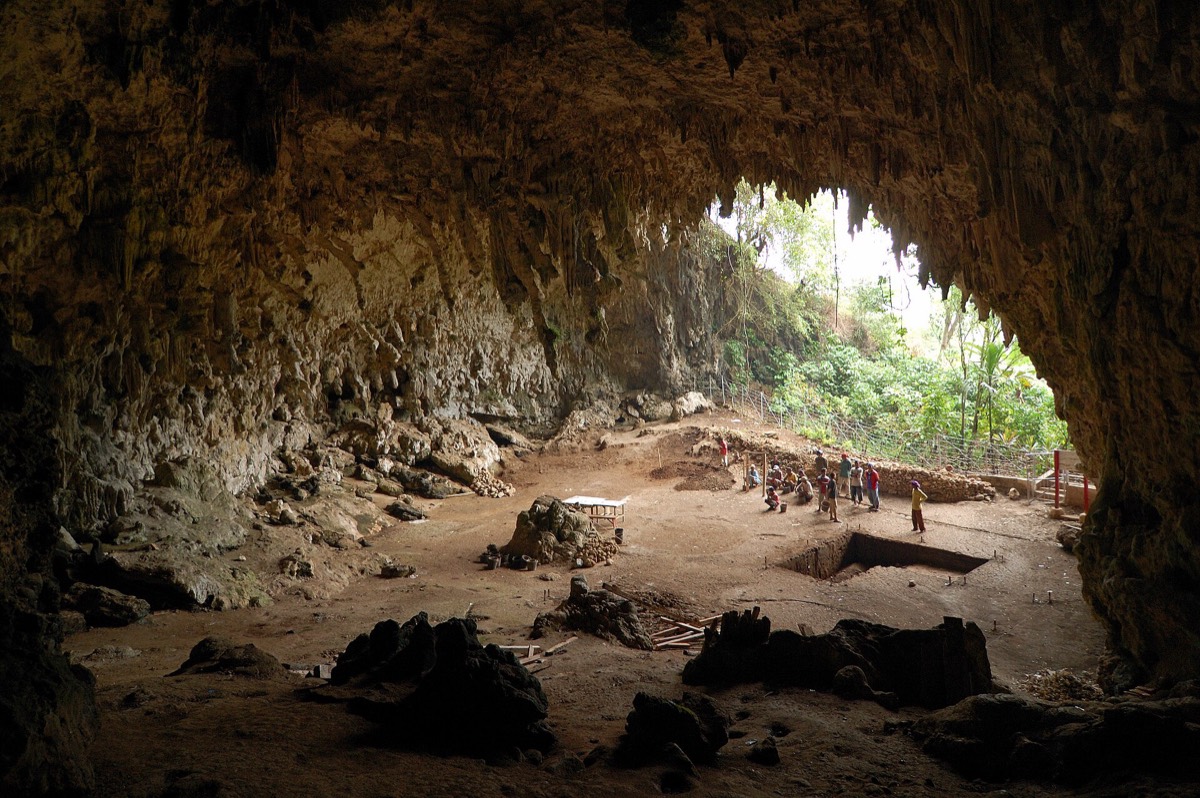
North of Ruteng, Liang Bua is a large, airy limestone cave where archaeologists made one of the most surprising discoveries of the century. There is a small museum nearby, and standing in the cave where a different human species once lived is a moving experience, even if there isn’t much to see beyond the excavation pits.
The story
The spiderweb fields reflect Manggarai customary land law. Communal land, lingko, was divided by the tua teno, the elder responsible for land, starting from a central point called the lodok. Each family received a slice, measured in finger widths from the centre, with larger shares for families with more members or higher status. The pattern made sure everyone got a share of better and worse ground.
In 2003, an Indonesian and Australian team excavating at Liang Bua found the skeleton of a tiny adult human, about a metre tall, with a small brain. They named the species Homo floresiensis, and the press quickly called it the hobbit. Later dating suggests the bones are roughly 100,000 to 60,000 years old, and stone tools in the cave are younger still.
Liang Bua had already been explored decades earlier by the Dutch priest Theodor Verhoeven, the same man who described Batu Cermin. The cave also contained remains of dwarf stegodons, a relative of elephants, and of giant rats and storks, a reminder that Flores was once home to a very unusual island fauna, where large animals shrank and small ones grew huge.
Getting there
The drive from Labuan Bajo to Ruteng takes about four hours on a winding mountain road, part of the Trans-Flores Highway. Hire a car with driver, or take a shared minibus. Ruteng also has a small airport with occasional flights.
Cancar is about twenty kilometres west of Ruteng on the main road. Liang Bua is roughly a half-hour drive north of town on a smaller road.
A suggested plan
- MorningLeave Labuan Bajo early; stop at Cunca Wulang or a coffee stall on the way.
- MiddayClimb to the viewpoint over the spiderweb rice fields near Cancar.
- AfternoonArrive in Ruteng, visit the cathedral and the market.
- Next morningDrive to Liang Bua and visit the cave and museum.
- Next afternoonContinue east to Bajawa or turn south towards Wae Rebo.
Where to stay
Ruteng has simple hotels and guesthouses, some run by Catholic missions, which are clean, calm and good value. Nights are cool, so check that rooms have blankets and hot water.
Good to know
- Bring a fleece; Ruteng evenings are surprisingly chilly.
- Try Manggarai coffee, grown on the surrounding slopes; it is strong and earthy.
- Ask your driver to stop at roadside viewpoints; the road to Ruteng is beautiful.
- The viewpoint at Cancar is on private land; a small fee goes to the family.
- The mountain road is winding and slow; take motion-sickness tablets if needed.
- Landslides can close roads in the wet season; allow extra time.
- Dress modestly in churches and villages.