Son Tra: Lady Buddha, langurs and the chessboard peak
A forested mountain on the edge of Da Nang, with a giant white Buddha above the bay, rare monkeys in the trees and a winding road to a summit with views of the whole coast.

- Area
- Da Nang
- Start from
- Da Nang
- Distance
- about 40–60 km round loop
- Time needed
- 1 day
- Best season
- February – August
- Difficulty
- Moderate
- Transport
- Scooter, taxi or private car
- Tickets & rules
- None; some roads may be closed to private vehicles, check locally
Why go
Son Tra is the green hump you see from every beach in Da Nang. It rises almost 700 metres straight out of the sea, and most of it is protected forest. Within twenty minutes of the city centre you are on a quiet road among trees, with glimpses of cliffs and turquoise coves below.
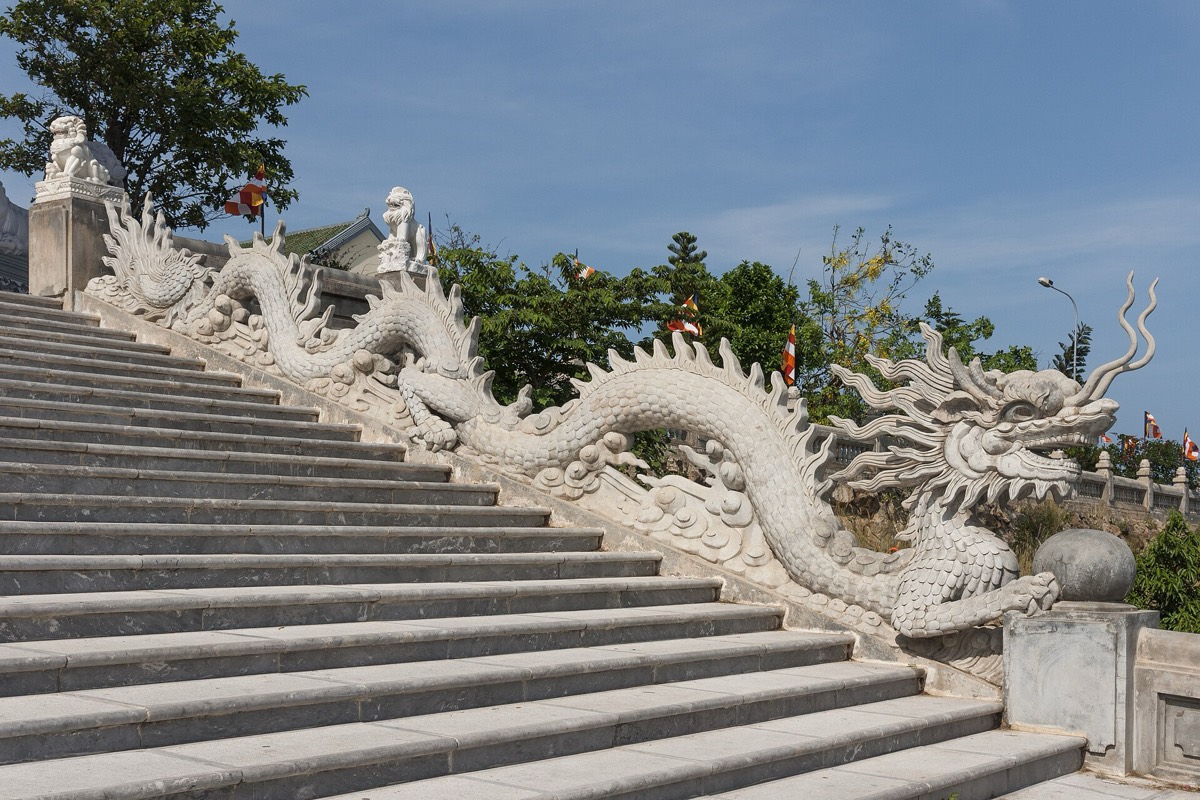
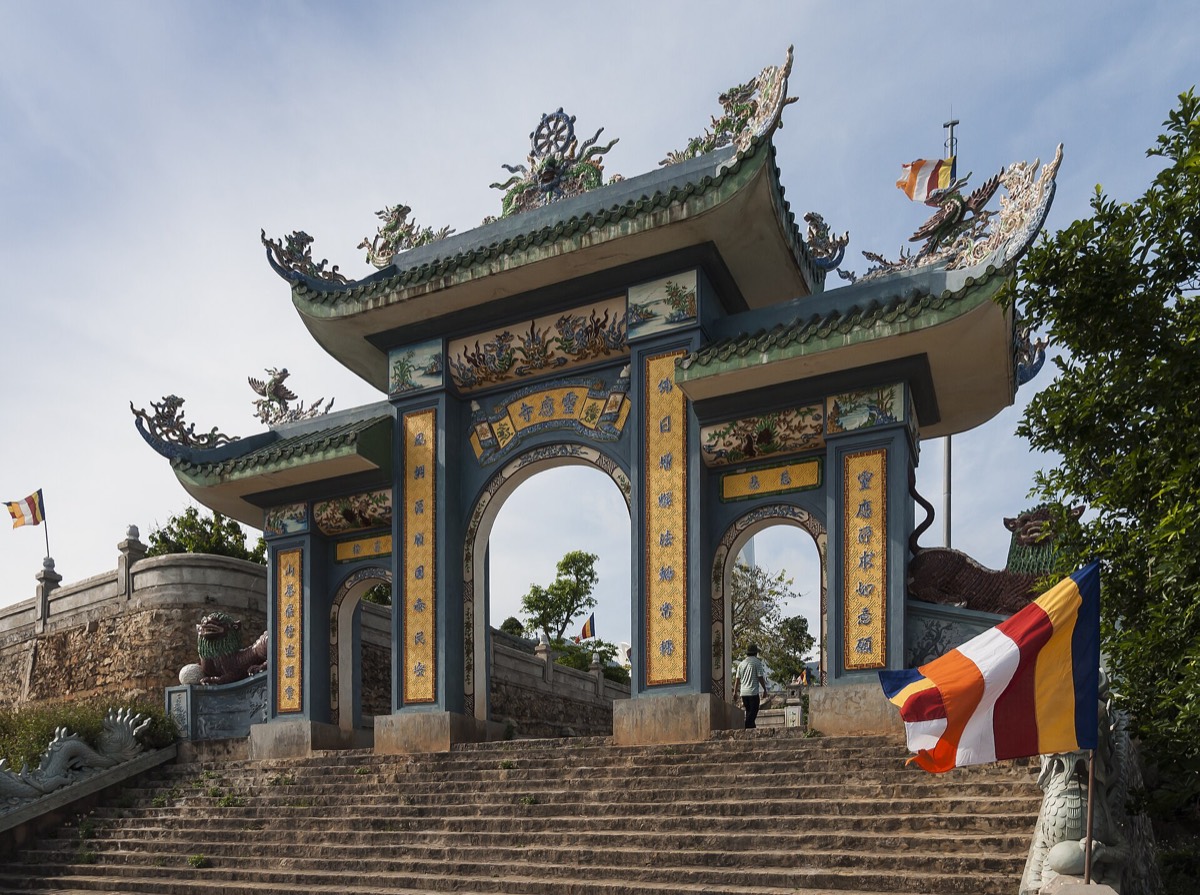
The best known stop is Linh Ung pagoda, with its 67-metre statue of the Bodhisattva of Mercy, Quan Am, facing the sea. Locals call her Lady Buddha. Her white figure is visible from far down the coast, and the pagoda grounds have bonsai gardens and views across the bay to Da Nang’s skyline.
For many visitors the real treasure is the red-shanked douc langur, one of the most beautiful primates in the world: grey bodies, maroon legs, white forearms and golden faces. Son Tra holds one of the largest wild populations. If you are quiet and patient, especially early in the morning, you may see a family feeding in the trees by the road.
The story
The French called the peninsula Monkey Mountain, and the name stuck in English. During the 20th century it was a military zone, with radar stations on the summit; some areas are still restricted.
The summit, Ban Co peak, is named after a legend. Two immortals came down to play chess on the mountaintop, and became so absorbed in the game that they forgot the world below. A stone statue of an old man and a chessboard marks the place, and the view from there sweeps across Da Nang, the Hai Van Pass and the sea.
Linh Ung pagoda opened in 2010 and quickly became a landmark. Fishermen say that Lady Buddha watches over them at sea, and the statue was built partly to protect people who make their living on the water. The legend links the site to a statue of Buddha that once washed up on the shore nearby.
Further along the coast road there is a giant banyan tree said to be about a thousand years old, its roots spreading over a huge area of the hillside. The douc langurs, meanwhile, have become symbols of the peninsula. Local conservation groups have campaigned to protect their habitat against development, and you’ll see signs asking drivers to slow down.

Getting there
From Da Nang, cross the river and follow the coast road north past the beaches to the peninsula. Linh Ung pagoda is about 10 km from the city centre. A loop around the peninsula and to the summit adds up to 40–60 km.
Roads are steep and winding in places. Only confident riders should take scooters; otherwise hire a car and driver. Some upper roads have occasionally been closed to private vehicles, so check current rules locally.
A suggested plan
- 6:00Ride out early to look for langurs in the trees along the road.
- 7:30Linh Ung pagoda and Lady Buddha before the tour groups.
- 9:00Drive up toward Ban Co peak for the view (if open).
- 10:30The thousand-year-old banyan tree and a coffee stop.
- 12:00Seafood lunch near the fishing harbour at the foot of the mountain.
Where to stay
Stay in Da Nang near My Khe beach or the river; the peninsula is an easy morning trip. A few resorts on the peninsula itself are an option for a splurge.
Good to know
- Binoculars help with langur-spotting.
- Bring water: shops are few on the mountain.
- Dress modestly for the pagoda.
- Start early: the light and the wildlife are best before 9.
- Do not feed the langurs or macaques.
- Steep descents need careful braking; brakes overheat on scooters.
- Some areas are military and off-limits; respect signs.