Marble Mountains: caves, pagodas and five elements
Five limestone and marble hills rising from flat coastal land, threaded with caves, shrines, staircases and viewpoints, halfway between Da Nang and Hoi An.

- Area
- Da Nang
- Start from
- Da Nang or Hoi An
- Distance
- about 8 km from Da Nang centre, 20 km from Hoi An
- Time needed
- half a day
- Best season
- All year
- Difficulty
- Moderate
- Transport
- Taxi, scooter or bus between Da Nang and Hoi An
- Tickets & rules
- Entrance ticket (around 40,000 VND, plus extra for the elevator and some caves); dress modestly
Why go
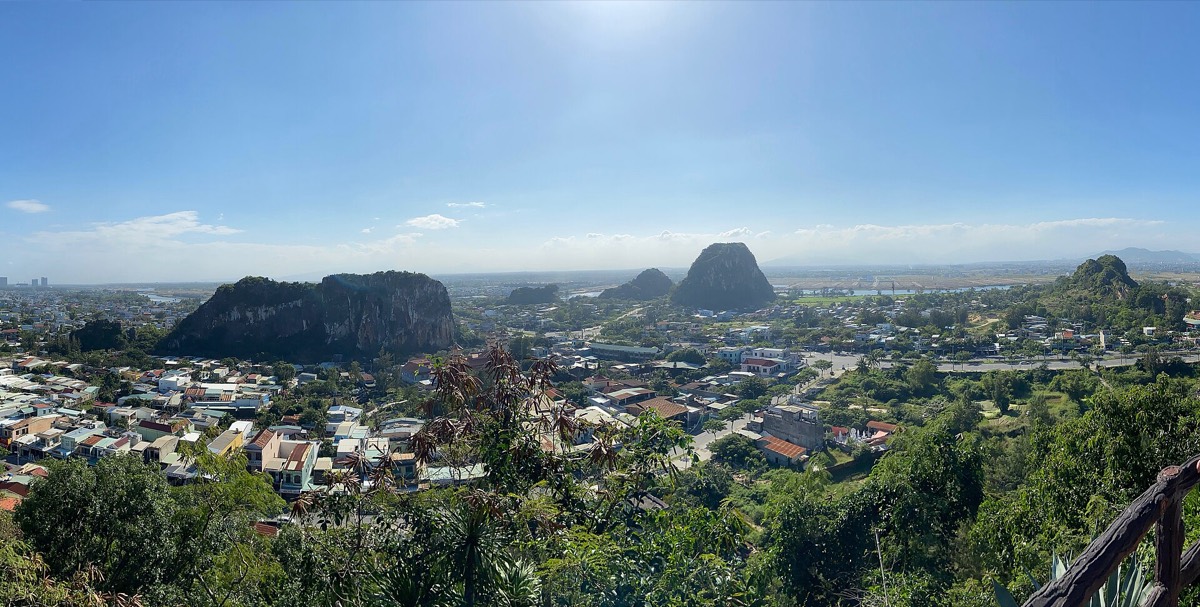
Driving between Da Nang and Hoi An, you can’t miss them: five steep, forested hills suddenly rising from the flat coastal plain. These are the Marble Mountains, Ngu Hanh Son, and the largest of them, Thuy Son, is laced with caves, pagodas and steps cut into the rock.
The experience is part pilgrimage, part adventure. Stone staircases lead from shrine to shrine, through narrow tunnels, up to viewpoints over the sea and the plain. The caves are the highlight: Huyen Khong cave is a huge chamber lit by holes in the roof, with shafts of sunlight falling on Buddha statues and incense smoke.
It is also an easy half-day stop on the way between the two cities. Spend a couple of hours climbing, then visit the stone-carving village at the foot of the hills, where workshops carve everything from small statues to giant lions.
The story
Each of the five mountains is named after one of the elements of Eastern philosophy: Thuy Son (water), Moc Son (wood), Hoa Son (fire), Kim Son (metal) and Tho Son (earth). A legend says they grew from the fragments of an egg laid by a dragon on the shore, from which a beautiful girl was born.
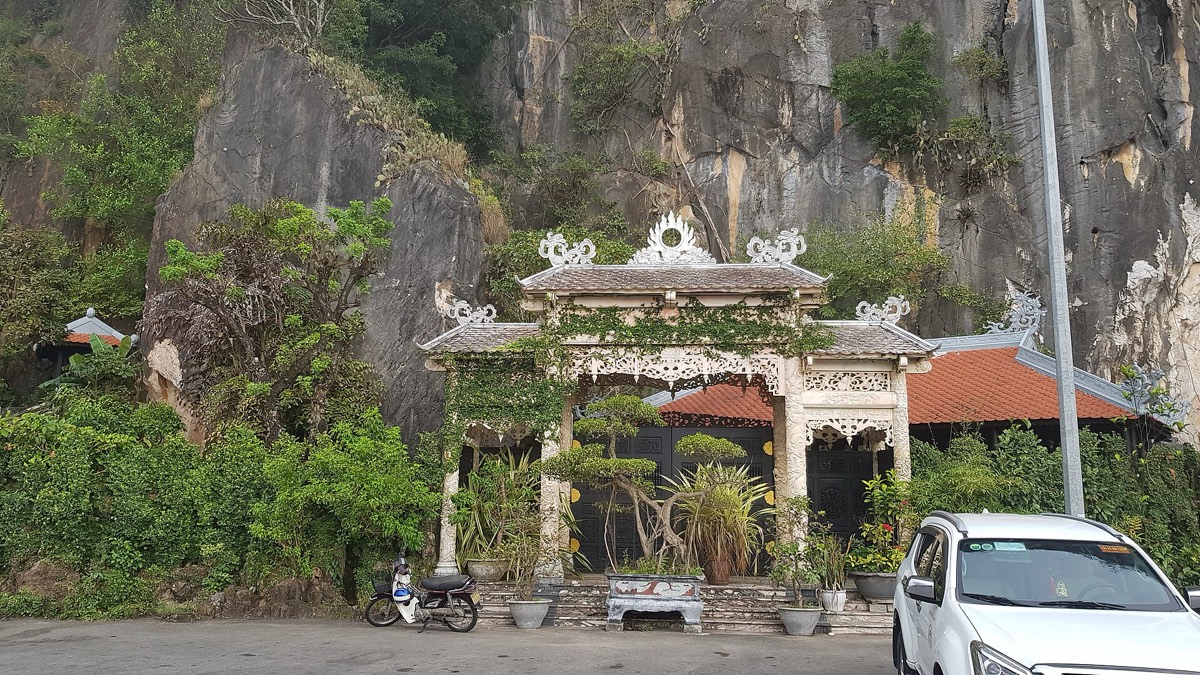
The caves have been used as shrines for centuries, first by the Cham, whose Hindu and Buddhist images remain in some places, and later by Vietnamese Buddhists. Emperor Minh Mang visited in the 19th century and gave several caves and pagodas their names.
During the American War, Huyen Khong cave was reportedly used as a hidden field hospital, and you can still see bullet marks on its walls. Am Phu cave, at the foot of the mountain, represents Buddhist hell and heaven, with dramatic, slightly spooky sculptures depicting punishments for sins.
The local Non Nuoc stone-carving village has been carving marble for generations. Originally the stone came from the mountains themselves, but quarrying was banned to protect them, and today most of the marble is brought from other provinces.

Getting there
The Marble Mountains are on the coast road between Da Nang and Hoi An. A taxi from either takes around 20–30 minutes. Local buses also run between the two cities and can stop nearby.
An elevator carries visitors up part of Thuy Son for an additional fee; otherwise, the stairs are steep but manageable.
A suggested plan
- 7:00Arrive at opening time to avoid heat and crowds.
- 7:30Climb Thuy Son: Tam Thai pagoda, Linh Ung pagoda and the viewpoints.
- 9:00Huyen Khong cave, best when the morning light falls through the roof.
- 10:00Am Phu cave at the foot of the mountain.
- 11:00Browse the stone-carving workshops in Non Nuoc village.
Where to stay
Base yourself in Hoi An or Da Nang. Non Nuoc beach, close to the mountains, has resorts if you want a quiet beach base between the two.
Good to know
- Wear shoes with good grip; stone steps are slippery.
- Bring water and a small torch for darker caves.
- Mornings are cooler and the light in the caves is better.
- Large stone carvings can be shipped abroad, but compare prices.
- Stairs are steep and uneven, with drops in some places.
- Souvenir sellers can be persistent; a polite no is enough.
- Caves can be humid and slippery after rain.