Vietnam Museum of Ethnology
The best introduction to Vietnam’s 54 ethnic groups, with a garden of full-size houses, from stilt homes to a towering communal hall, to wander through.

- Area
- Ba Dinh & West Lake
- Start from
- Old Quarter
- Distance
- about 8 km west of the centre
- Time needed
- half a day
- Best season
- All year; good on overcast days
- Difficulty
- Easy
- Transport
- Grab or taxi, about 25–40 minutes
- Tickets & rules
- Entry ticket; small fee for cameras may apply
Why go
Before heading up to Sa Pa or Ha Giang, or after you return, spend a morning here. The Museum of Ethnology is thoughtful, beautifully presented and full of everyday objects: fishing traps, wedding costumes, shaman’s tools, looms and baby carriers. It treats the minority peoples of Vietnam not as curiosities but as communities with their own histories.
The highlight is outside. In the garden behind the main building, full-size traditional houses have been reconstructed by craftsmen from the communities themselves, and you can climb inside.
It is a calm, almost rural place on the edge of the city, and a good option for a grey day.
The story
The museum opened in 1997 in the Cau Giay district, then on the fringe of Hanoi. Vietnam officially recognises 54 ethnic groups. The Kinh, or Viet, make up the majority, while groups such as the Tay, Thai, Muong, Hmong, Dao, Khmer, Cham, Ede and many smaller ones live mostly in the mountains and the south.
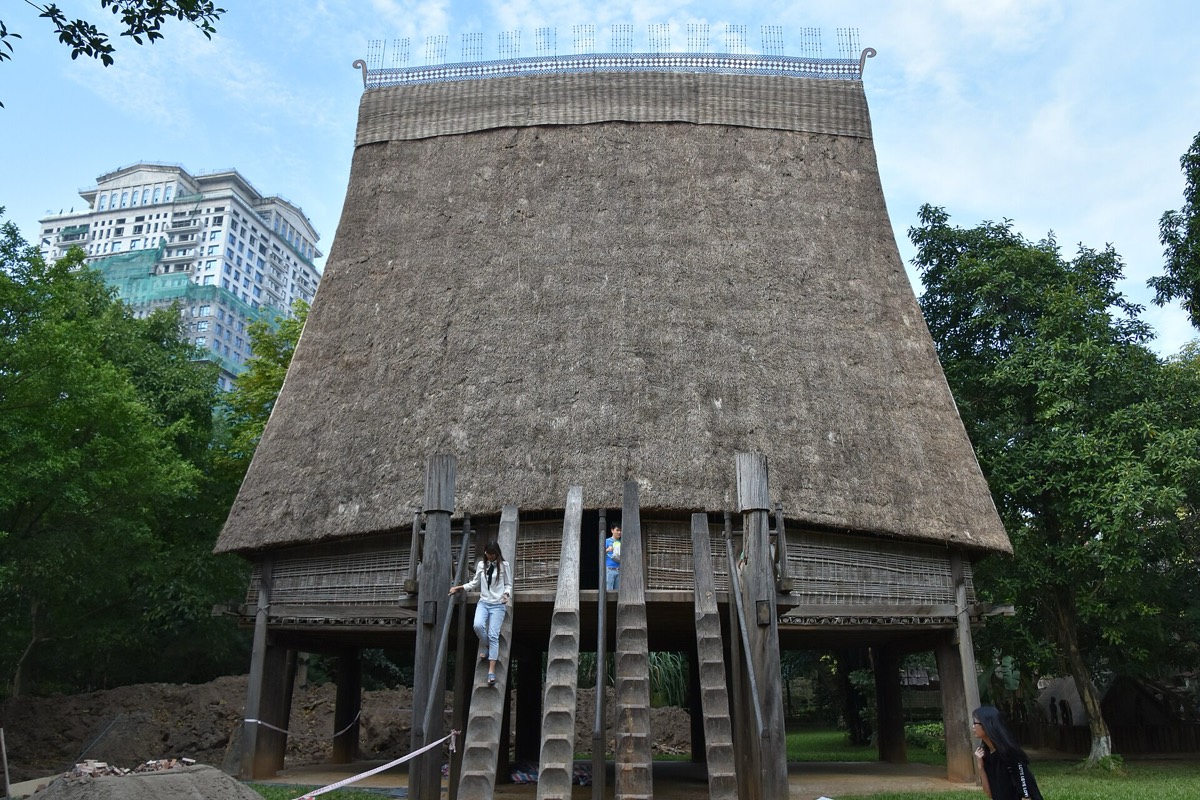
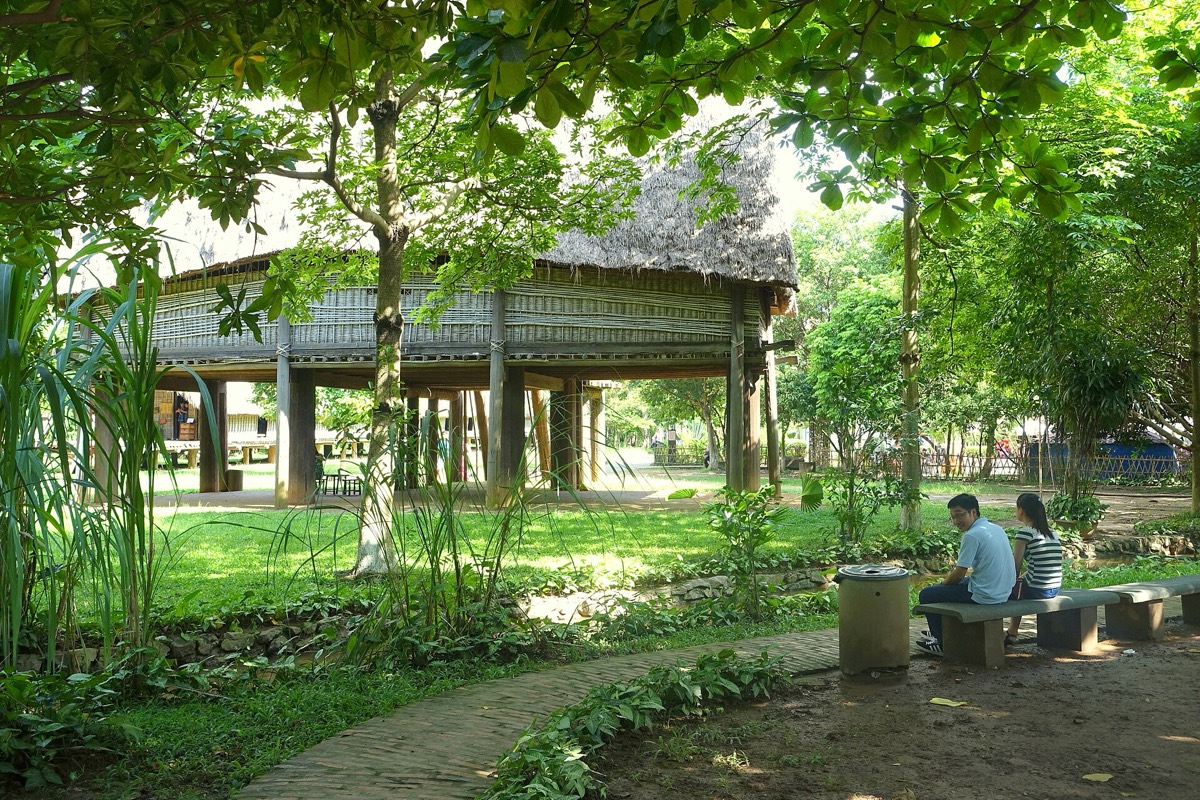
In the outdoor section stand a Tay stilt house, a Hmong house of earth and wood, an Ede longhouse that stretches far back under the trees, and a Bahnar communal house whose steep thatched roof soars around nineteen metres. Families built them using traditional techniques, and in some cases came to Hanoi to raise the beams with the right rituals.
Particularly striking are the Giarai funeral houses, surrounded by carved wooden figures: mourners, pregnant women and naked figures, symbols of the cycle of life and of the end of mourning, when a family abandons the tomb in a great ceremony.
A further building, the Southeast Asian wing, places Vietnam among its neighbours, with collections from Indonesia, Laos, Cambodia and beyond.

Getting there
The museum is on Nguyen Van Huyen street in Cau Giay. Take a Grab or taxi from the centre; the ride can take longer in rush hour.
It is usually closed on Mondays; check the current hours.
A suggested plan
- 8:30Arrive at opening and start in the main indoor building.
- 10:00The garden of traditional houses; climb into the longhouse and the Bahnar communal house.
- 11:30Southeast Asian wing if you still have energy.
- 12:30Lunch in Cau Giay, a busy local district with student-priced food.
Where to stay
There is no need to stay nearby; it’s an easy trip from the Old Quarter or West Lake.
Good to know
- Water puppet shows are sometimes performed on an outdoor stage in the garden; ask at the entrance.
- The gift shop sells textiles and crafts from minority cooperatives.
- Allow longer than you think; the garden is absorbing.
- Bring mosquito repellent for the garden in summer.
- The stilt-house stairs are steep and may be slippery; take care with children.
- Traffic on the way in rush hour can double the journey time.