A Hanoi street-food walk
Pho at dawn, bun cha at noon, rolled rice pancakes in the afternoon and turmeric fish sizzling at dinner: a day spent eating the Hanoi way.

- Area
- Food & nights
- Start from
- Old Quarter
- Distance
- about 3 km on foot
- Time needed
- half a day, spread over a whole day
- Best season
- All year; winter is perfect for noodle soups
- Difficulty
- Easy
- Transport
- On foot
- Tickets & rules
- None
Why go
Hanoi is one of the great eating cities of Asia, and almost all of the best food is cooked on the street or in small open-fronted shops that do one dish and nothing else. You sit on a low plastic stool, often on the pavement, and the bowl arrives in moments.
Northern food is subtler than in the south: clearer broths, fewer sweet sauces, more fresh herbs on the side. Many dishes are tied to the time of day. Pho is breakfast, bun cha is lunch, and most stalls simply close when the pot is empty.
This walk is less a fixed itinerary than a rhythm to follow. Eat little and often, look for crowded stools, and point at what your neighbours are eating.
The story
Pho is thought to have emerged in the Red River delta around the start of the twentieth century, possibly influenced by French beef stews and Chinese noodle soups, though its origins are argued over with great passion. The northern style is spare: beef broth simmered for hours with charred onion, ginger, star anise and cinnamon, flat rice noodles, a little spring onion. Chilli, lime and garlic vinegar are on the table, but locals use them lightly.
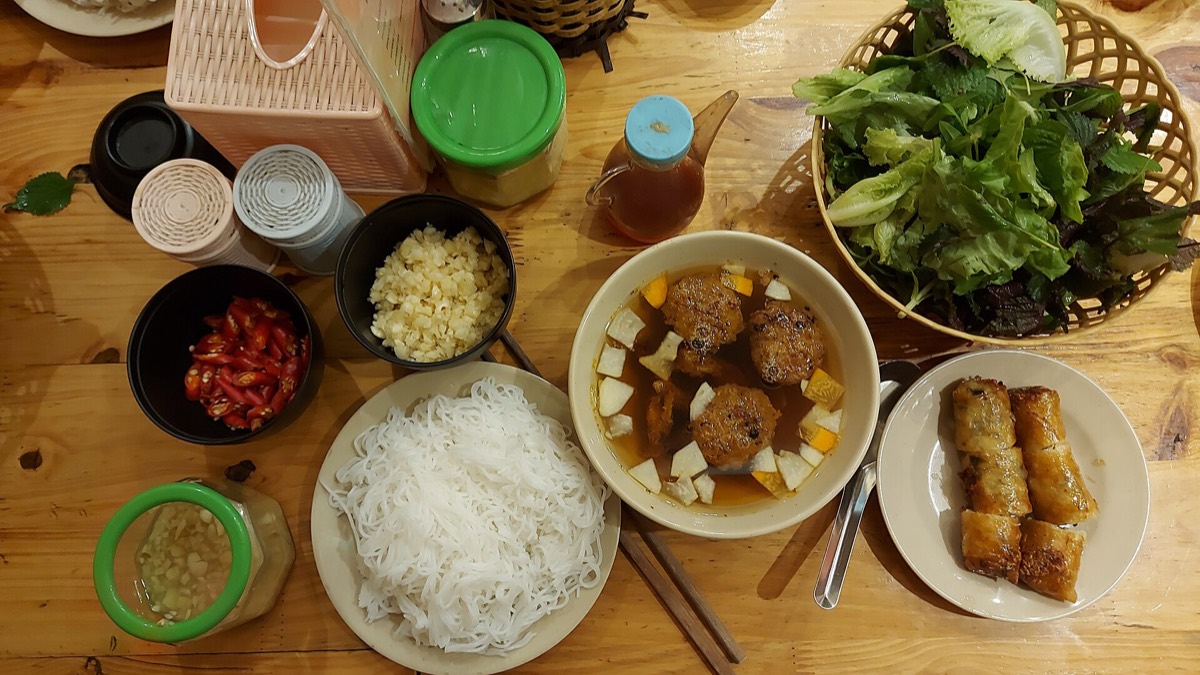
Bun cha, grilled pork patties and sliced pork belly served in a sweet and sour dipping broth with cold rice noodles and herbs, is the classic Hanoi lunch. The smoke of charcoal grills on the pavement around noon is one of the city’s defining smells. It became world-famous in 2016, when a US president sat down for a bowl at a canteen on Le Van Huu street.
Cha ca, turmeric-marinated fish fried at the table with masses of dill and spring onion, gave its name to a whole street, Cha Ca, in the Old Quarter, where one family is said to have served it since the late nineteenth century.
Banh cuon, steamed rice sheets rolled around minced pork and wood-ear mushroom, is best watched being made: the cook ladles batter onto a cloth stretched over a steaming pot and lifts off a translucent sheet in seconds.

Getting there
Everything here is in or near the Old Quarter. Walk between stops, which helps make room for the next one.
Look for stalls where locals are eating, a short menu, and a fast turnover. Prices are usually displayed or quickly given on request.
A suggested plan
- 7:00Pho bo, beef noodle soup, at a busy shop in the Old Quarter.
- 10:00Banh cuon, rolled rice pancakes, freshly steamed.
- 12:00Bun cha at a smoky lunchtime grill.
- 15:00Bun rieu crab noodle soup or a fresh banh mi as a snack.
- 17:00Che, sweet bean and jelly desserts, or a fruit smoothie.
- 19:00Cha ca at a table with its own little stove.
Where to stay
Stay in the Old Quarter; you want to be able to walk out for pho at seven in the morning without a plan.
Good to know
- The tissues on the table are not always free; it’s a small charge, normal and fine.
- Pho ga, chicken pho, is lighter and good on hot days.
- Fresh herbs are part of the dish: tear them in yourself.
- Many shops close once sold out, so eat earlier rather than later.
- A food tour with a local guide on your first evening can help you order confidently afterwards.
- Ice in drinks is usually made from purified water in the city, but go easy if you have a sensitive stomach.
- Check prices before ordering in very touristy spots; menus without prices invite surprises.