The Temple of Literature
Five walled courtyards, a lotus pond and rows of stone turtles bearing the names of scholars: Vietnam’s first university, still visited by students praying for good exam marks.

- Area
- Ba Dinh & West Lake
- Start from
- Old Quarter
- Distance
- about 2.5 km from Hoan Kiem Lake
- Time needed
- half a day
- Best season
- All year; early morning before the groups
- Difficulty
- Easy
- Transport
- Walk, cyclo or Grab
- Tickets & rules
- Entry ticket; shoulders and knees covered
Why go
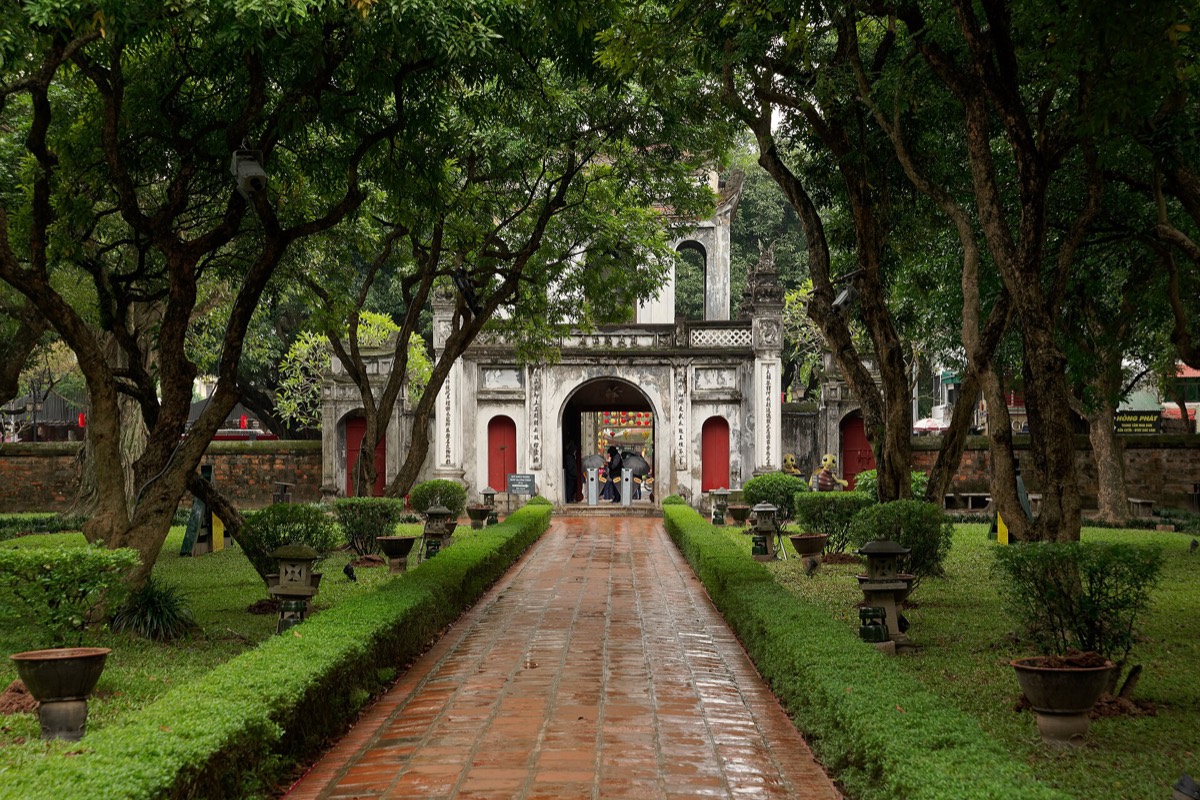
Behind a long wall on a busy road lies the most peaceful place in central Hanoi. The Temple of Literature is a sequence of five courtyards, one after another, each separated by a gate. The first are green and open, with old trees and clipped hedges; the deeper you go, the more ornate and sacred the buildings become.
It is beautiful in a restrained way: dark wood, red lacquer, curving tiled roofs and still ponds. In spring and early summer, graduating students in gowns pose for photographs, and before exam season you see teenagers with their parents lighting incense and leaving offerings for luck.
Even if temples are not usually your thing, this one tells a story about how much Vietnam has valued learning for almost a thousand years.
The story
The temple was founded in 1070 under Emperor Ly Thanh Tong and dedicated to Confucius. In 1076 the Imperial Academy, Quoc Tu Giam, was opened on the same grounds, and it is often called Vietnam’s first university. At first it educated princes and the sons of mandarins; later it opened to talented commoners who had passed the regional examinations.
In the third courtyard stand the stelae of the doctors: 82 stone tablets mounted on the backs of stone turtles, recording the names and birthplaces of those who passed the highest royal examinations between 1442 and 1779. The turtle symbolises longevity and wisdom. Visitors used to rub the turtles’ heads for luck, so many that the stones are now fenced off to protect them.
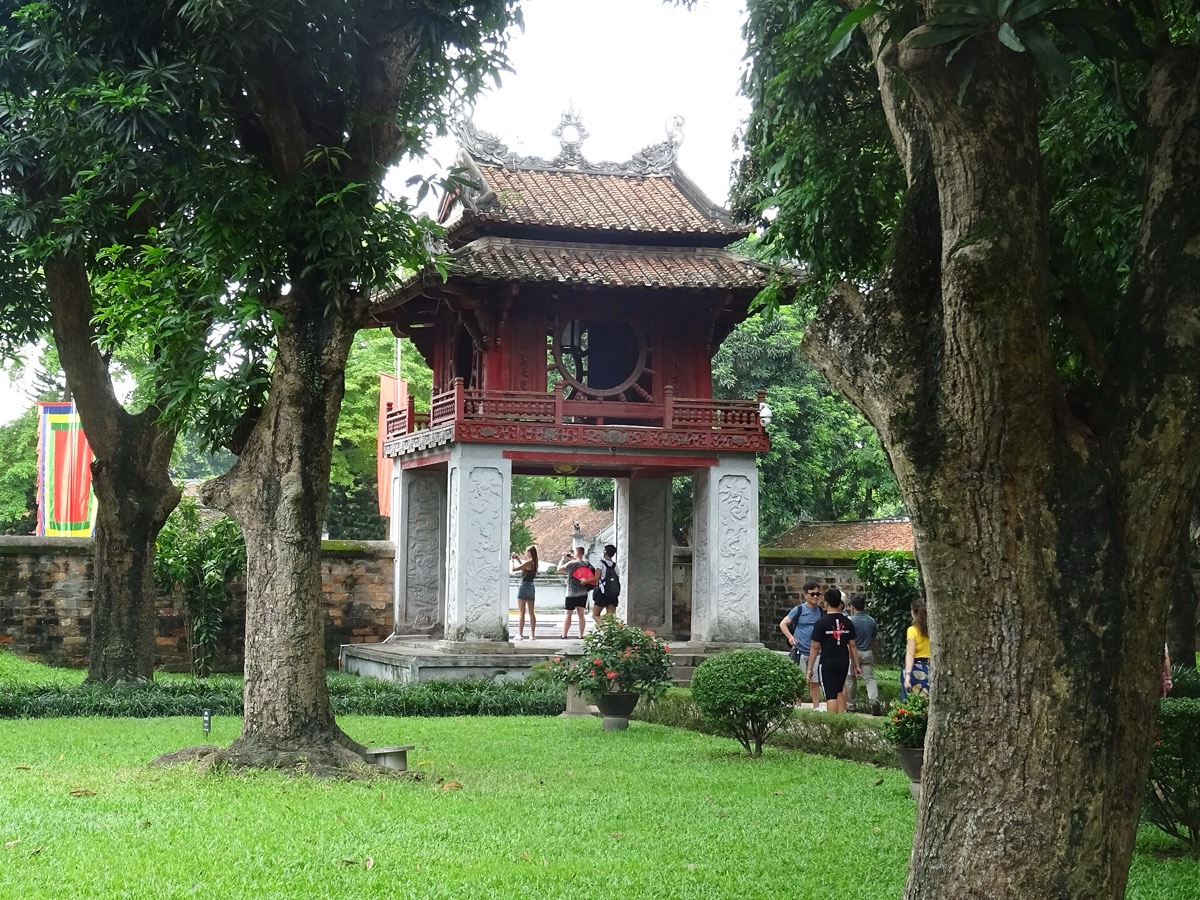
The pavilion at the entrance to the third courtyard, Khue Van Cac, the Constellation of Literature, was built in 1805. With its round windows radiating like stars, it has become an emblem of Hanoi and appears on the 100,000 dong banknote.
The examination system was rigorous and brutal. Candidates spent years studying the Confucian classics, and only a small handful of the thousands who sat the exams earned the title of doctor. Their names carved in stone were the greatest honour a village could hope for.

Getting there
From the Old Quarter it’s about a thirty-minute walk west along Hang Bong and Nguyen Thai Hoc streets, or a short Grab ride. The main entrance is on Quoc Tu Giam street, facing a small park and a lake called Van Chuong.
The Fine Arts Museum is a few minutes’ walk away, which makes a natural pairing.
A suggested plan
- 8:00Arrive at opening time to have the first courtyards almost to yourself.
- 8:30Walk slowly through the gates to Khue Van Cac and the stelae of the doctors.
- 9:30The fourth courtyard and the sanctuary of Confucius.
- 10:00The fifth courtyard, rebuilt on the site of the old academy, with exhibits upstairs.
- 11:00Coffee across the road, then the Fine Arts Museum or lunch.
Where to stay
Stay in the Old Quarter, or for a quieter base, in the residential streets of Ba Dinh nearby, where small guesthouses and serviced apartments are easier to find.
Good to know
- Read the stelae inscriptions slowly; even translated summaries are moving.
- Calligraphers set up stalls outside around Tet; a character written for you makes a lovely souvenir.
- On public holidays and during graduation season it’s very crowded by mid-morning.
- Visit the small Van Chuong lake opposite to see the old setting of the temple.
- Don’t climb on the stelae or touch the turtles; they are protected heritage.
- Be respectful near altars where students and families are praying.