The Imperial Citadel and the One Pillar Pagoda
The excavated heart of the thousand-year capital, with dragon steps, a hidden wartime bunker and a tiny lotus-shaped pagoda rising from a pond.

- Area
- Ba Dinh & West Lake
- Start from
- Old Quarter
- Distance
- about 3 km on foot between sights
- Time needed
- half a day to 1 day
- Best season
- All year
- Difficulty
- Easy
- Transport
- Grab or walk from the Old Quarter
- Tickets & rules
- Ticket for the Imperial Citadel; modest dress for the Ba Dinh area and pagoda
Why go
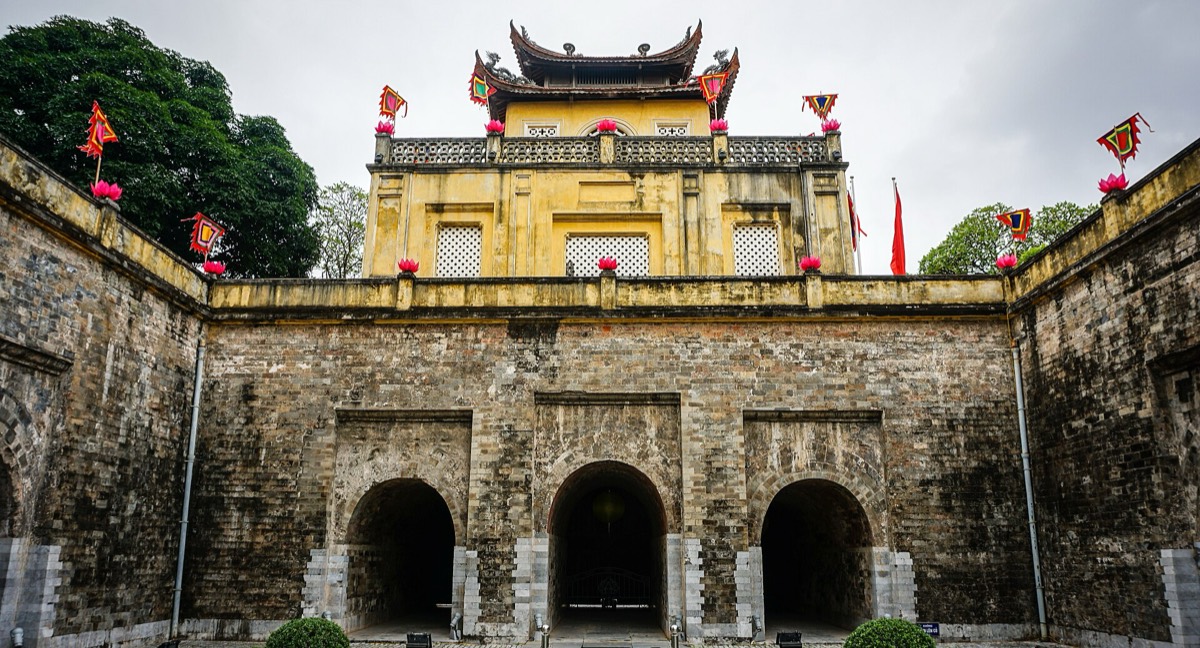
The Imperial Citadel of Thang Long, a UNESCO World Heritage Site since 2010, is one of the least crowded major sights in Hanoi, and one of the most rewarding. What survives is fragmentary: a great gate, the stone foundation of a palace guarded by carved dragons, scattered pavilions, and archaeological pits revealing layers of royal buildings stacked century upon century.
That fragmentary quality is part of its charm. You walk across open lawns under old trees, almost alone, and piece together the city that stood here.
Nearby, the One Pillar Pagoda is tiny but much loved, and the wide Ba Dinh square, laid out on the site of an old citadel gate, gives a sense of the formal, ceremonial side of the capital.
The story
In 1010 King Ly Thai To moved his capital to this spot on the Red River. According to legend, as he arrived a golden dragon rose into the sky, so he named the city Thang Long, the Ascending Dragon. Successive dynasties built and rebuilt their palaces here for eight centuries, until the Nguyen moved the capital to Hue in the nineteenth century.
Archaeologists working at 18 Hoang Dieu, across the road from the main site, uncovered foundations, wells, roof tiles and ceramics from many dynasties, layered on top of one another. It was this rare continuity that earned the site its UNESCO listing. Within the citadel, the steps of Kinh Thien palace still bear their fifteenth-century stone dragons.
The citadel also hides a more recent story: bunker D67, built in the 1960s, where military leaders met during the war. You can walk down into its meeting room, preserved with its maps and telephones.
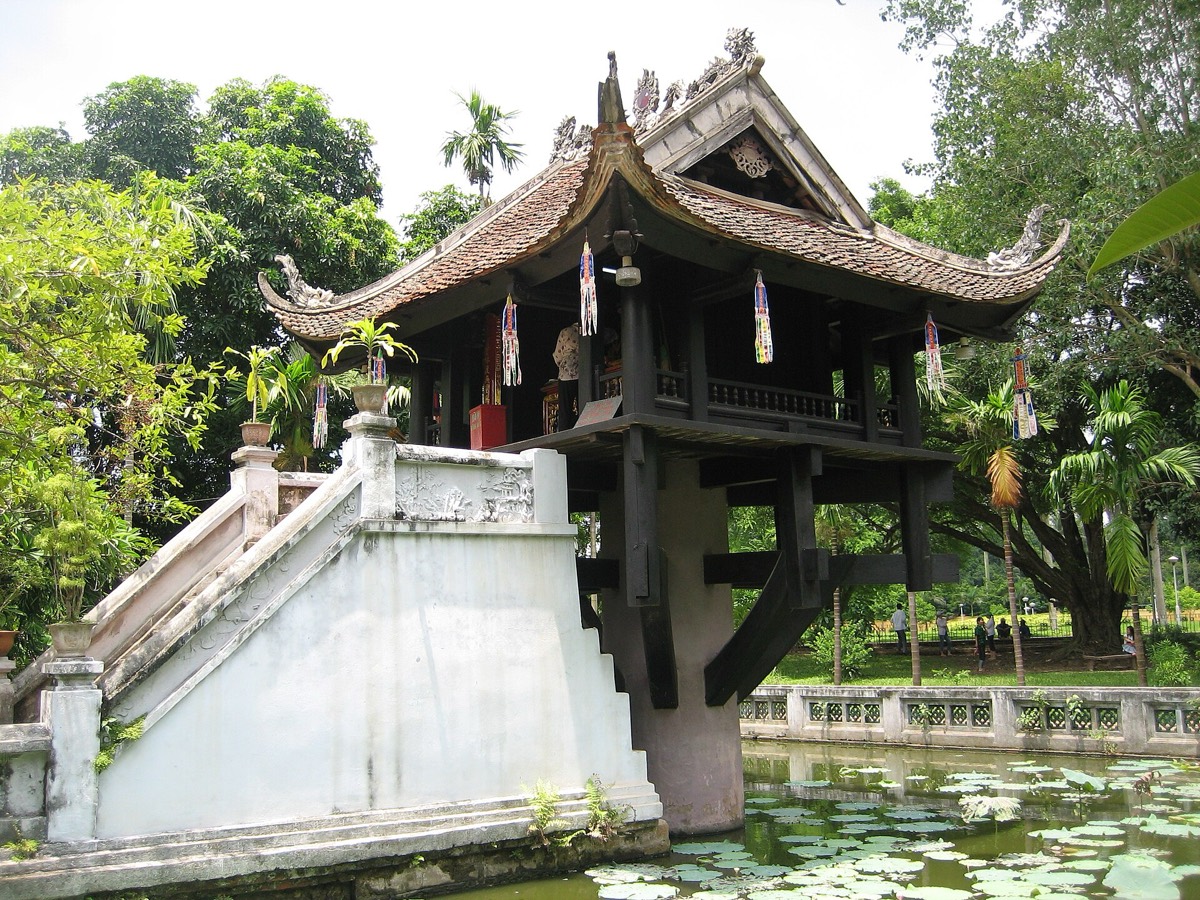
The One Pillar Pagoda dates to 1049. The story goes that the childless Emperor Ly Thai Tong dreamed that the bodhisattva Quan Am, seated on a lotus, handed him a baby boy. Soon after he had a son, and in gratitude built a temple in the shape of a lotus rising from a single pillar in a pond. The original was destroyed in 1954 and rebuilt faithfully the next year.

Getting there
The citadel entrance is on Hoang Dieu street, about a thirty-minute walk or ten-minute Grab from the Old Quarter. The One Pillar Pagoda lies behind the Ba Dinh square, a fifteen-minute walk south-west.
The square and its surroundings have security rules and dress expectations; follow guards’ directions and don’t walk on the lawns.
A suggested plan
- 8:00Enter the Imperial Citadel through Doan Mon gate.
- 9:00Kinh Thien palace and its dragon steps, then bunker D67.
- 10:00Cross to the archaeological site at 18 Hoang Dieu if it’s open.
- 11:00Walk to Ba Dinh square and the One Pillar Pagoda.
- 12:00Lunch in the quiet streets of Ba Dinh, then continue to West Lake.
Where to stay
The Ba Dinh district has calm residential streets with guesthouses and apartments; it’s pleasant if you prefer quiet over Old Quarter buzz and still within a short ride of everything.
Good to know
- The citadel has little shade outside the trees; bring a hat in summer.
- Signage is decent, but a guide or audio guide helps make sense of the layers.
- Combine with the Temple of Literature the same day; they’re close.
- The square is spectacular in the early evening when the flag is lowered.
- Shorts, sleeveless tops and loud behaviour are not welcome around Ba Dinh square.
- Do not photograph soldiers or guards up close without permission.