Camotes: a lake, swimming caves and quiet coves
A cluster of green islands east of Cebu with a calm lake, cool swimming caves, white coves and roads where you rarely meet another visitor.

- Area
- North & islands
- Start from
- Danao port
- Distance
- about 35 km from Cebu City plus a 2-hour ferry
- Time needed
- 2–3 days
- Best season
- Best December – May
- Difficulty
- Easy
- Transport
- Ferry from Danao or Cebu City; motorbike or habal-habal on the islands
- Tickets & rules
- Small entrance fees at caves, the lake and some beaches
Why go
The Camotes Islands are only a couple of hours from Cebu by ferry, yet they feel far away. The two main islands, Pacijan and Poro, are joined by a short causeway through mangroves, and you can explore both by motorbike in a day or two: green hills, rice fields, cassava gardens, chapels and villages where life moves at walking pace.
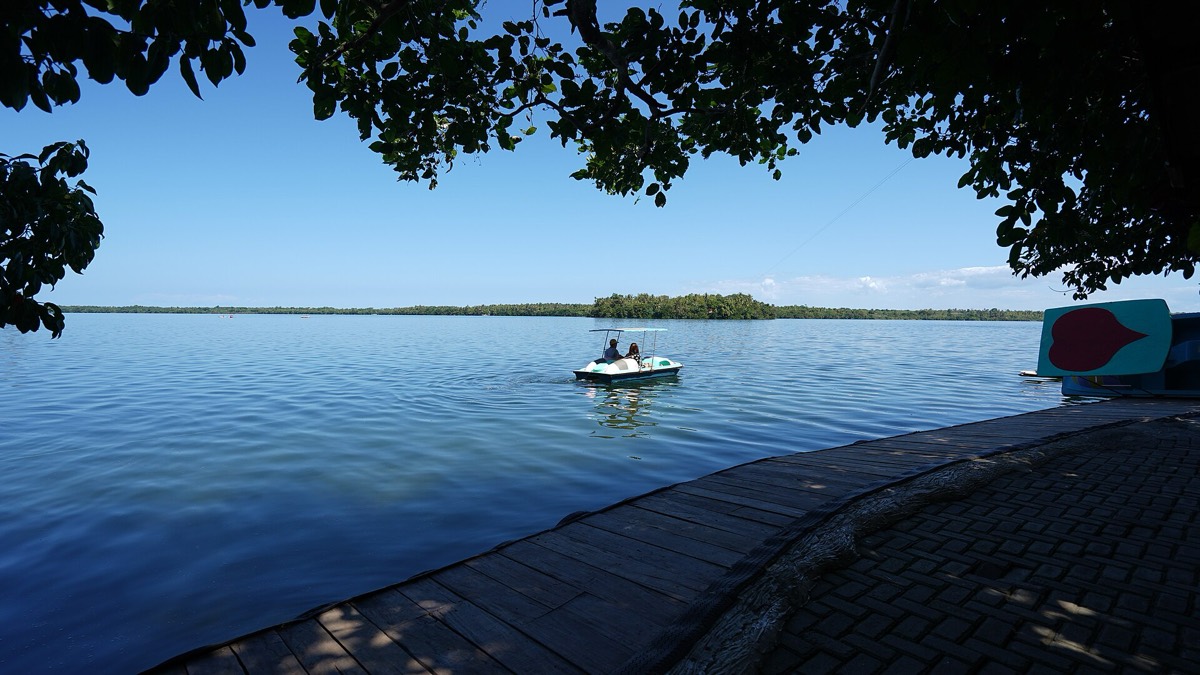
Lake Danao on Pacijan is a large, calm freshwater lake ringed with trees, where you can rent a small boat or just sit by the water watching egrets. The islands are full of limestone caves, and two are perfect for a swim: Timubo, where steps lead down to a clear underground pool, and Bukilat on Poro, a big chamber with holes in the roof letting shafts of light fall onto the water.
Santiago Bay, on Pacijan’s south coast, is a wide curve of white sand and clear water, and Mangodlong Rock nearby is a favourite spot for jumping into deep blue water from the rocks. In the evening, the islands fall silent except for the frogs and the occasional karaoke.
The story
The islands are said to take their name from camote, the sweet potato, which grows well in their soil, though some locals offer other explanations. Tourism brochures call them the lost horizon of the south, and for once the slogan fits.
There are four islands in the group: Pacijan, Poro and Ponson, which are inhabited and have their own towns, and the tiny islet of Tulang. Ponson lies furthest east, closer to Leyte, and is the quietest of all.
Life here has long revolved around fishing and farming, with many families also depending on relatives working in Cebu City or abroad. You see it in the small houses being slowly expanded floor by floor, as money comes home.
The caves were used as shelters in times of war and storms, and some still have small shrines inside. Typhoon Odette in 2021 damaged the islands badly, but they have slowly recovered and kept their quiet, rural feel.
Getting there
Most people go from Danao, about an hour north of Cebu City by bus or car, where ferries cross to Consuelo port on Pacijan in around two hours. Some boats also run from Cebu City’s piers. Schedules change, so check them a day or two before.
On the islands, rent a motorbike if you are experienced, or hire a habal-habal driver for the day; tricycles cover shorter hops.
A suggested plan
- Day 1Ferry from Danao to Consuelo; check in and watch sunset at Santiago Bay.
- Day 2 morningLake Danao, then a swim in Timubo Cave.
- Day 2 afternoonCross the causeway to Poro; Bukilat Cave and Mangodlong Rock.
- Day 3 morningA slow beach morning or a ride to quiet coves on Poro.
- Day 3 afternoonFerry back to Danao and on to Cebu City.
Where to stay
Santiago Bay and the stretch around Mangodlong have the most resorts and guesthouses. For more quiet, look on Poro or take a boat to Ponson.
Good to know
- Bring cash; ATMs are few and can run out.
- Pack water shoes for the caves and rocky beaches.
- Check the last ferry back before planning your final day.
- Fuel is sold in bottles at roadside stalls; fill up when you see one.
- Ferries are cancelled in rough weather; leave a buffer before flights.
- Cave steps and floors are slippery; move slowly.
- Check depth and listen to locals before jumping from the rocks at Mangodlong.