Night noodles on Chulia and Kimberley Streets
After dark, old George Town turns into one long kitchen: wonton noodles under fluorescent tubes, duck soup on Kimberley Street and trishaws rattling past.
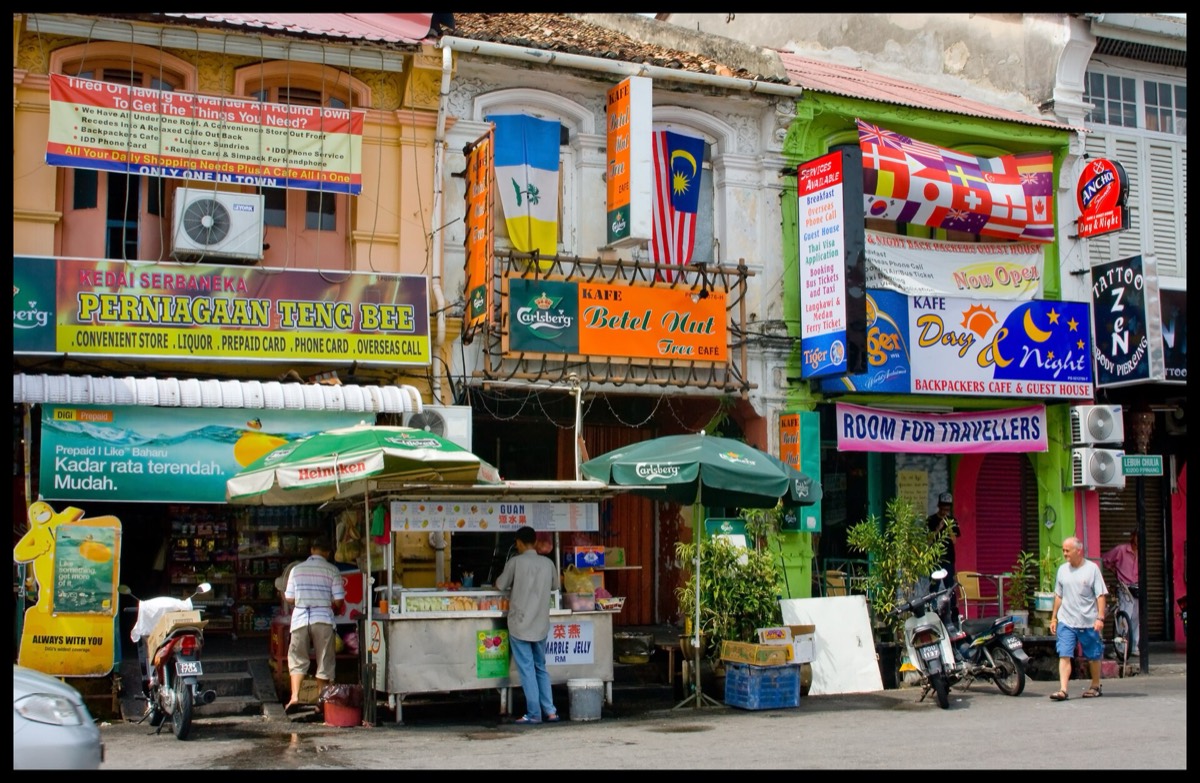

- Area
- Hawker food
- Start from
- Chulia Street, George Town
- Distance
- about 1 km on foot
- Time needed
- an evening
- Best season
- All year; stalls open roughly from 6 pm until late
- Difficulty
- Easy
- Transport
- On foot from anywhere in the heritage zone
- Tickets & rules
- None
Why go
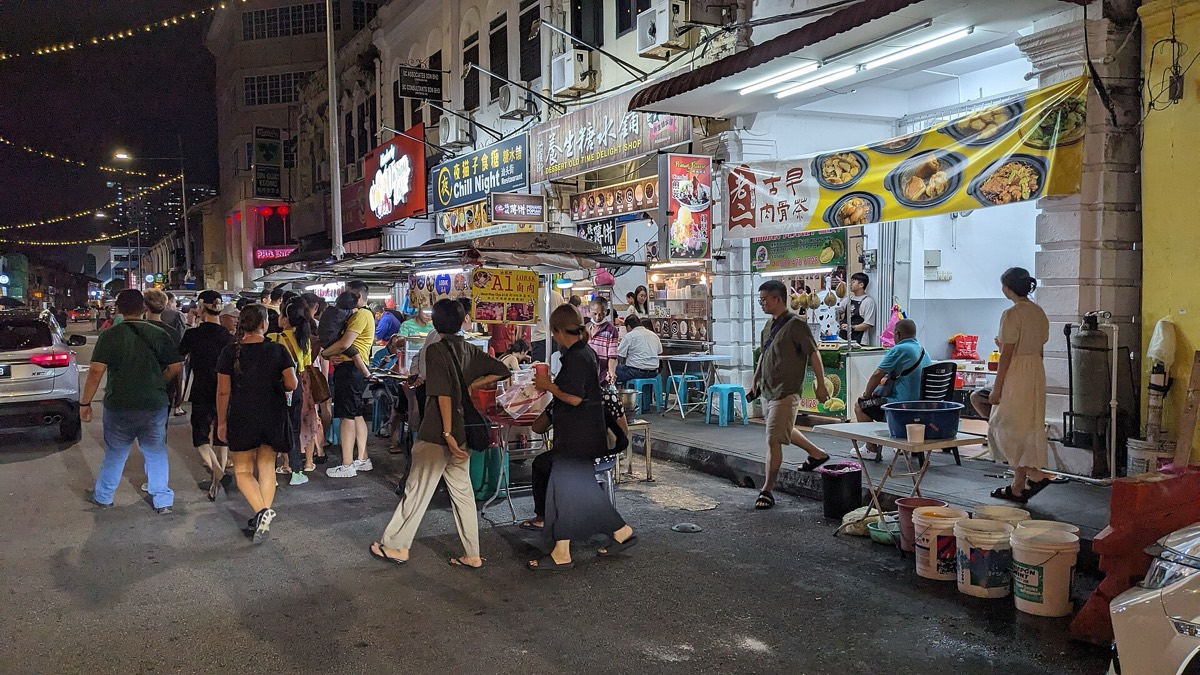
Some of my best evenings in Penang were spent on plastic stools on Chulia Street, eating a plate of wonton noodles while the shophouses glowed above. The street’s night stalls appear at dusk, set up in front of closed shops, and serve until late.
Walk a few minutes to Kimberley Street (Lebuh Kimberley) and the choice expands: koay chiap, a rich herbal duck soup with flat rice rolls; fried oyster omelette; kway teow th’ng, a clear noodle soup; sweet bubur cha cha. The stalls are run by families, often for decades.
This is food as most locals eat it: quick, cheap, hot and unpretentious. Join the queue that looks longest.
The story
Chulia Street takes its name from the Chulia, Tamil Muslim traders from the Coromandel Coast of India who were among the earliest settlers of George Town. Over two centuries it has been a street of Indian moneylenders, Chinese tailors, hotels for sailors and, from the 1970s, cheap guesthouses for backpackers on the overland trail through Asia.
Many hawkers here are second or third generation, using recipes their parents cooked on pushcarts. Penang’s hawkers famously resisted being moved into indoor food courts, and the street stalls survive because locals keep coming back.
Koay chiap, the Teochew duck noodle soup, is a George Town speciality rarely found elsewhere: flat rice sheets rolled like scrolls in a dark, herbal broth with duck, braised egg and offal for the adventurous.
Kimberley Street was named after the Earl of Kimberley, a British colonial secretary, but in Hokkien it’s still known by older names tied to the trades that once filled it, including the noodle makers whose descendants still sell fresh noodles here by day.

Getting there
Start at the junction of Chulia Street and Lebuh Cintra or Love Lane; the stalls string east along Chulia Street. Kimberley Street runs parallel to the south, a short walk away.
Everything is walkable from the heritage zone, and after dinner the streets are well lit and busy.
A suggested plan
- 7:00 pmWonton noodles on Chulia Street, dry with char siu and chilli.
- 7:45 pmWalk to Kimberley Street for koay chiap or oyster omelette.
- 8:30 pmSomething sweet: bubur cha cha, tau suan or a nutmeg juice.
- 9:30 pmWander Love Lane and Muntri Street, where small bars and cafés stay open later.
Where to stay
Chulia Street and Love Lane are the heart of George Town’s budget scene; quieter boutique stays are a block away on Muntri or Stewart Lane.
Good to know
- Stall days off vary; if your favourite is closed, there’s always another.
- Order ‘kaw’ for stronger coffee and ‘kurang manis’ for less sugar.
- Bring tissues; napkins are rare.
- Weeknights are calmer than weekends.
- Watch for motorbikes weaving between tables set up near the road.
- Street food is generally safe, but choose busy stalls where food turns over fast.