Chowrasta Market, nutmeg and Nyonya kuih
An old wet market of spice sacks and pickled nutmeg, second-hand bookstalls upstairs, and pastel Nyonya cakes sold by the piece around the corner.

- Area
- Hawker food
- Start from
- Penang Road, George Town
- Distance
- about 2 km on foot
- Time needed
- half a day
- Best season
- All year; mornings are best
- Difficulty
- Easy
- Transport
- On foot
- Tickets & rules
- None
Why go
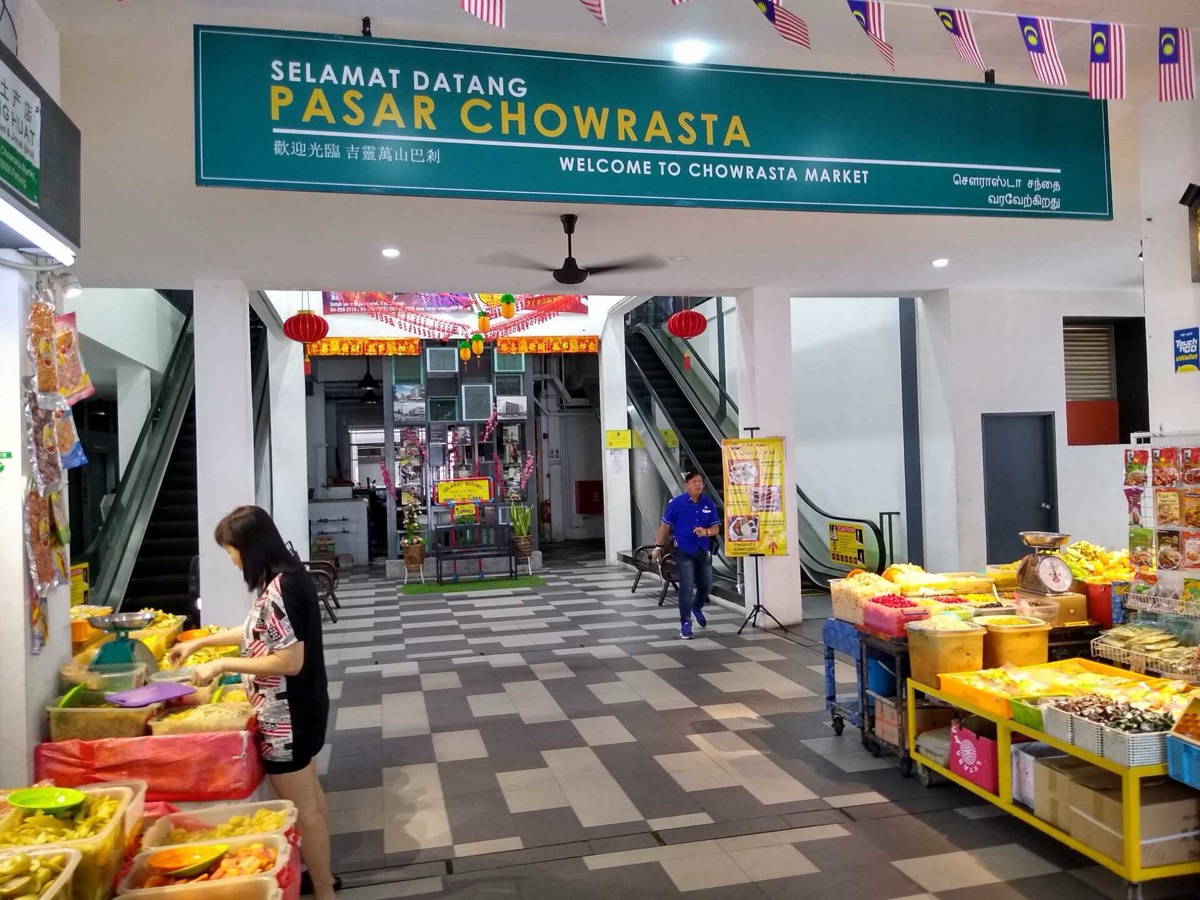
Markets show you how a city really eats. Chowrasta, on Penang Road, has been feeding George Town for well over a century. Downstairs the stalls sell vegetables, fish, dried shrimp and preserved fruit; along the outside, shops sell salted fish, crackers and the island’s famous nutmeg products.
Upstairs, a cluster of second-hand bookstalls is a quiet treasure, with old Malaysian novels, textbooks and magazines.
Close by, a few shops and stalls sell Nyonya kuih, the colourful steamed cakes of the Peranakans: layered kuih lapis, blue-tinted pulut tai tai with kaya, coconut-filled kuih kosui. Buying a mixed bag is the best snack in town.
The story
Chowrasta comes from a Hindi-Urdu word meaning ‘crossroads’ or ‘four roads’, a reminder of the Indian traders who helped shape early George Town. The market building has been rebuilt and renovated over the years, but the trade has continued without a break.
Penang was once at the centre of the world spice trade. The British brought nutmeg and clove seedlings here in the late 18th century, hoping to break the Dutch monopoly in the Moluccas. Plantations spread across the island’s hills, and although the industry faded, nutmeg remains part of Penang life: dried and candied, as balms, and as a sweet-sour iced juice.
Nyonya kuih are the work of patience. Many are coloured with natural ingredients: blue from butterfly pea flowers, green from pandan leaves, brown from palm sugar. Traditional Nyonya kitchens prized fine technique, and a young woman’s skill at making kuih was once considered a measure of her upbringing.
Many of the kuih you see were once made at home for festivals and weddings; now family workshops make them daily, often starting before dawn.
Getting there
Chowrasta Market is on Penang Road, near the junction with Lebuh Kimberley. It’s a short walk from Komtar and the heritage zone.
Campbell Street and the lanes towards Lebuh Kimberley have several old shops selling biscuits, preserved fruit and local snacks.
A suggested plan
- 8:00Walk through the wet market while it’s busiest.
- 9:00Taste nutmeg juice and buy candied nutmeg.
- 9:30Browse the second-hand bookstalls upstairs.
- 10:30Buy a mixed box of Nyonya kuih to eat on a shaded bench.
- 11:30Walk to Campbell Street and Kimberley Street for old biscuit shops.
Where to stay
The market is on the edge of the heritage zone, close to Penang Road and Komtar, where large hotels and guesthouses are mixed together.
Good to know
- Kuih are best eaten on the day they are made.
- Ask to taste before buying preserved fruit.
- Nutmeg balm is a popular local souvenir.
- The market is quieter after lunch, and some stalls close.
- Wet market floors are slippery; wear closed shoes.
- Pickpockets are rare, but keep valuables close in crowded aisles.