Tanjung Rhu: casuarinas and a sandbar
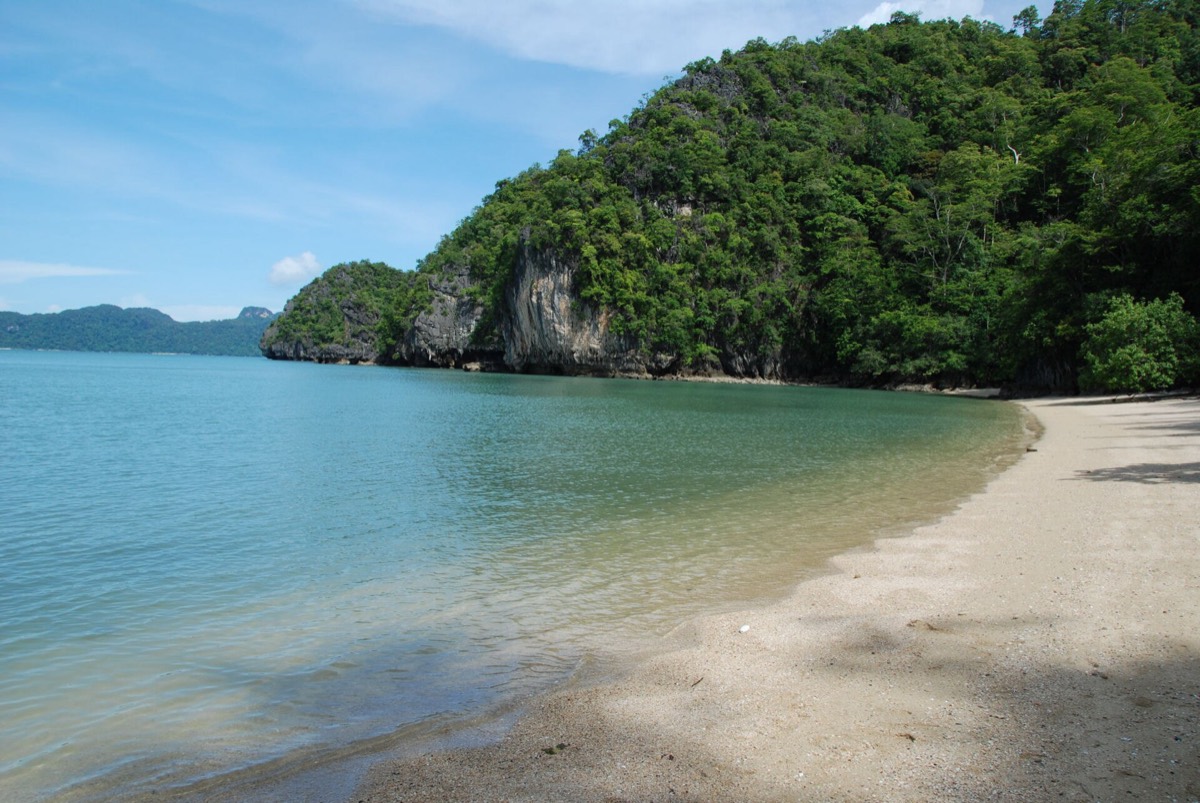
A long white beach shaded by casuarina trees, where at low tide you can wade across to small islands and watch limestone stacks catch the evening light.

- Area
- North coast & Kilim
- Start from
- Tanjung Rhu
- Distance
- walking distance along the beach
- Time needed
- half a day
- Best season
- November – April; calm water and clear skies
- Difficulty
- Easy
- Transport
- Taxi or car; kayak or boat around the headland
- Tickets & rules
- None
Why go
Tanjung Rhu is the most beautiful beach on Langkawi, in my opinion, and still one of the quietest. It is a long curve of fine white sand on the north coast, backed by tall casuarina trees whose needles sigh in the wind. Offshore, a cluster of limestone islands rises straight out of the sea.
At low tide a sandbar appears, connecting the beach to the islet of Pulau Pasir, and you can walk across with water around your knees, looking for sea stars and shells on the way. The water is clear and shallow, ideal for long, lazy swims.
There is very little development here: a couple of luxury resorts, a public beach area with a few food stalls, and boats offering trips into the nearby mangroves and caves. I spent an afternoon reading under the trees and only saw a dozen people all day.
The story
The name means ‘casuarina cape’: rhu is the Malay word for the casuarina, a tree with needle-like leaves that thrives on sandy coasts and gives the beach its soft, rustling shade.
The cape was a fishing area for generations, and some families still work from small boats along the coast. Luxury resorts arrived later, but large parts of the beach remain public, and on weekends you will find local families picnicking under the trees.
The limestone islands offshore are part of the Kilim geoforest area. One of them, often called the Crocodile Rock, has a profile that looks like a crocodile’s head emerging from the water. Boatmen also point out caves and notches that mark old sea levels in the cliffs.
Around the headland, the boatmen’s favourite stop is Hole in the Wall, a narrow gap in the limestone that opens into a sheltered lagoon used as a fish-farming spot. From the open sea you would never guess it was there, which is presumably why fishermen have used it as a refuge from storms for a very long time.

Getting there
Tanjung Rhu is about 30 minutes from Kuah and 45 minutes from Pantai Cenang by car. There is a public car park near the beach stalls.
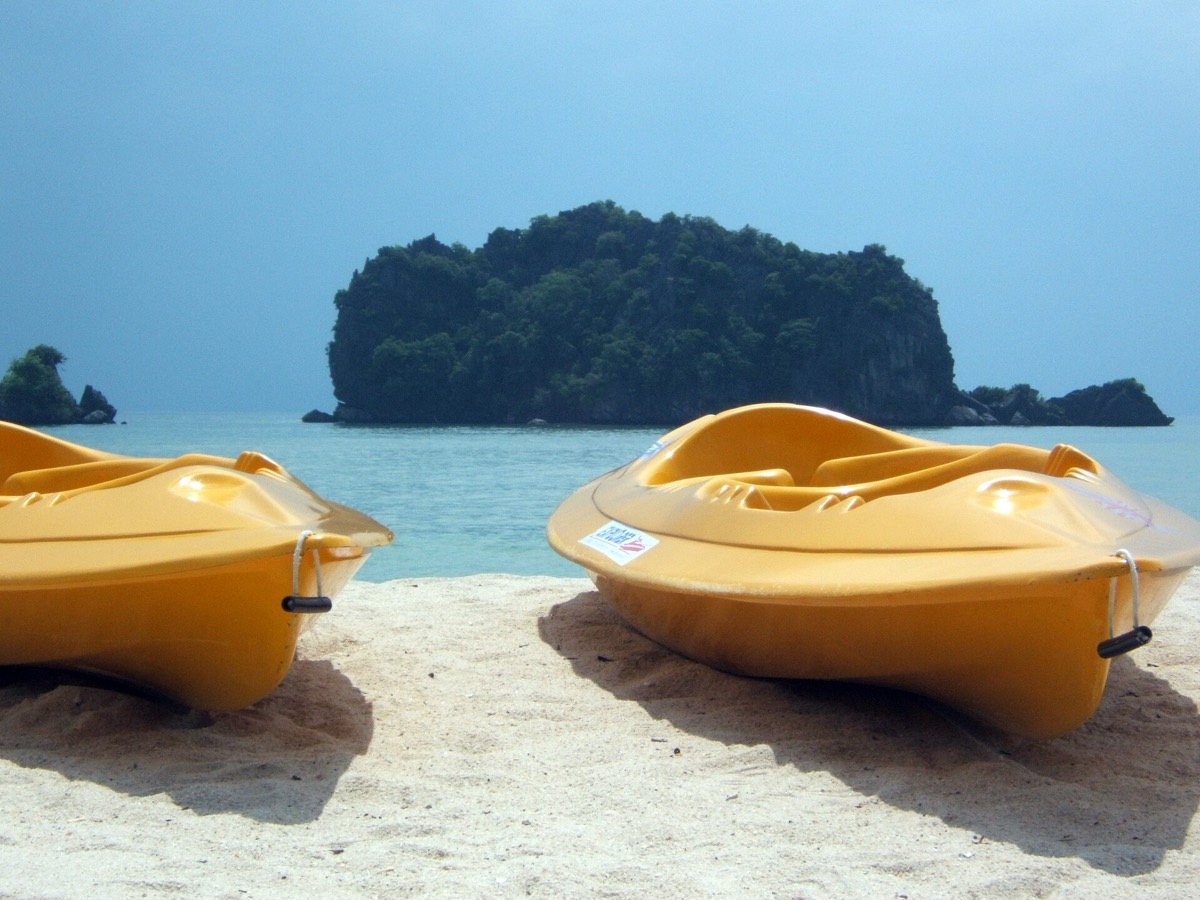
Boat tours from the beach area or the nearby jetty go around the headland into the mangroves and to Hole in the Wall, a narrow passage into a hidden lagoon. Kayak tours are also offered seasonally.
A suggested plan
- MorningArrive early and walk the beach while it is cool and empty.
- Low tideWade across the sandbar to Pulau Pasir; check tide times.
- MiddayLunch at the stalls near the car park or a resort.
- AfternoonBoat or kayak trip around the limestone islands.
- SunsetWatch the light fade over the islands from under the casuarinas.
Where to stay
There are luxury resorts on Tanjung Rhu itself. For a cheaper base, stay in Kuah or near Kilim and drive over, or come from Pantai Cenang for the day.
Good to know
- Check tide tables; the sandbar appears only at low tide.
- Bring snacks and water; food stalls may be closed on weekdays out of season.
- Bring a mat or sarong to sit under the trees.
- Sunset here is softer than on the west coast but no less beautiful.
- Jellyfish can appear in some months; ask locals before swimming.
- Casuarina cones and roots can be sharp underfoot; wear sandals in the trees.
- Do not leave valuables on the beach while you swim.