Kota Belud's Sunday tamu and the Bajau horsemen
North of KK, rice fields lead to a country market where Bajau, Dusun and Chinese traders meet every Sunday, with Mount Kinabalu rising behind the paddies.

- Area
- Islands & west coast
- Start from
- Kota Kinabalu
- Distance
- about 75 km
- Time needed
- half a day
- Best season
- All year; Sunday mornings for the tamu
- Difficulty
- Easy
- Transport
- Car, taxi or minibus from KK
- Tickets & rules
- None
Why go
A tamu is a traditional open market in Sabah, held on a fixed day of the week, and the one at Kota Belud on Sunday mornings is one of the biggest and most colourful. People come from the surrounding villages and hills with buffalo, chickens, betel nut, tobacco, dried fish, rice, fruit, knives and baskets. It's very much a working market for locals, not a show for visitors.
The setting is part of the pleasure. The road from KK runs through the flat Tempasuk plain, where wet rice paddies stretch towards the foothills and, on a clear morning, the jagged granite of Mount Kinabalu stands over everything. Egrets and herons pick through the fields, and in some seasons migratory birds gather in the wetlands.
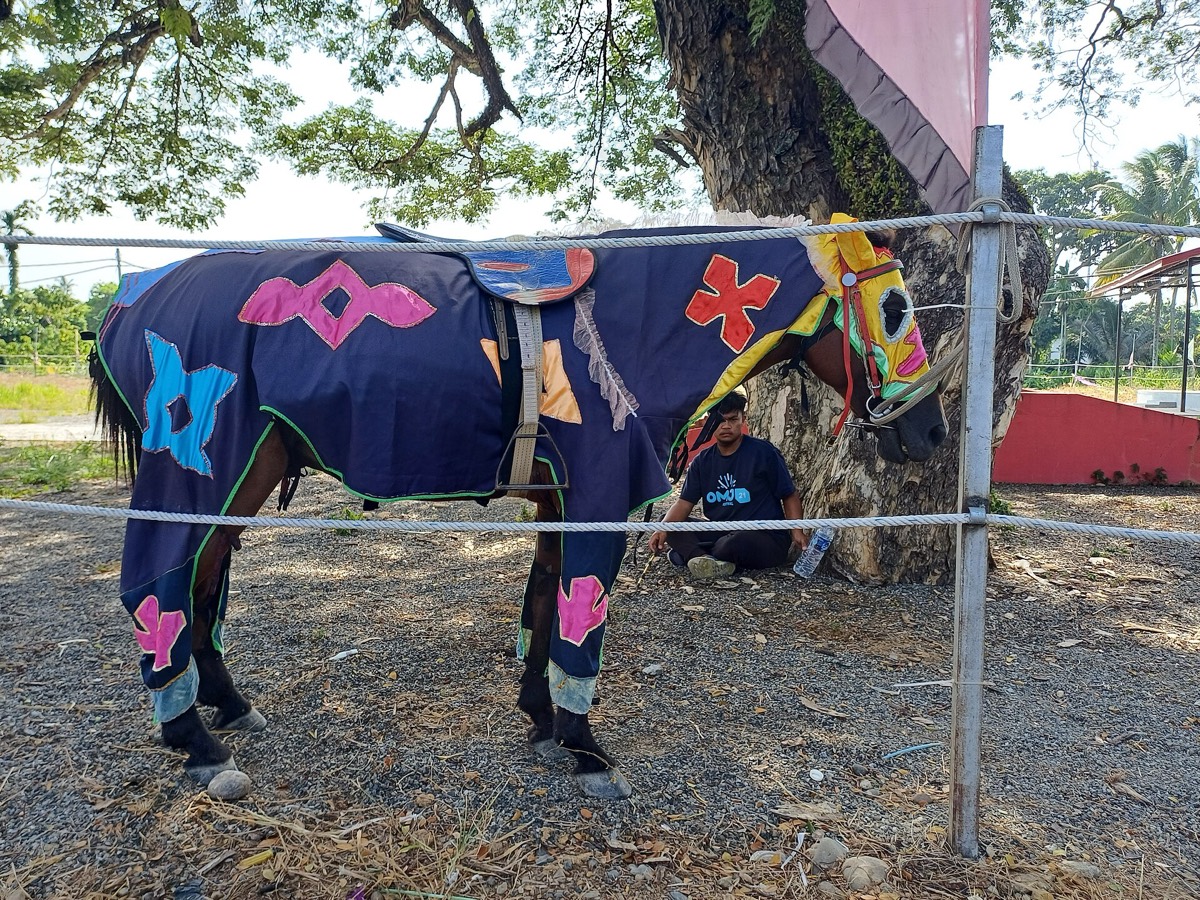
If you're lucky, especially around festivals, you'll see Bajau horsemen in full costume: bright embroidered outfits, decorated ponies, and a sense of style that has given them the nickname 'cowboys of the East'.
The story
The Bajau of the west coast of Sabah are thought to have come from the Sulu and southern Philippines region generations ago and settled on the plains around Kota Belud, where they took up farming, cattle and horse breeding. Over time they became known as skilled riders, and horse culture became part of their identity, unlike the sea-going Bajau of the east coast.
On important occasions, the riders and their horses wear richly decorated costumes with beads, bells and embroidered cloth. The annual Tamu Besar, a bigger version of the weekly market with cultural events, often includes a parade of horsemen, and you may see one at a wedding too.
Tamus have a long history in Sabah. Before roads, they were the main places where hill peoples and coastal peoples traded goods, settled disputes and exchanged news. The colonial administration encouraged them and fixed their days, and many towns in Sabah still hold their tamu on the same day of the week as a hundred years ago.
Getting there
Kota Belud is about an hour and a half north of KK by car on the main road towards Kudat. Minibuses leave from the north bus terminal area in KK and fill up early on Sunday mornings.
Hiring a car or a driver lets you stop in the rice fields on the way for photos of Kinabalu, and continue to a beach or a waterfall afterwards.
A suggested plan
- 6:00 amLeave KK early for the best light on the mountain and the fields.
- 7:30 amArrive at the tamu, have breakfast at a stall.
- 8:00 amWalk the market: livestock section, food, handicrafts and the lively rows of fruit.
- 10:30 amStop on the way back for photos of Kinabalu over the paddies, if clouds allow.
- NoonBack in KK for lunch, or continue north towards Kudat.
Where to stay
Most people visit from KK. If you're heading north to Kudat and the Tip of Borneo, this makes a natural first stop on the way.
Good to know
- Go early; by late morning it's hot and the mountain is usually in cloud.
- Ask before photographing people, and buy something if you take a lot of pictures at one stall.
- Look for the local handwoven cloth called dastar, used for Bajau headdresses.
- Traffic on the main north road can be fast; take care when stopping for photos on the roadside.
- Livestock trading areas are muddy; wear closed shoes.