Klias: proboscis monkeys and firefly trees
A long afternoon drive south of KK brings you to quiet mangrove rivers where proboscis monkeys gather at dusk and, after dark, whole trees flicker with fireflies.

- Area
- Islands & west coast
- Start from
- Kota Kinabalu
- Distance
- about 120 km
- Time needed
- 1 day (afternoon and evening)
- Best season
- All year; fewer mosquitoes in drier months
- Difficulty
- Easy
- Transport
- Organised tour by minivan, then a small river boat
- Tickets & rules
- None beyond the tour price
Why go
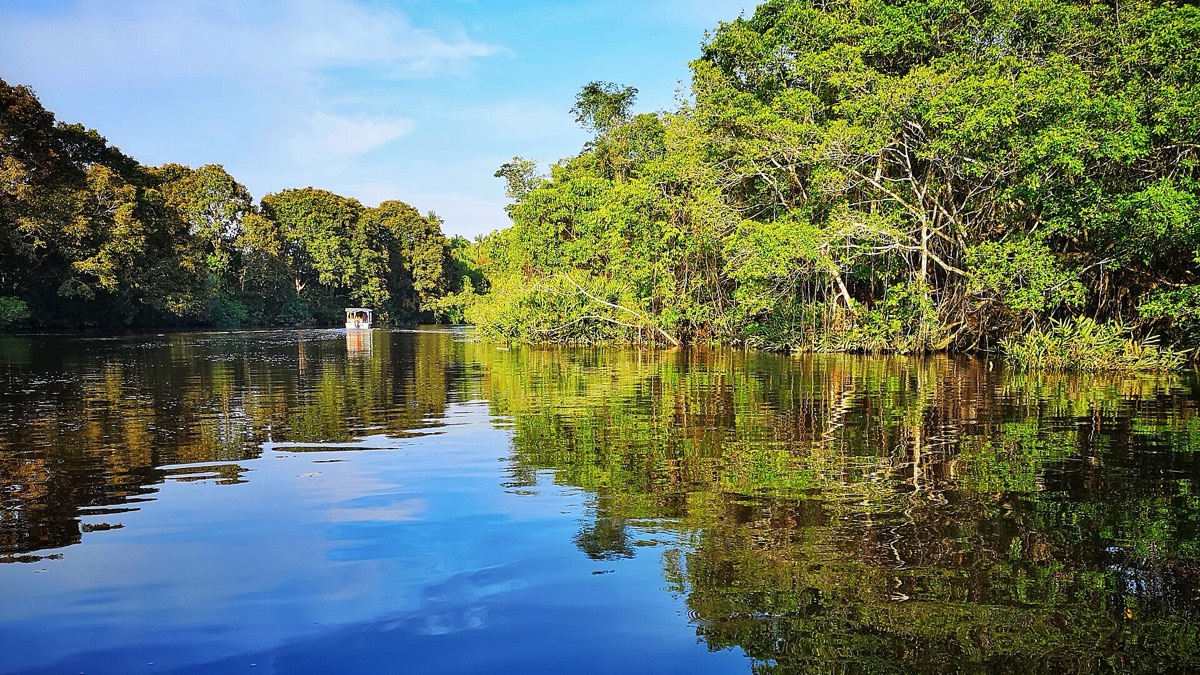
You don't need to fly to the east coast to see Borneo's strangest monkey. On the Klias peninsula, a couple of hours south of the city, slow brown rivers wind through nipa palms and mangroves, and in the late afternoon troops of proboscis monkeys come down to the riverside trees to settle for the night. From a small boat you can watch them leaping between branches, the big males sitting with their absurd noses and pot bellies like old men on a park bench.
Long-tailed macaques, silvered langurs, egrets and kingfishers are often seen too, and sometimes a monitor lizard swimming across. The boat drifts, the engine is cut, and the sounds of the swamp take over.
Then, after dinner, the boat goes out again in the dark. Along the bank, certain trees blink with thousands of synchronous fireflies, pulsing on and off like fairy lights. It's one of those quiet, unexpectedly moving things that you remember long after the bigger sights.
The story
The proboscis monkey is found only on Borneo. Malay speakers sometimes call it 'monyet belanda', the Dutch monkey, a joke about the big noses and red faces of colonial Europeans. Scientists think the male's nose works as a resonating chamber for its honking calls and helps attract females; the bigger the nose, the better the chances.
They live mostly on leaves and unripe fruit, which ferment in their complex stomachs, and that's why they look permanently pot-bellied. They are also excellent swimmers, with partly webbed feet, and can be seen jumping from branches straight into the river, which is not a wise thing to do where there are crocodiles.
The fireflies are a kind of beetle that gathers on particular riverside trees, often the berembang mangrove apple, and flash in unison to attract mates. Nobody fully understands how they synchronise so precisely. Their numbers depend on clean water and undisturbed riverbanks, and in many places in Southeast Asia they are disappearing as mangroves are cleared.
Getting there
Most visitors go with a tour that picks up from KK hotels after lunch, drives about two hours south past Papar and Kimanis, and runs a river cruise on the Garama, Klias or Weston rivers before dinner and a firefly trip after dark. You're back in KK late in the evening.
Driving yourself is possible, but the boat trips are run by operators on the river, and it's simpler to book a package.
A suggested plan
- 1:30 pmPick-up in KK and drive south through rice fields and small towns.
- 3:30 pmTea and snacks at the jetty.
- 4:30 pmRiver cruise in search of proboscis monkeys as they gather for the night.
- 6:30 pmDinner at the riverside lodge or jetty.
- 7:30 pmFirefly cruise in the dark, then the drive back to KK.
Where to stay
Most people return to KK the same night. If you want to linger, a few simple lodges near the rivers offer overnight stays.
Good to know
- Bring binoculars and a camera with a decent zoom; the monkeys are often high in the trees.
- Wear long sleeves and trousers in the evening.
- Don't use flash at the fireflies; it doesn't work, and it disturbs them.
- Ask which river your tour uses; some are quieter than others.
- Mosquitoes and sandflies are fierce at dusk; use repellent generously.
- Keep your hands inside the boat; saltwater crocodiles live in these rivers.