Three days on the Kinabatangan river
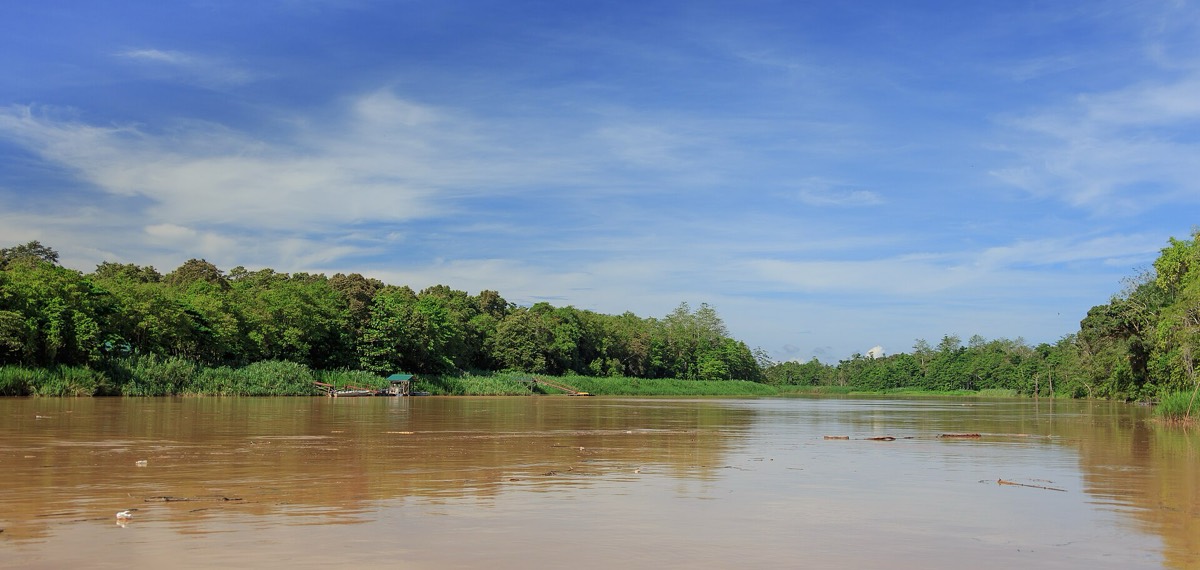
A wide brown river through a ribbon of forest, where proboscis monkeys crash through the treetops at dusk, hornbills fly overhead and pygmy elephants sometimes come down to drink.

- Area
- Kinabatangan & Danum
- Start from
- Sandakan
- Distance
- about 130 km to Sukau or Bilit
- Time needed
- 2–3 days
- Best season
- All year; often best wildlife March – October; floods possible November – February
- Difficulty
- Easy
- Transport
- Road transfer, then small river boats
- Tickets & rules
- Usually included in lodge packages; small conservation fees
Why go
The Kinabatangan is Sabah's longest river, around 560 km from the interior to the Sulu Sea, and its lower reaches are one of the best places in Southeast Asia to see wildlife. It's not a pristine wilderness: oil palm plantations press in on both sides. But the strip of protected forest along the banks has concentrated the animals, so on a good boat trip at dawn or dusk you can see more in two hours than in days of jungle walking.
Proboscis monkeys are almost guaranteed, gathering in riverside trees in the evening. Long-tailed and pig-tailed macaques, silvered langurs, crocodiles and monitor lizards are common. All eight species of Bornean hornbill can be seen here, including the huge rhinoceros hornbill. With luck, an orangutan in a fig tree, and sometimes the Bornean pygmy elephants, which move up and down the river in herds.
Days take on a gentle rhythm: a boat out at dawn in the mist, breakfast, a rest in the heat, another boat in the afternoon, and a night walk or night cruise to look for owls, sleeping kingfishers and tiny frogs.
The story
The Lower Kinabatangan Wildlife Sanctuary was established in the early 2000s, after years of conservation work by local communities and NGOs. It is not one continuous block of forest but a chain of protected patches linked along the river, a 'corridor of life' that conservationists hope to keep connected for animals that need to move.
The Bornean pygmy elephant is smaller and gentler-looking than its mainland cousins, with big ears and a long tail. Whether they're native to Borneo or descended from elephants brought by a sultan centuries ago is still debated, though genetic studies suggest they've been isolated here for a very long time. There are thought to be only a couple of thousand left.
The people of the river are the Orang Sungai, 'river people', who have lived along the Kinabatangan for generations, fishing and farming. Many now work as guides and boatmen, and some villages run homestays. Near Batu Puteh, the cave site of Agop Batu Tulug holds old wooden coffins carved in animal shapes, belonging to ancestors of local communities and dating back centuries.

Getting there
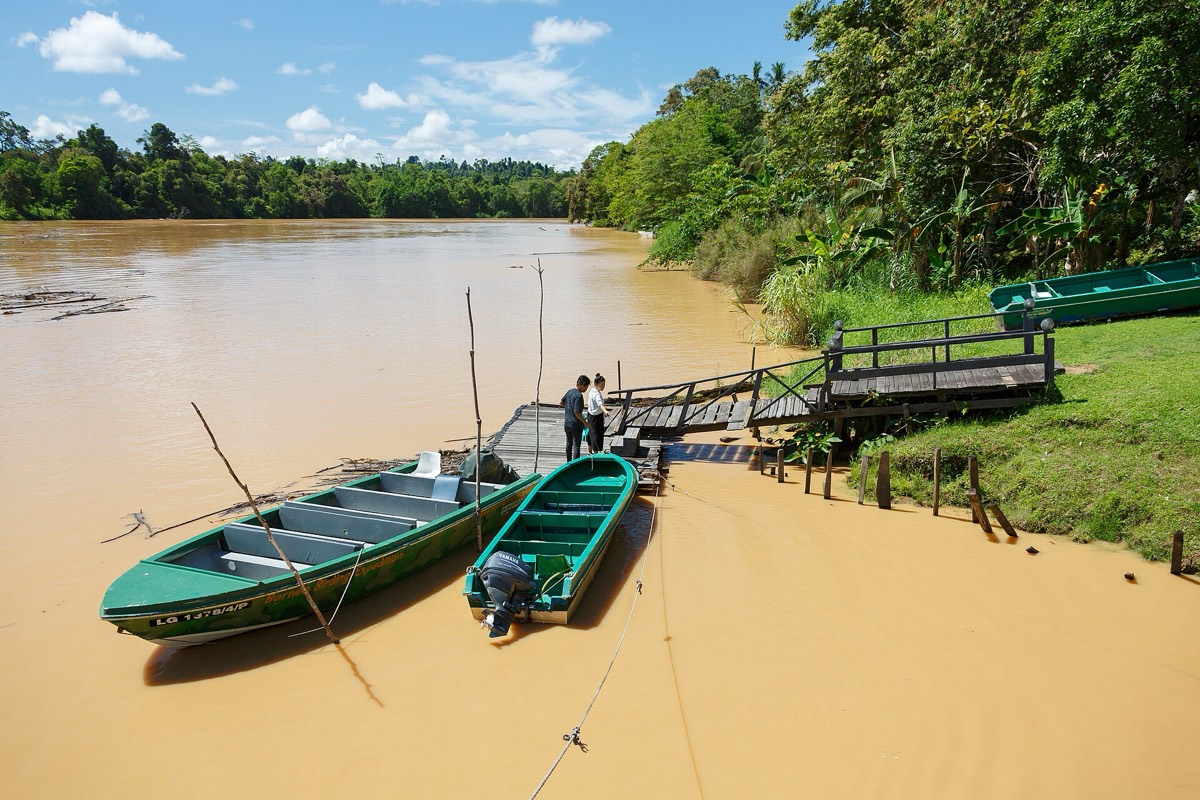
From Sandakan, the drive to Sukau or Bilit takes around two to two and a half hours, often combined with a stop at Gomantong Caves. Most lodges include transfers in their packages. From Sukau, everything is done by boat.
Buses between Sandakan and Lahad Datu or Tawau can drop you at the Sukau junction, but you'll need lodge transport from there.
A suggested plan
- Day 1 afternoonArrive at the lodge; first river cruise at 4 pm for proboscis monkeys.
- Day 1 nightNight cruise or night walk with a guide.
- Day 2, 6 amDawn cruise up a side river or to an oxbow lake for hornbills.
- Day 2 afternoonRest during the heat, then an afternoon cruise looking for elephants.
- Day 3 morningA final dawn cruise, then transfer out to Sandakan, Lahad Datu or Danum.
Where to stay
There are many river lodges around Sukau and Bilit, from simple guesthouses to comfortable eco-lodges, plus village homestays near Batu Puteh. Packages usually include meals, cruises and transfers.
Good to know
- Bring binoculars; the animals are often in the high canopy.
- Long sleeves and a rain jacket for the boat.
- Ask your lodge to share any recent elephant sightings; they move a lot.
- Choose a lodge with experienced local guides, not the cheapest one.
- Saltwater crocodiles live in the river; never swim, and keep away from the bank edges.
- Never approach elephants, especially mothers with calves.
- Leeches on forest walks after rain; leech socks help.