Danum Valley: into ancient rainforest
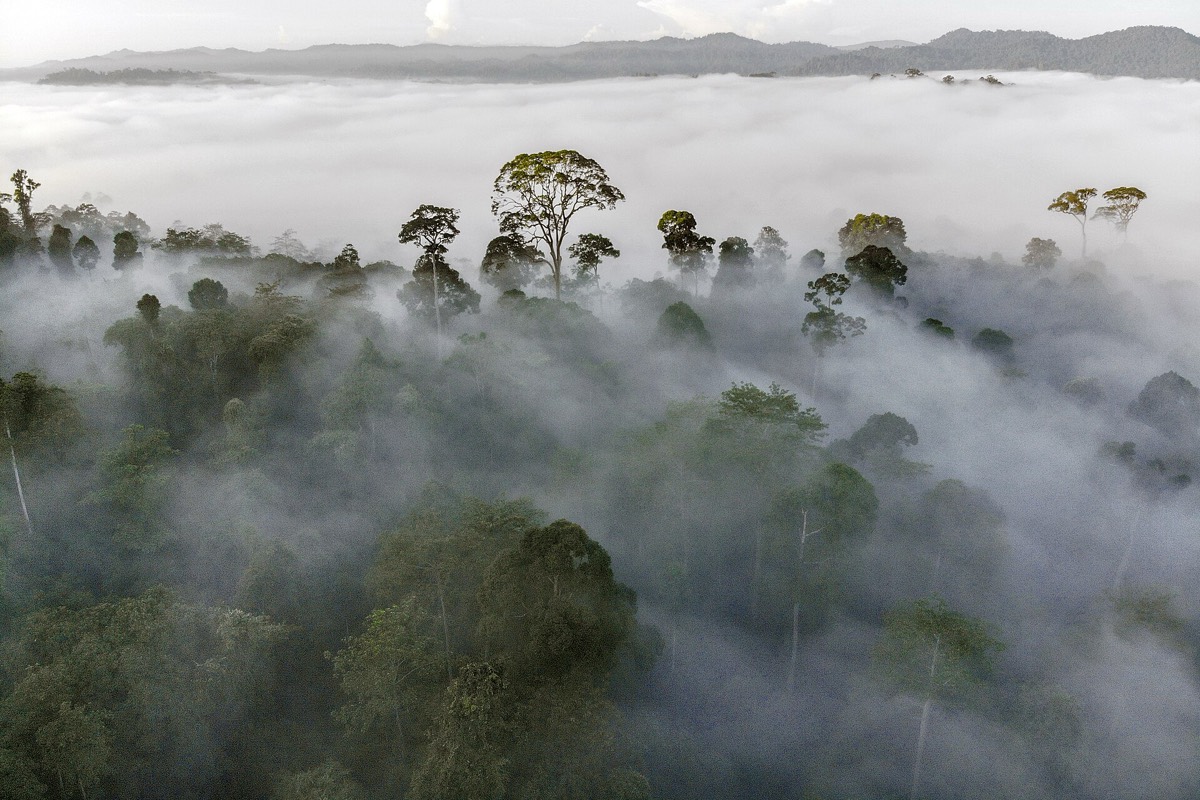
Some of the oldest and tallest rainforest on earth, where you might wake to gibbons calling, find an orangutan nesting by the trail and walk under trees taller than a thirty-storey building.

- Area
- Kinabatangan & Danum
- Start from
- Lahad Datu
- Distance
- about 80 km on forest roads
- Time needed
- 3–4 days
- Best season
- All year; drier months roughly March – September
- Difficulty
- Moderate
- Transport
- Flight to Lahad Datu, then 4WD transfer
- Tickets & rules
- Conservation fees; stays must be pre-booked
Why go
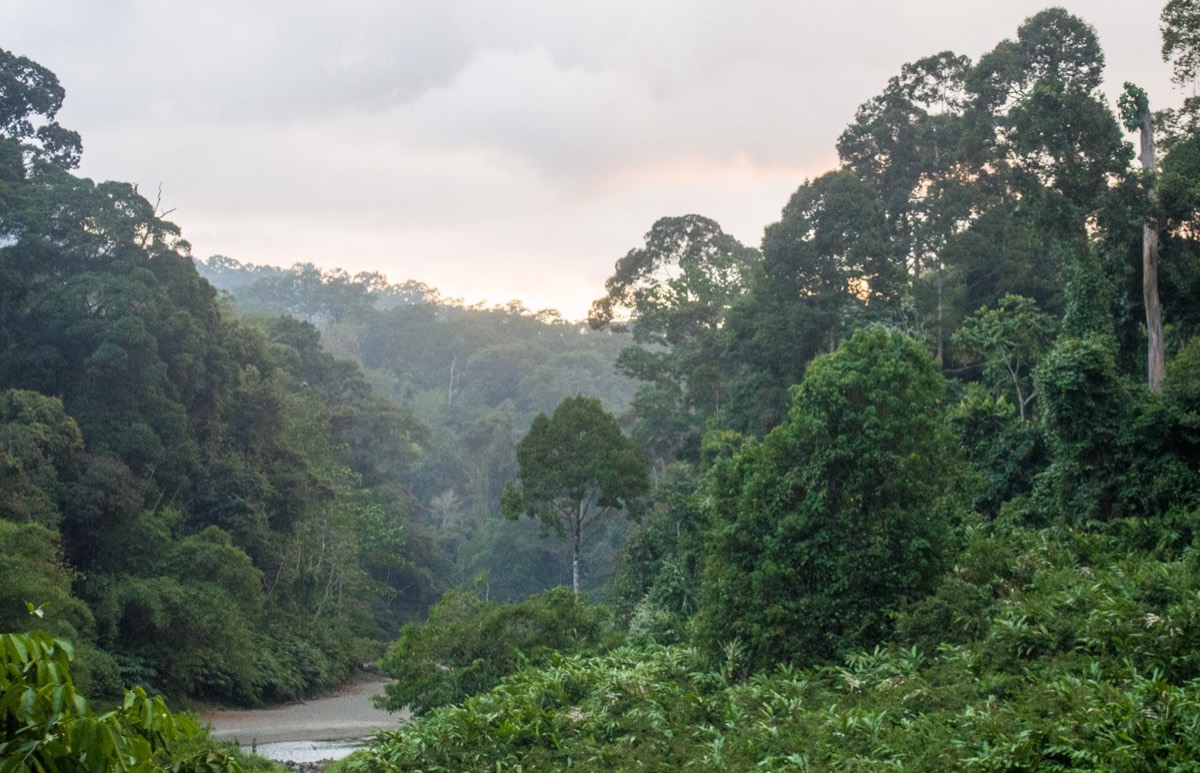
Danum Valley is the rainforest of documentaries: towering dipterocarp trees, buttress roots taller than a person, lianas hanging from the canopy, and an almost total absence of human presence. The protected conservation area covers around 440 square kilometres of lowland forest that has never been logged.
Wildlife is everywhere, if shy. Gibbons sing in the early morning. Orangutans are seen often. Red leaf monkeys, giant squirrels, flying lizards, pheasants and hornbills are common. On night drives, look for slow lorises, civets, flying squirrels and, very occasionally, a clouded leopard. Guided walks teach you to read the forest: the smell of a civet, a gibbon's call, the marks of a sun bear on a trunk.
There's a canopy walkway, trails to waterfalls and pools where you can swim, and quiet viewpoints over a sea of green. Above all, it is a place for listening and slowing down.
The story
Danum was set aside for conservation and research by Yayasan Sabah, a state foundation that held huge logging concessions. Its research station, the Danum Valley Field Centre, opened in the 1980s and has hosted scientists from all over the world. Much of what we know about Bornean rainforests comes from studies here.
In 2019, scientists using airborne laser scanning found a yellow meranti tree in Danum around 100 metres tall, then the tallest tropical tree known. It was named Menara, 'tower' in Malay. Climbing it, they found that it's not just the height but the scale of life up there that is remarkable: orchids, ferns and insects found only in the canopy.
Near the main lodge, a trail leads to a burial site in the cliffs, where old wooden coffins of local ancestors rest in a rock shelter. Guides ask visitors to approach quietly and with respect, because for local people it's not an exhibit but a place of the dead.

Getting there
Fly to Lahad Datu from KK (about 50 minutes). From there, a pre-arranged 4WD transfer takes around two to three hours on forest roads to the field centre or the lodge.
There's no independent access: you must book a stay at the field centre or the lodge, which includes transfers and guides.
A suggested plan
- Day 1Fly to Lahad Datu, drive in, first afternoon walk and a night drive.
- Day 2 dawnCanopy walkway at sunrise; listen for gibbons.
- Day 2A long guided hike to a waterfall or viewpoint, swim in a jungle pool.
- Day 3The burial site trail, more walks, a final night walk.
- Day 4Early birdwatching, then transfer back to Lahad Datu.
Where to stay
There are two main options: the Danum Valley Field Centre, simple and research-oriented, and the more expensive Borneo Rainforest Lodge. Both must be booked in advance; transfers and meals are included.
Good to know
- Book months ahead; beds are limited.
- Bring quick-drying clothes, leech socks and a headlamp.
- Light binoculars are essential.
- There's little or no mobile signal; plan accordingly.
- Leeches are everywhere after rain; they're harmless but persistent.
- Stay with your guide on trails; it's easy to get lost.
- Bees and wasps can be aggressive near nests; listen to your guide.