Gomantong Caves: swiftlets, nests and bats at dusk
Walk into a huge limestone cave where swiftlets nest by the million, harvesters climb rattan ladders to the roof, and at dusk a river of bats pours out into the sky.

- Area
- Sandakan & Sepilok
- Start from
- Sandakan or Sukau
- Distance
- about 110 km from Sandakan
- Time needed
- half a day
- Best season
- All year; nest harvests roughly February – April and July – September
- Difficulty
- Moderate
- Transport
- Car or tour, often on the way to the Kinabatangan
- Tickets & rules
- Entry fee; hard hat sometimes required
Why go
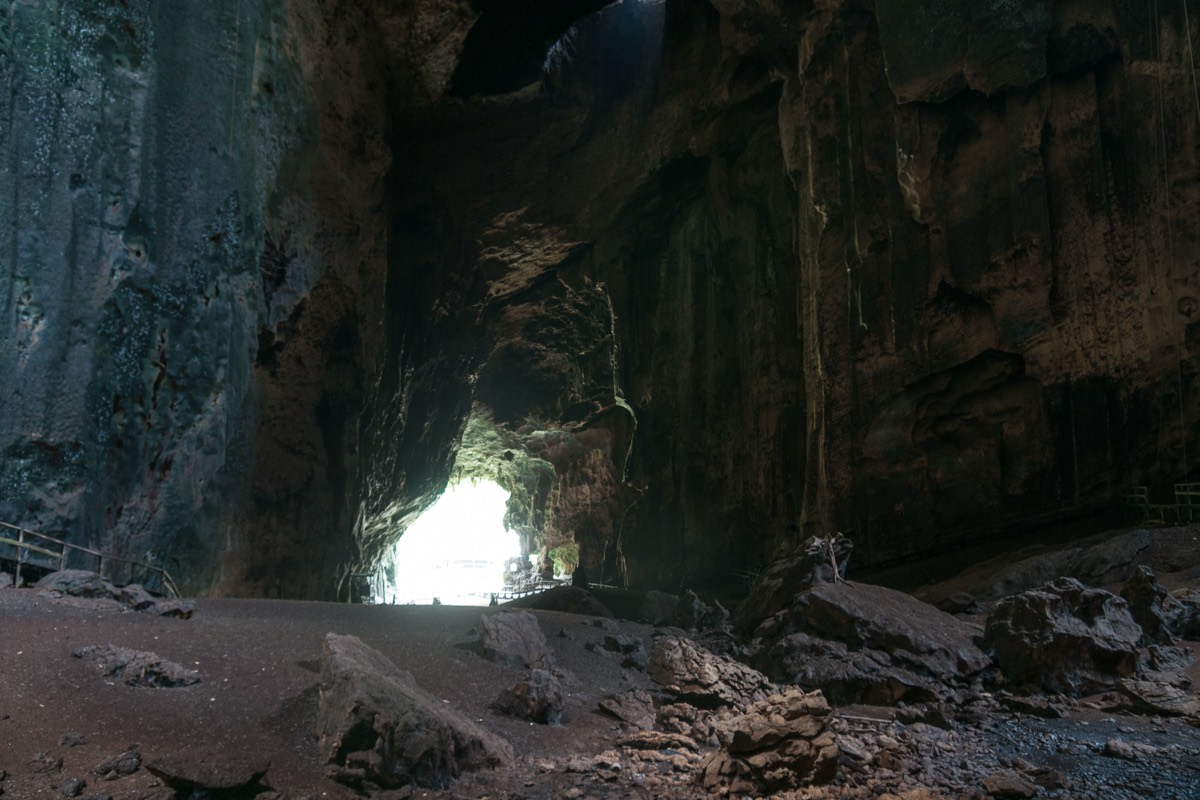
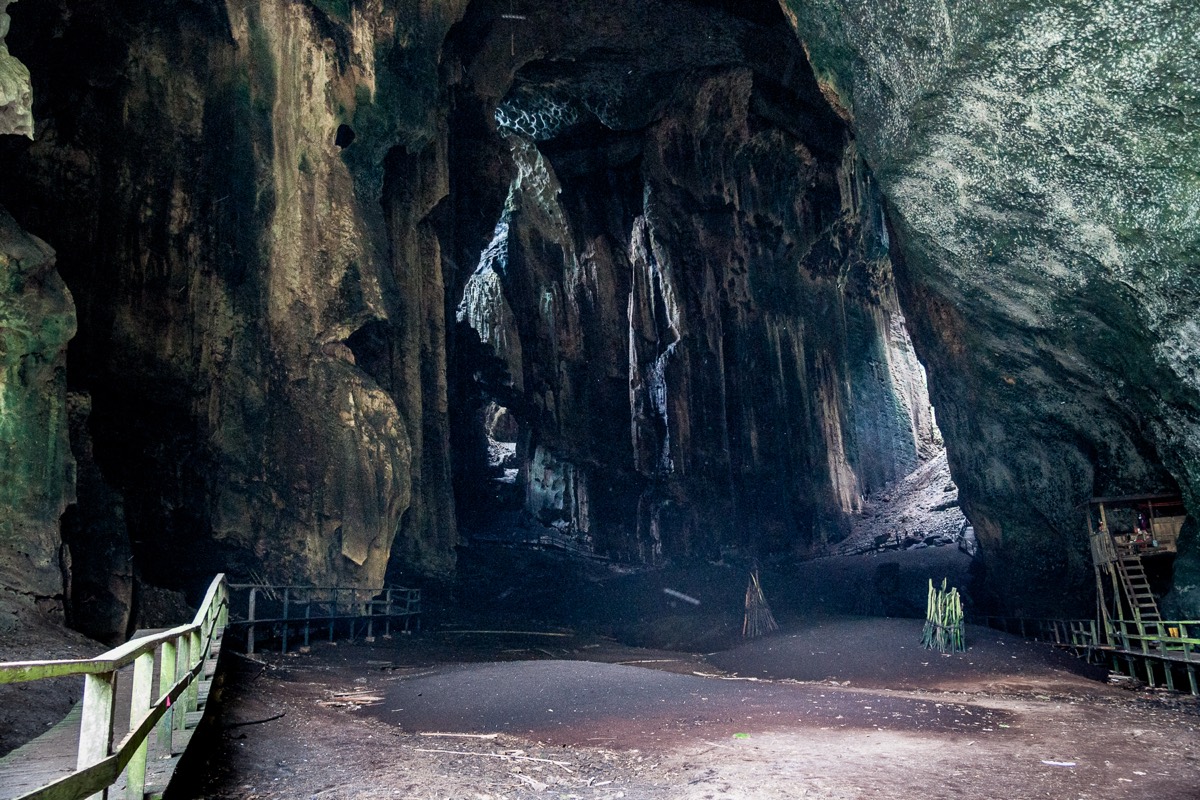
Gomantong is the largest cave system in Sabah, and the main cave, Simud Hitam, is an astonishing place: a vast dark chamber, lit by shafts of sunlight from holes high in the roof, where thousands of swiftlets dart and click in the dark. A boardwalk leads inside, across a floor of guano crawling with cockroaches and beetles. It's smelly, extraordinary, and unforgettable.
What draws people here, apart from the scale, is the bird's nest harvest. The swiftlets build their nests from their own saliva, and these nests are a prized delicacy in Chinese cuisine. In season, harvesters climb up rattan ladders and ropes to the cave roof, sixty metres or more above the floor, to collect them by candlelight and torch.
Stay until dusk if you can. Hundreds of thousands of bats spiral out of the cave mouth, and bat hawks swoop in to catch them, while swiftlets stream back inside. It's one of the great natural spectacles of Borneo.
The story
Bird's nests have been harvested in Gomantong for centuries; Chinese traders were buying them from Bornean coastal peoples long before Europeans arrived. In the colonial period, the rights to harvest were carefully controlled and auctioned, and today the Sabah Wildlife Department oversees the harvest seasons to protect the birds.
The harvesting rights in Gomantong have traditionally belonged to local families, many from the Orang Sungai communities of the Kinabatangan. The work is incredibly dangerous: men climb in the dark on swaying ladders, often without modern safety gear, and the skills pass down within families. Most people find watching it much scarier than the cockroaches.
Edible nest swiftlets build white nests that fetch high prices; black-nest swiftlets mix in feathers and produce cheaper nests that need more cleaning. In Sabah you'll also see many concrete 'swiftlet houses' in towns, built to attract birds and farm nests, a modern industry that grew out of the old cave trade.

Getting there
Gomantong is about two hours by road from Sandakan, and about 30 minutes from Sukau on the Kinabatangan. Most visitors see it as part of a Kinabatangan tour, stopping on the way in the late afternoon.
There's no public transport to the caves; you need a car, driver or tour.
A suggested plan
- MorningLeave Sandakan or Sepilok after the orangutan feeding.
- 2:00 pmArrive at Gomantong; short walk through the forest to the cave.
- 2:30 pmWalk the boardwalk inside Simud Hitam.
- 4:00 pmLook for orangutans and birds on the forest trail outside the cave.
- 5:30 pmWatch the bats leave the cave, then continue to the Kinabatangan.
Where to stay
Most visitors stay at river lodges in Sukau or Bilit on the Kinabatangan, a short drive away.
Good to know
- Wear closed shoes and clothes you won't mind washing.
- Bring a torch or headlamp.
- A hat helps; things drop from above.
- Don't hold the handrails if you can avoid it; they're coated in guano.
- The boardwalk is slippery and the cave floor is crawling with insects.
- Don't climb anything; the harvest ropes are not for visitors.
- People with breathing problems may find the ammonia smell difficult.