Sandakan: a heritage walk and the memorial park
In the old capital of British North Borneo, stone steps lead past a Chinese temple and a colonial church to the house of a writer who named Sabah, and later to a quiet park that remembers a terrible war.

- Area
- Sandakan & Sepilok
- Start from
- Sandakan town
- Distance
- about 3 km on foot, plus a short taxi ride
- Time needed
- 1 day
- Best season
- All year
- Difficulty
- Easy
- Transport
- On foot in town; taxi to the memorial park
- Tickets & rules
- Small entry fees at Agnes Keith House; none at the memorial park
Why go
Sandakan is a working port town, not a pretty one at first sight, but it has more history than anywhere else in Sabah. A marked heritage trail starts in the centre and climbs the hill behind the town: a long stone staircase, the Sam Sing Kung temple, the stone church of St Michael and All Angels, and up to Agnes Keith House, with its veranda and gardens looking out over the bay.
Next door, a colonial-style tea house serves scones and tea on the lawn, which is absurd and lovely on a hot afternoon. From the hill you can see the bay, the fishing boats and the stilt villages along the shore.
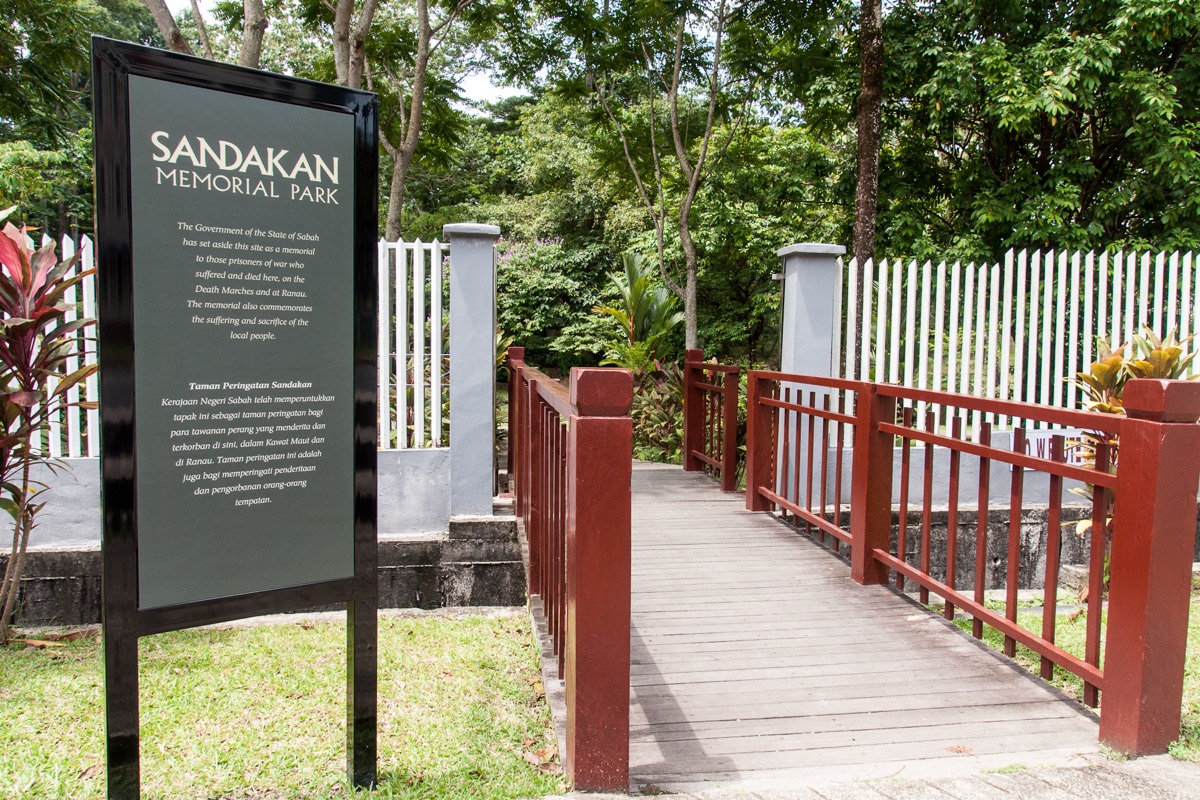
The Sandakan Memorial Park, a short taxi ride out of town, is built on the site of the prisoner-of-war camp from which the death marches began. It's peaceful now, with a small museum, rusted machinery and lawns among the trees. Many visitors find it one of the most moving places in Borneo.
The story
Sandakan was founded in the 1870s and became the capital of British North Borneo in 1883. It grew rich on timber, bird's nests and trade with Hong Kong, and was nicknamed 'Little Hong Kong'. Its population was largely Chinese, and the town had cinemas, clubs and grand houses. All of this was destroyed in 1945, and the capital moved to Jesselton after the war.
Agnes Keith, an American writer, lived here with her husband Harry, the colony's conservator of forests, from the 1930s. Her book 'Land Below the Wind' (1939) gave Sabah its lasting nickname. During the war, the family was interned by the Japanese, an experience she wrote about in 'Three Came Home'. The present house is a reconstruction of their wooden home, which was destroyed in the war, and now holds a small museum.
The prisoner-of-war camp here held around 2,400 Australian and British soldiers. In 1945, those who could still walk were marched towards Ranau; the rest died in the camp. Of all of them, only six survived. Every year on Anzac Day, 25 April, a dawn service is held at the memorial park, attended by families who still come from Australia.
Getting there
Sandakan is reached by flight from KK (about 45 minutes) or by a long bus ride. The heritage trail starts near the town centre and the clock tower; follow the signs. The memorial park is about 12 km from town in Taman Rimba; take a taxi or ride-hailing car.
Sepilok is close by, so it's easy to combine the two on consecutive days.
A suggested plan
- 9:00 amStart the heritage trail in the centre; climb the 100-step staircase.
- 10:00 amSam Sing Kung temple and St Michael and All Angels Church.
- 11:00 amAgnes Keith House and the tea house garden.
- 1:00 pmLunch at a seafood restaurant in town or by the bay.
- 3:00 pmSandakan Memorial Park and its small museum.
Where to stay
Sandakan town has hotels near the waterfront, and Sepilok's jungle lodges are only half an hour away. Many travellers stay in Sepilok and come into town for the day.
Good to know
- The Puu Jih Shih Buddhist temple on another hill has good views over the town and bay.
- Sandakan is known for seafood; ask for fresh prawns and crabs by weight.
- Read some Agnes Keith before you go.
- The midday heat on the trail is serious; bring water and a hat.
- Some streets near the market are busy and chaotic; mind traffic and uneven pavements.