Wat Phou, the Mountain Temple of Champasak
A ruined Khmer sanctuary climbing a mountain slope towards a sacred spring, older than Angkor Wat, with views across the Mekong plain.

- Area
- Champasak
- Start from
- Pakse or Champasak town
- Distance
- about 45 km from Pakse; 10 km from Champasak town
- Time needed
- half a day to 1 day
- Best season
- November – February; early morning all year
- Difficulty
- Moderate
- Transport
- Bicycle from Champasak town, motorbike or car from Pakse
- Tickets & rules
- Entry ticket; modest dress
Why go
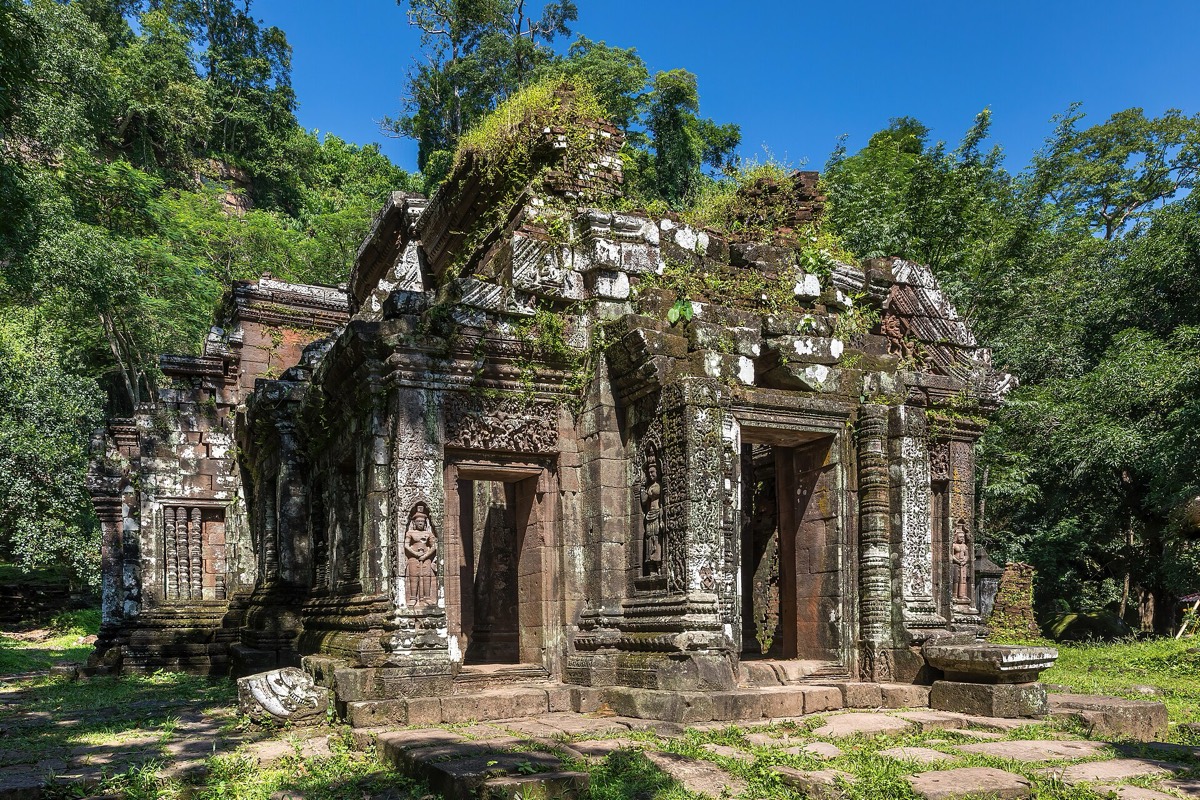
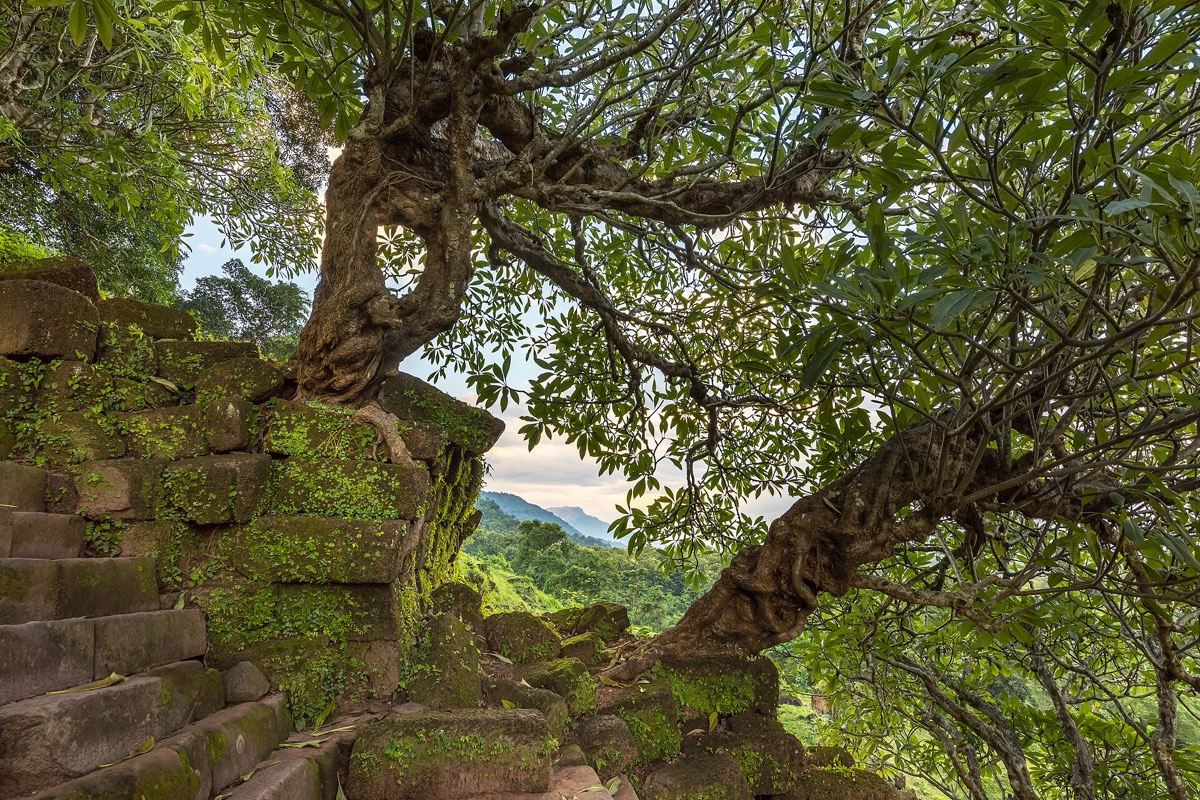
Wat Phou is the great sight of southern Laos and one of the most atmospheric places in the region. A long ceremonial avenue lined with stone boundary markers leads past two ruined palaces, then stairs climb the hillside through frangipani trees to a sanctuary at the foot of a cliff.
The setting is everything. Above the temple rises Phou Kao, whose peak has a natural stone shape that ancient worshippers saw as a lingam, symbol of the god Shiva. Below, the plain stretches to the Mekong, with rice paddies and baray reservoirs catching the light.
Come early and you may have the upper terraces almost to yourself, with only the sound of birds and the trickle of the sacred spring.
The story
The site was sacred long before the Khmer empire reached its height. There was a temple here by the fifth century, linked to an ancient city on the riverbank nearby. Most of what stands today dates from the eleventh to thirteenth centuries, when the region was part of the Khmer world and connected by road to Angkor.
The sanctuary was dedicated to Shiva, and water from a spring at the foot of the cliff was channelled into the temple to bathe the lingam. Later, the region became Buddhist, and the sanctuary was converted; Buddha images now sit where Hindu images once stood.
In 2001 UNESCO inscribed Wat Phou and the surrounding cultural landscape as a World Heritage Site, noting how the whole plain was designed to reflect the relationship between nature and humanity. Each year around the full moon of the third lunar month, usually in February, the Boun Wat Phou festival brings pilgrims, music and markets.

Getting there
From Pakse there are two ways to reach the west bank: cross the Lao-Japanese bridge and follow the road south along the river, or ride south on Route 13 to Ban Muang and take the small car ferry across to Champasak town. Wat Phou is about 10 km beyond the town. Many people base themselves in Champasak and cycle there in under an hour on a flat road.
There is a small museum at the entrance and, depending on the season, a shuttle cart along the first stretch of the avenue.
A suggested plan
- 7:00Arrive at opening to beat the heat and the tour groups.
- 7:30Walk the processional avenue and look at the ruined palaces.
- 8:30Climb the stairs to the upper sanctuary; look for carvings of Indra and other deities.
- 9:30Visit the sacred spring and the rock carvings of the elephant and crocodile nearby.
- 10:30Visit the site museum, then return to Champasak for lunch.
Where to stay
Champasak town, with its riverside guesthouses, is the most atmospheric base. Pakse also works for a day trip, but you will lose the quiet early-morning hours.
Good to know
- Bring water and a hat; the stairs are steep and sun-exposed.
- Wear shoes with good grip; stone steps are uneven and worn.
- Allow time for the hidden carvings to the north of the sanctuary.
- If you come during the festival, book accommodation well ahead.
- Steps are steep and uneven, especially on the descent.
- Do not climb on carvings or fragile walls; this is a protected site.
- Snakes occasionally appear in the grass; stay on paths.