Champasak Town by Bicycle
A single sleepy street of French villas and wooden houses along the Mekong, best explored at bicycle pace with stops for temples, coffee and long river views.

- Area
- Champasak
- Start from
- Champasak town
- Distance
- 10–25 km by bicycle
- Time needed
- 1 day
- Best season
- November – March; mornings and late afternoons all year
- Difficulty
- Easy
- Transport
- Rented bicycle; ferry from Ban Muang if arriving from Route 13
- Tickets & rules
- None, apart from temple donations
Why go
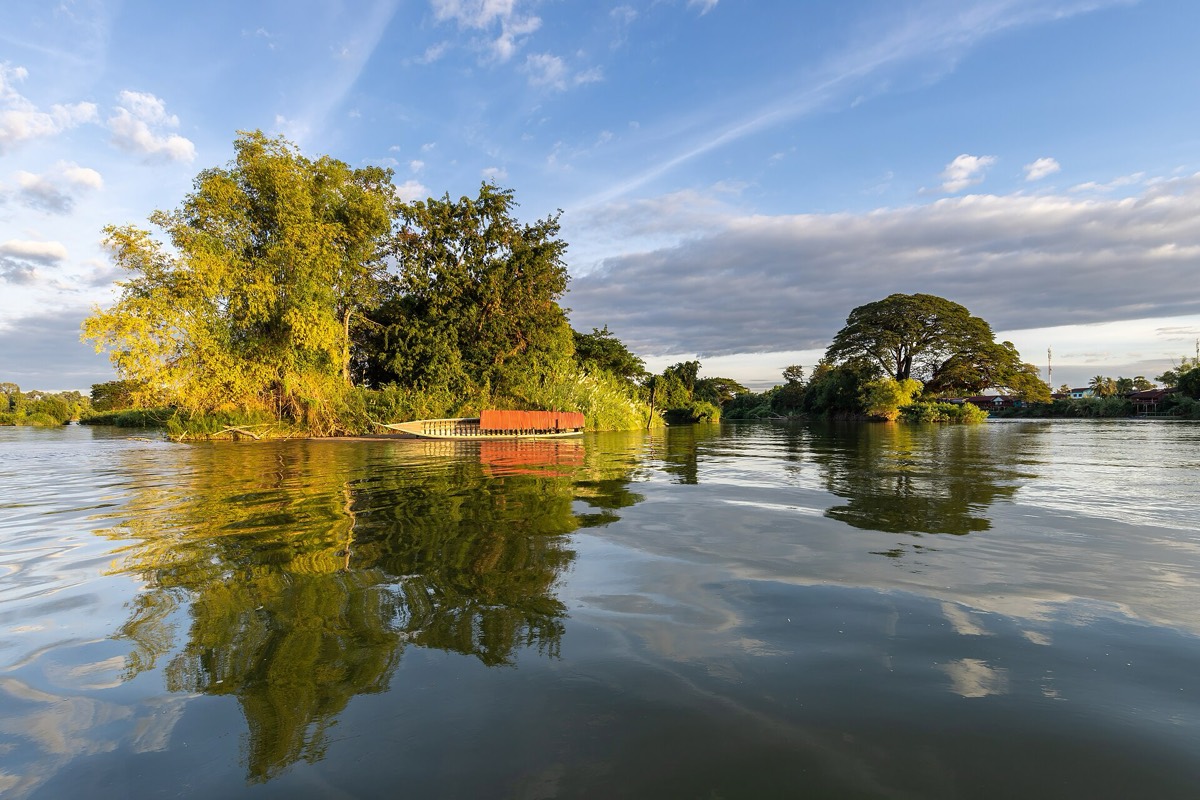
Champasak is less a town than a long, gentle line of houses strung along the west bank of the Mekong, with rice paddies behind and the mountain of Wat Phou on the horizon. It was once the seat of a kingdom, and now it is one of the most peaceful places I know in Laos.
A bicycle is all you need. Ride north or south along the riverside road and you pass colonial villas with tall shuttered windows, monasteries where novices play football, schoolchildren on bikes far too big for them and old men mending fishing nets in the shade.
There is not much to do, which is the point. You stop where you like, drink a cold coffee, watch the river, and in the late afternoon ride out into the paddies as the light turns gold over the ancient baray reservoirs.
The story
After the Lao kingdom of Lan Xang split apart around 1700, the south became the Kingdom of Champasak, with its royal seat in this area. It became a vassal of Siam in the eighteenth century, and later part of French Indochina. The royal family kept a ceremonial role into the twentieth century; Prince Boun Oum, who began the palace in Pakse, belonged to this line.
Two ornate villas near the centre of town are often pointed out as having belonged to the royal family. Elsewhere, look for the wooden houses on stilts with carved gables, the small Wat Thong where members of the royal family have been commemorated, and the riverside temples whose stupas have been rebuilt and repainted over the centuries.
The plain around Champasak also holds traces of a much older city, often called Shrestapura, which archaeologists link to the early Khmer and pre-Khmer kingdoms of the fifth century. Earthworks and old walls can still be traced in the fields, though few signs explain them.

Getting there
From Pakse, take a bus or songthaew south on Route 13 to Ban Muang and cross by the small ferry to Champasak, or ride the west-bank road from the Lao-Japanese bridge. Bicycles are rented from most guesthouses for a small daily fee.
Heading south along the riverside road, you can ride as far as you like; heading inland, small lanes lead through rice fields towards the baray and Wat Phou.
A suggested plan
- 7:00Watch the alms round on the main street from a respectful distance.
- 8:00Breakfast by the river, then cycle north past the old villas.
- 10:00Visit a riverside monastery and its old stupa.
- 12:00Lunch and a long rest in a hammock.
- 16:00Cycle inland through the paddies to the ancient baray as the light softens.
- 18:00Sunset over the Mekong from your guesthouse terrace.
Where to stay
Guesthouses and a few boutique hotels line the riverside road, many in restored villas or wooden houses with terraces facing the Mekong. Choose one with a river view; it is the main entertainment in the evening.
Good to know
- Check bicycle brakes and tyres before setting out.
- There may be only one or two ATMs; bring enough cash from Pakse.
- Combine this route with Wat Phou the next morning, cycling out early.
- Evenings are very quiet; restaurants close early.
- Ride on the right, and watch for trucks on the narrow road.
- Mosquitoes are fierce at dusk near the paddies; use repellent, as dengue occurs in Laos.