The Golden Buddha on Phou Salao at Sunset
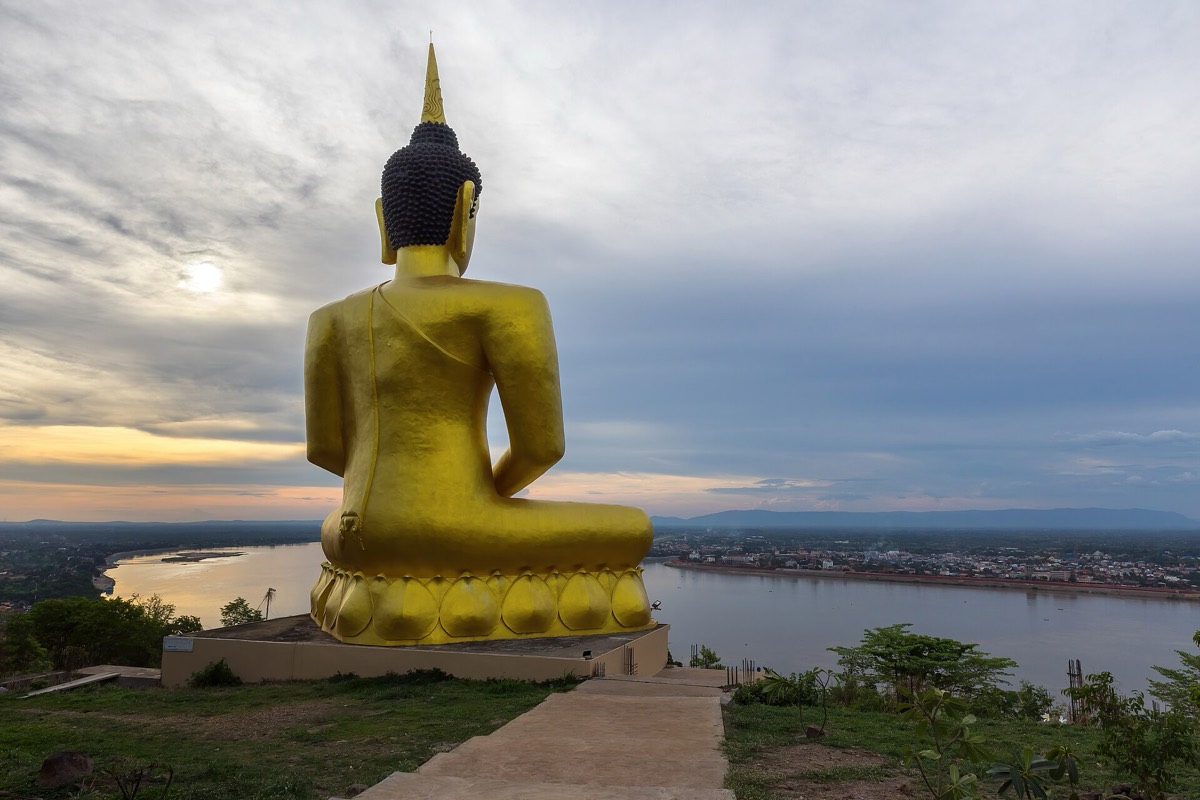
A long staircase up a forested hill to a giant seated Buddha watching over Pakse, the bridge and the wide brown Mekong at golden hour.

- Area
- Pakse town
- Start from
- Central Pakse
- Distance
- about 5 km, across the Mekong
- Time needed
- 2–3 hours
- Best season
- All year; clearest views November – February
- Difficulty
- Easy
- Transport
- Tuk-tuk, motorbike or bicycle across the Lao-Japanese bridge
- Tickets & rules
- Free; modest dress at the temple
Why go
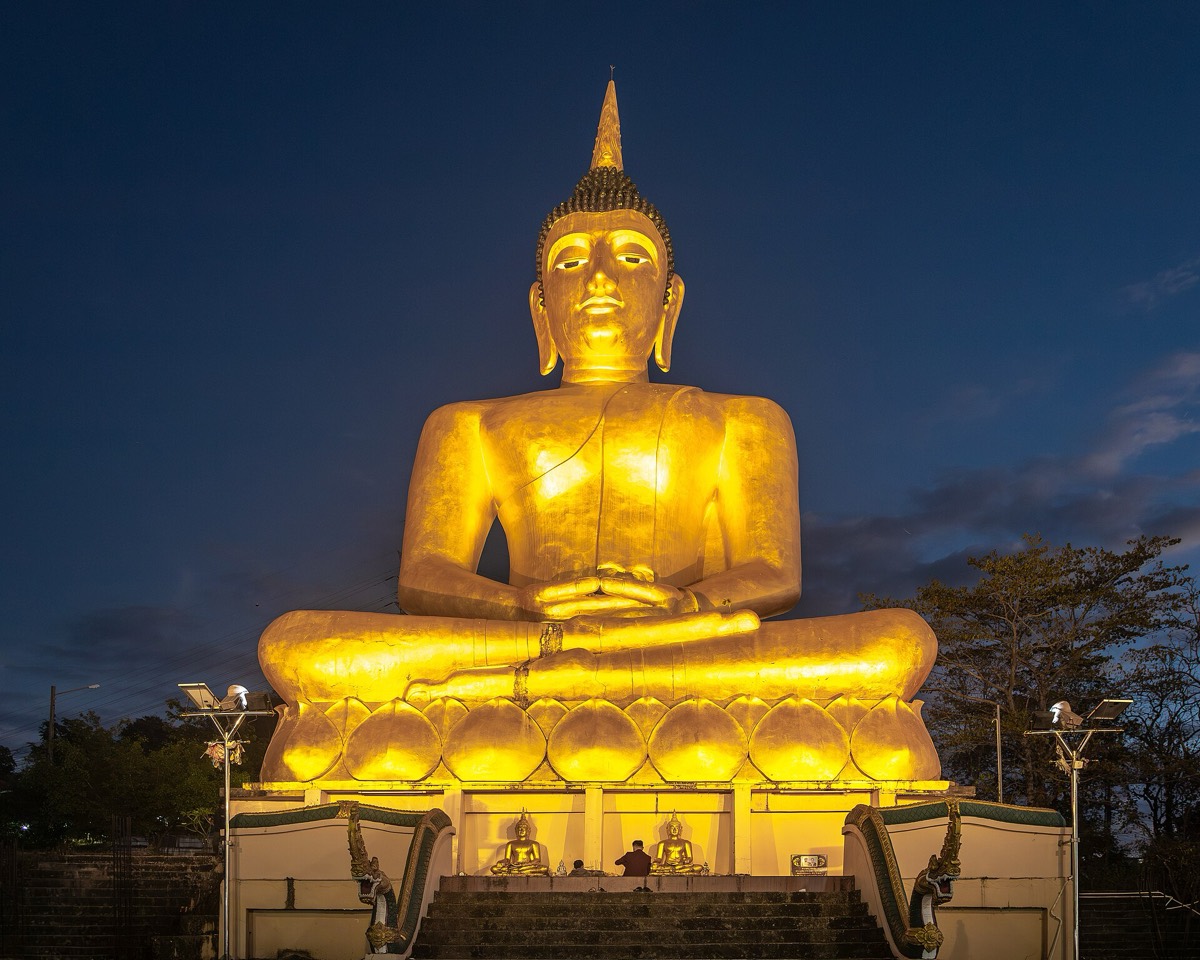
From almost anywhere in Pakse you can see it: a huge golden Buddha seated on the green hill across the Mekong. Climbing up to it in the late afternoon is the easiest way to get a sense of the town’s setting, with the river bending below, the Lao-Japanese bridge stretching across it and, on clear days, the dark line of the Bolaven Plateau to the east.
The climb is a long flight of steps flanked by naga balustrades, the serpent guardians whose bodies rise up the hill with you. It is steep but short, and there are landings where you can stop and catch your breath.
At the top, the temple grounds of Wat Phou Salao are calm. Families come up to make offerings, young couples take photos, and as the sun drops the gold of the statue turns almost orange.
The story
The statue is modern, completed in the 2010s as part of a temple complex built with donations from local devotees. It shows the Buddha seated in meditation, facing the town, and is large enough to be a landmark from the river and the bridge. For many people in Pakse it has become a place to come on holy days and at the new year, when the hill fills with visitors.
The bridge below, often called the Lao-Nippon bridge, opened in 2000 and was built with Japanese assistance. At around 1.4 km it was one of the longest bridges in the country when it opened, and it transformed Pakse by connecting it directly to the west bank and the road to the Thai border.
Phou Salao itself is a modest hill, but like many high places in Laos it was considered sacred long before the statue. Small shrines dot the slopes, and the naga staircase is a classic Lao way of linking the earthly world below to the realm of the Buddha above: you climb along the body of the serpent towards enlightenment, or at least towards a good view.

Getting there
Cross the Lao-Japanese bridge heading west and take the turning to the temple on the far side; the access road to the foot of the stairs is signposted. A tuk-tuk from the centre will wait while you climb if you agree the price for a return trip. On a motorbike or bicycle it is an easy ride, although the bridge has fast traffic and little shoulder.
There is also a road that climbs closer to the summit, so you can ride most of the way if you prefer not to do the stairs.
A suggested plan
- 16:00Leave Pakse and cross the bridge, stopping on the far bank for the view back to town.
- 16:30Climb the naga staircase slowly, resting at the landings.
- 17:15Walk around the temple grounds and the Buddha, then find a spot facing west and north.
- 17:45Watch the sunset over the Mekong and the bridge lights come on.
- 18:30Ride back to town for dinner by the river.
Where to stay
Stay in central Pakse; this is an easy outing from any guesthouse. If you combine it with Dao Heuang market in the morning and the riverside in the evening, it fills a gentle first day in the south.
Good to know
- Bring water; the stairs are exposed to the sun until late afternoon.
- Remove shoes where you see others doing so near the shrine.
- A headlamp or phone torch helps if you walk down after dark.
- The view to the east, towards the plateau, is often clearest after rain.
- Riding back across the bridge at dusk means fast trucks and dazzling headlights; wear a helmet and use lights.
- Stray dogs sometimes gather near the temple; ignore them and walk calmly.