A Morning Walk Through French-Era Pakse
Shophouses with peeling shutters, a riverside temple, an unfinished prince’s palace and the meeting of two rivers, all within a slow loop of the town centre.

- Area
- Pakse town
- Start from
- Central Pakse
- Distance
- about 4 km on foot
- Time needed
- half a day
- Best season
- November – February is coolest; early mornings all year
- Difficulty
- Easy
- Transport
- On foot; a tuk-tuk back if the heat wins
- Tickets & rules
- None; cover shoulders and knees inside temples
Why go
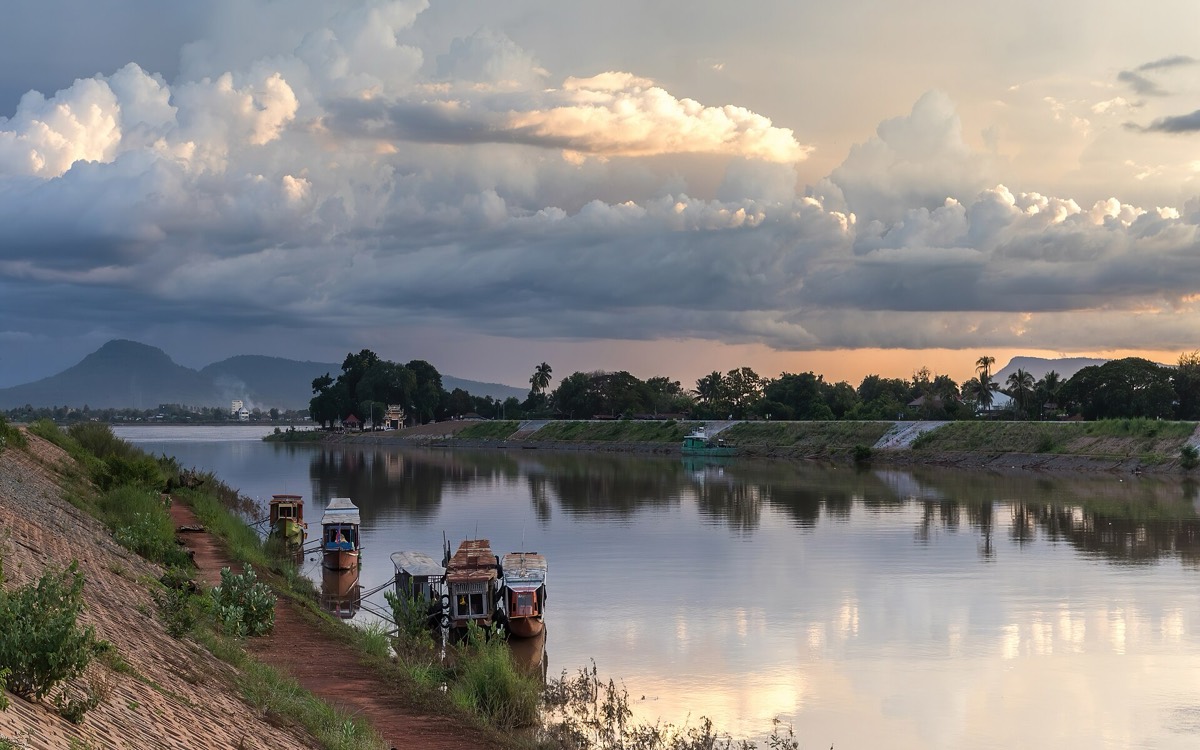
Most travellers treat Pakse as a bus stop on the way to somewhere greener, and I did the same the first time. It was only on the second visit, with a free morning and nothing to catch, that I noticed how pleasant the old centre is between seven and ten, before the trucks wake up. The grid of streets near the Xe Don river still holds rows of two-storey shophouses with wooden shutters, faded yellow plaster and Chinese characters above the doors.
The walk is not about any single great sight. It is about the texture of a provincial Lao town: a woman sweeping in front of a pharmacy, monks crossing the road with umbrellas, coffee being poured from a cloth sock into glasses half filled with condensed milk. You can do it in two hours, or stretch it over a whole morning with long stops.
It also helps you understand where you are. Pakse sits where the Xe Don flows into the Mekong, and almost everything in the south, from plateau coffee to island fish, passes through its markets and bridges.
The story
Pakse is young by Lao standards. The French established it as an administrative post in the early twentieth century, at the confluence that gives the town its name: pak means mouth and se, or xe, means river. It grew into the capital of the south, a trading hub for coffee, cardamom and timber coming down from the Bolaven Plateau, and a river port on the long, broken route between Vientiane and Cambodia.
The most curious building in town is the large, tiered palace on the hill above the Xe Don. It was begun in the late 1960s by Prince Boun Oum na Champassak, heir of the old royal house of Champasak, and was meant to have more than a thousand rooms. He left the country in 1975 with the palace unfinished; it was later completed in a simpler form and became a hotel. Its wedding-cake silhouette is still the town’s best-known landmark.
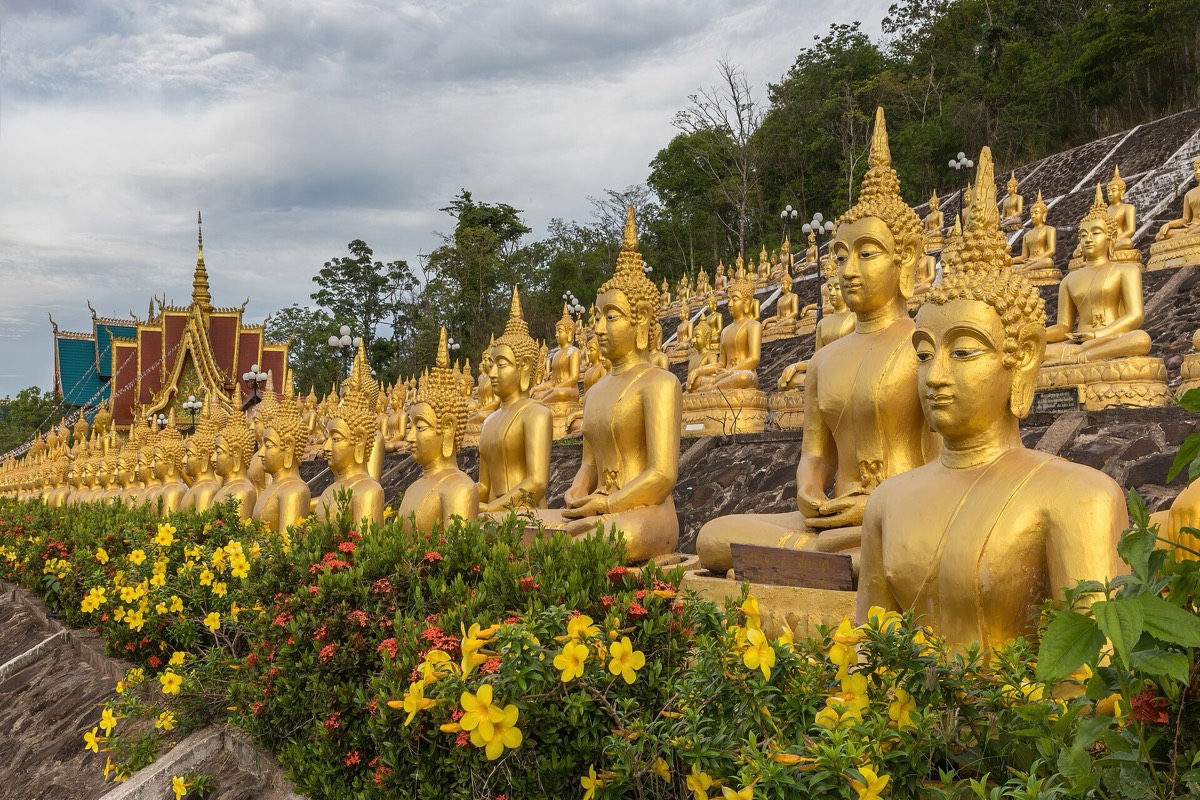
Wat Luang, by the Xe Don, is one of the town’s main monasteries and has a school for novice monks. In the late afternoon you can hear chanting drifting out over the river. Elsewhere, look for the old colonial villas tucked behind mango trees, some restored, others slowly being reclaimed by bougainvillea.

Getting there
Everything here is walkable from the guesthouses along Route 13 and the streets near the Xe Don bridge. If you are coming in from the bus stations, which sit a few kilometres outside town, a shared tuk-tuk or songthaew will drop you in the centre for a modest fare; agree the price before you get in.
A loop starting at the Xe Don bridge, following the river to Wat Luang, cutting through the old shophouse streets and ending at the Mekong riverbank makes a natural shape for the morning.
A suggested plan
- 7:00Coffee and a baguette or noodle soup at a street stall near the centre.
- 7:45Walk along the Xe Don to Wat Luang while the monks are busy with morning chores.
- 9:00Wander the shophouse streets and look up at the shutters, balconies and faded signs.
- 10:00Walk to the Mekong bank where the two rivers meet and watch the ferries and fishing boats.
- 11:00Back to your guesthouse before the midday heat, or straight on to lunch.
Where to stay
Central Pakse has plenty of simple guesthouses and mid-range hotels within a few blocks of Route 13 and the Xe Don, which is the most convenient area for walking, renting motorbikes and catching tour minibuses. Rooms on the river side are quieter at night than those facing the main road.
Good to know
- Carry small kip notes; street stalls rarely have change for large bills.
- Many motorbike rental shops and tour desks cluster near the centre; this walk is a good time to compare them for later routes.
- Temples are open to visitors, but step around monks rather than between them and a person they are speaking with.
- Sundays are quieter, with many shops shuttered, which suits a walk but not shopping.
- Pavements are uneven and often blocked by parked motorbikes; watch your step and the traffic when you step into the road.
- By late morning the sun is fierce even in the cool season; carry water and a hat.