Cycling to the quiet temples: Sewu, Plaosan and Sambisari
Twin Buddhist temples among rice fields, a shrine buried under volcanic ash for a thousand years, and barely another visitor in sight.

- Area
- Temples of the plain
- Start from
- Prambanan
- Distance
- about 20 km by bicycle
- Time needed
- 1 day
- Best season
- Dry season, April – October; ride in the morning
- Difficulty
- Moderate
- Transport
- Bicycle or motorbike; car with driver as an alternative
- Tickets & rules
- Sewu is covered by the Prambanan park ticket; small fees at Plaosan, Sambisari and Kalasan
Why go
The Prambanan plain is scattered with temples, and most visitors see only the main one. Get on a bicycle and you discover dozens of others, some grand, some no bigger than a garden shed, among rice fields, sugarcane and villages. It’s one of the most pleasant days I know in Java: flat roads, warm air, temples to yourself.
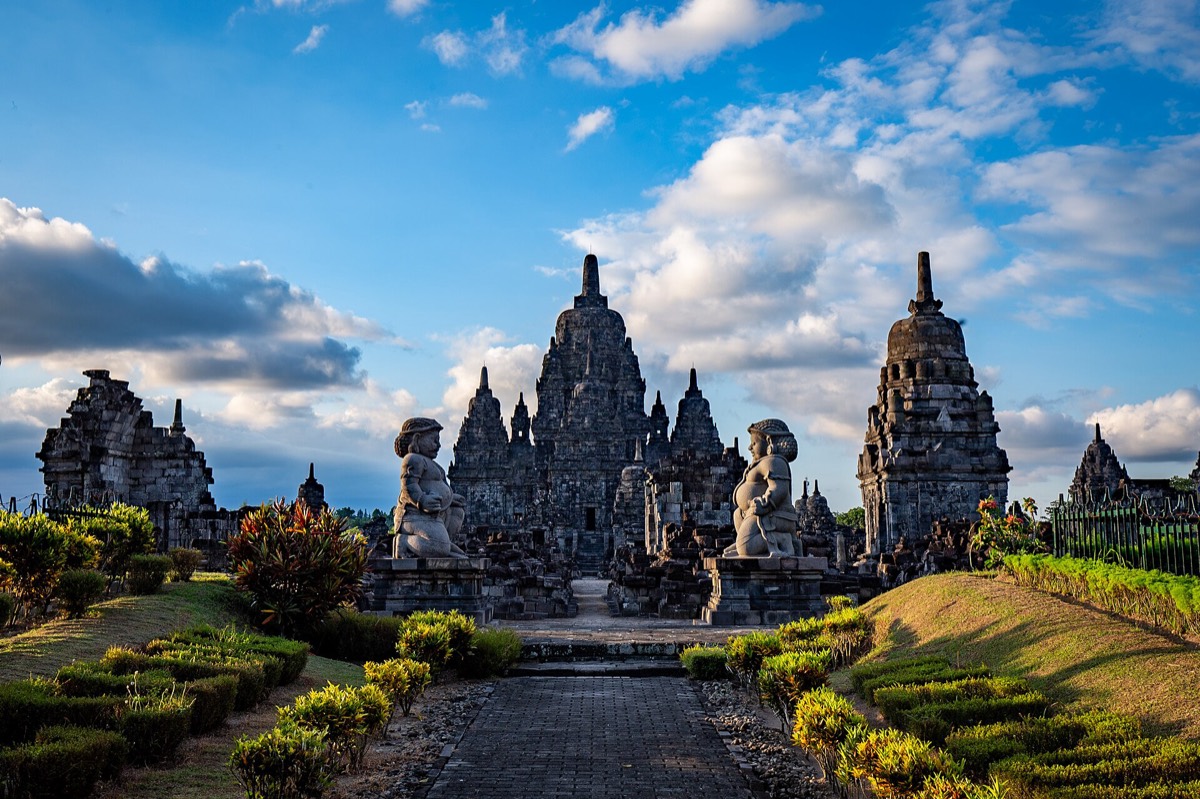
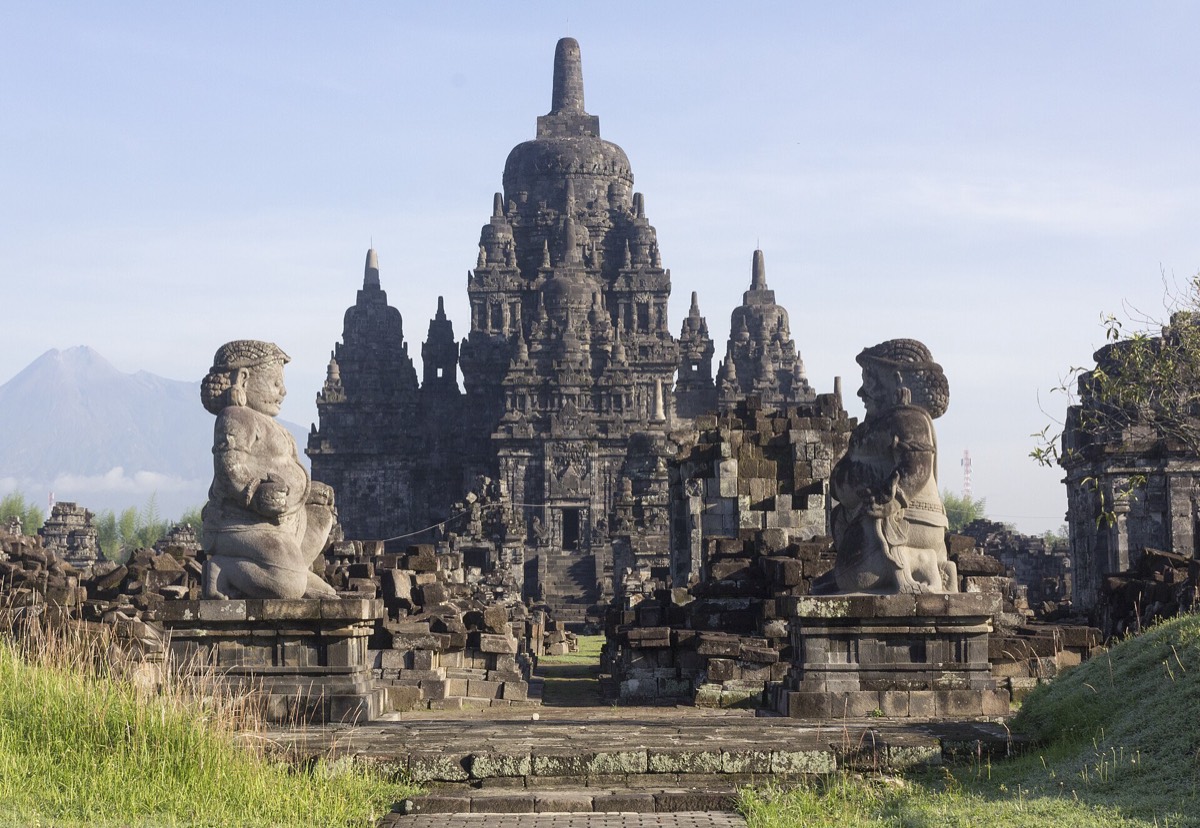
Sewu, just north of Prambanan, is the second-largest Buddhist temple complex in Indonesia after Borobudur: a main temple surrounded by rows and rows of smaller shrines, guarded at each entrance by a pair of fat, grinning stone giants with clubs. Plaosan, a short ride east, has two elegant twin temples, with carvings of men and women that some think show the patrons who paid for them.
Sambisari is the surprise. You come to a field, look down, and see a perfect little Hindu temple sitting in a pit several metres below ground level, with a lingam inside and grass terraces around it. It feels like a secret.
The story
Sewu was begun in the late eighth century, earlier than Prambanan. Its name means ‘thousand’, a local exaggeration, though the complex does have more than 240 structures. The guardian figures, called dwarapala, are among the most charming sculptures in the region. Like Prambanan, Sewu was badly damaged in the 2006 earthquake and parts are still under restoration.
Plaosan dates from the mid-ninth century. According to one interpretation of its inscriptions, it was built under a Hindu king, Rakai Pikatan, for his Buddhist queen, Pramodhawardhani, of the Sailendra line. Whether or not the story is precise, the temple shows how intertwined the two traditions and dynasties were. Each twin temple has two floors and beautifully detailed reliefs.
Sambisari was found in 1966 by a farmer who struck a carved stone while digging his field. Archaeologists uncovered a complete temple buried under about six metres of volcanic material, most likely from Merapi eruptions over the centuries. It dates from the early ninth century. Standing at the edge of the pit, you see in one glance how much the land has risen around it.
There are other small temples along the way: Kalasan, with its fine stucco-like coating and a dedication inscription from 778, one of the oldest dated in the region, and Sari, a two-storey building that may have been a monastery dormitory for monks.

Getting there
Start from Prambanan. Sewu is a 10-minute walk or short ride north inside the park. Plaosan is about 1.5 km north-east of Sewu by small roads. Sambisari is roughly 10 km west of Prambanan, north of the main road, with Kalasan and Sari on the way.
Bicycles can be rented in Jogja or arranged through some guesthouses near Prambanan; e-bikes are increasingly available. The main Jogja–Solo road is heavy with traffic, so stick to village roads wherever possible.
A suggested plan
- 7:00Enter the Prambanan park early and cycle or walk north to Sewu.
- 8:30Village roads to Plaosan; walk around both twin temples.
- 10:00Ride west through rice fields to Sari and Kalasan.
- 11:30Sambisari, then a cold drink at a warung nearby.
- 13:00Lunch and return to Jogja by car or bike.
Where to stay
Guesthouses near Prambanan make an early start easier; otherwise ride out from Jogja or put your bike in a car for the first stretch.
Good to know
- Download offline maps; signposting to small temples is minimal.
- Carry plenty of water; the midday heat on the plain is serious.
- Plaosan is lovely in the late afternoon too, if you prefer a second visit.
- Crossing the main Jogja–Solo road is the most dangerous part of the day; cross with care.
- Dogs occasionally chase bikes in villages; slow down and they usually lose interest.