Prambanan and the Ramayana ballet under the stars
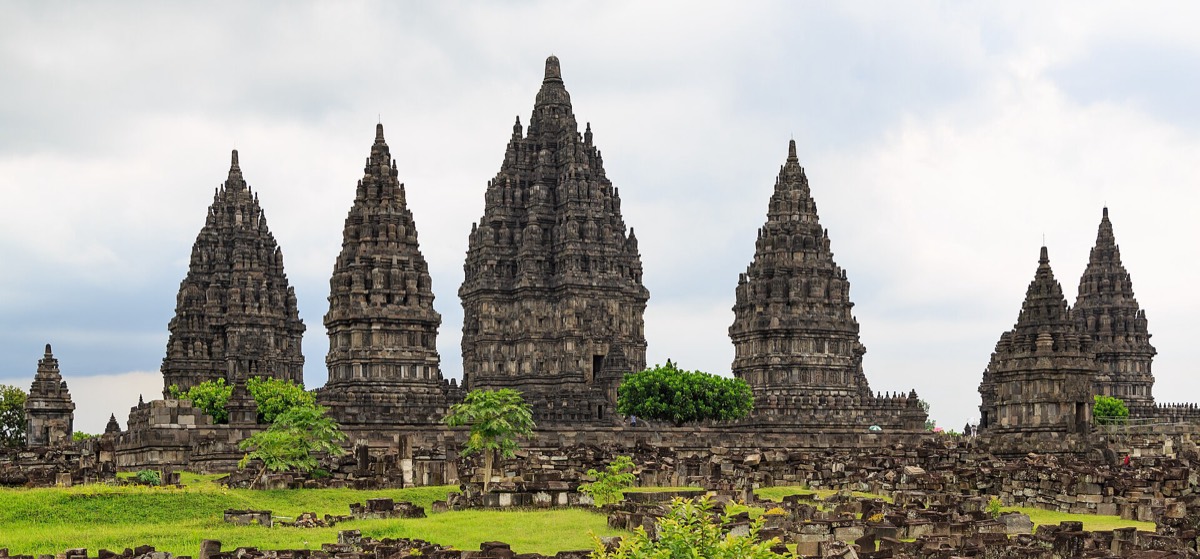
Soaring Hindu towers glow orange in the late sun, and after dark the Ramayana is danced against their silhouette, as the gamelan fills the night air.

- Area
- Temples of the plain
- Start from
- Yogyakarta
- Distance
- about 17 km east
- Time needed
- afternoon and evening
- Best season
- Open-air ballet in the dry season, roughly May – October; indoor shows in the wet season
- Difficulty
- Easy
- Transport
- Ride-hailing car, Trans Jogja bus or hired car
- Tickets & rules
- Temple ticket; separate ballet ticket; sarong may be provided
Why go
Prambanan is the great Hindu counterpart to Borobudur. Where Borobudur spreads wide, Prambanan shoots up: a cluster of slender towers, the tallest, dedicated to Shiva, rising to around 47 metres. The stone is dark grey, the walls thick with carvings, and in the late afternoon the whole complex turns warm and golden.
The reliefs are wonderful. Around the balustrades of the Shiva and Brahma temples runs the Ramayana, told in panel after panel: Rama and Sita’s exile, the golden deer, Sita’s kidnapping by the demon king Ravana, the monkey army and the burning of Lanka. If you know the story even slightly, it’s a joy to follow it around the walls.
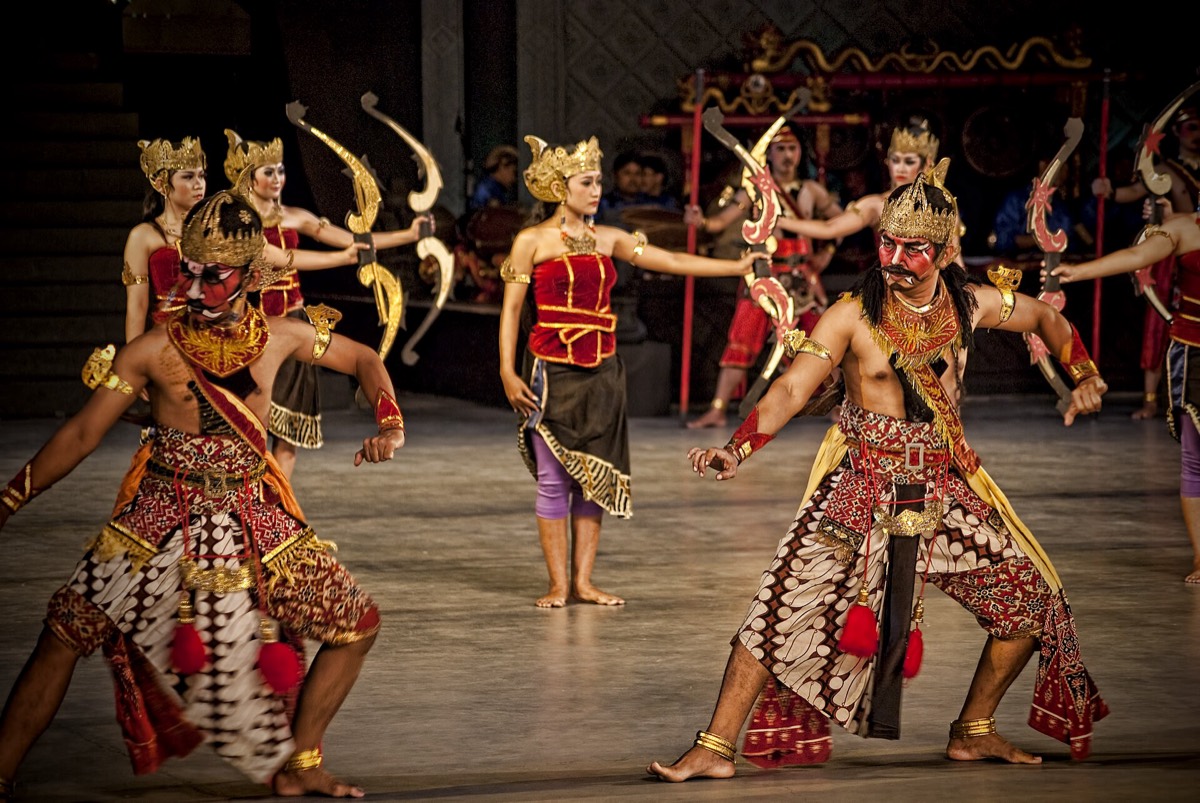
In the evening the story comes alive again. The Ramayana ballet at Prambanan has been performed since the 1960s, a large dance-drama with dozens of dancers and a full gamelan. In the dry season it’s held on an open-air stage with the illuminated temples behind it. There are no words, but the story is easy to follow through movement, costume and music.
The story
Prambanan, or Candi Rara Jonggrang as it is called locally, was built in the mid-ninth century, probably around 850, a few decades after Borobudur. It was dedicated to the Hindu trinity of Shiva, Vishnu and Brahma, with the largest temple for Shiva in the centre and smaller temples for their animal mounts opposite. Originally there were 240 temples in the compound, most of them small shrines in concentric rows.
The legend of Roro Jonggrang is the story everyone tells. A powerful man, Bandung Bondowoso, wanted to marry the princess Roro Jonggrang, whose father he had killed. She agreed on one condition: that he build a thousand temples in a single night. With the help of spirits he nearly managed it, so she woke the village women to pound rice and light fires, making the roosters crow as if it were dawn. The spirits fled with one temple unfinished. In fury he turned her into stone, the thousandth statue, which people identify with the statue of Durga in the Shiva temple.
The temples collapsed over the centuries, possibly through earthquakes and volcanic activity. Reconstruction began in the early twentieth century and the Shiva temple was completed in 1953. A major earthquake in 2006 damaged the complex again and some parts were closed for years. Restoration work continues; scaffolding and numbered stones are a common sight.
Prambanan became a UNESCO World Heritage Site in 1991, together with nearby Buddhist temples such as Sewu, Lumbung and Bubrah. That close proximity of Hindu and Buddhist monuments, built under related dynasties in the same generation, says a lot about the religious tolerance of the time.

Getting there
Prambanan is 30–45 minutes from the centre by car, along the busy road towards Solo. Trans Jogja buses run there too, but are slow. The commuter train to Solo stops at Brambanan station, a short walk from the temple, which can be convenient.
The ballet stage is on the west side of the complex. For the evening, organise a ride back in advance or use ride-hailing; there are often drivers waiting after the show.
A suggested plan
- 14:30Arrive at Prambanan; walk around the main temples while the light softens.
- 15:30Follow the Ramayana reliefs around the Shiva and Brahma temples.
- 16:30Walk north through the park to Sewu temple, then back for sunset.
- 18:00Dinner near the ballet stage.
- 19:30The Ramayana ballet; the show usually lasts around two hours.
Where to stay
Most people return to Jogja after the ballet. There are also a few guesthouses near Prambanan if you want to combine this with Ratu Boko or the quiet temples of the plain the next morning.
Good to know
- Read a short summary of the Ramayana before the ballet; it makes the evening much richer.
- Seats nearer the stage are pricier but you see the dancers’ expressions.
- In the dry season, bring mosquito repellent for the open-air show.
- The temple grounds have little shade; hats and water are a must in the afternoon.
- Check the ballet schedule in advance; performances don’t run every night, and the outdoor stage is replaced by an indoor one in the rainy months.