Gili Trawangan by bicycle, from sunrise to sunset
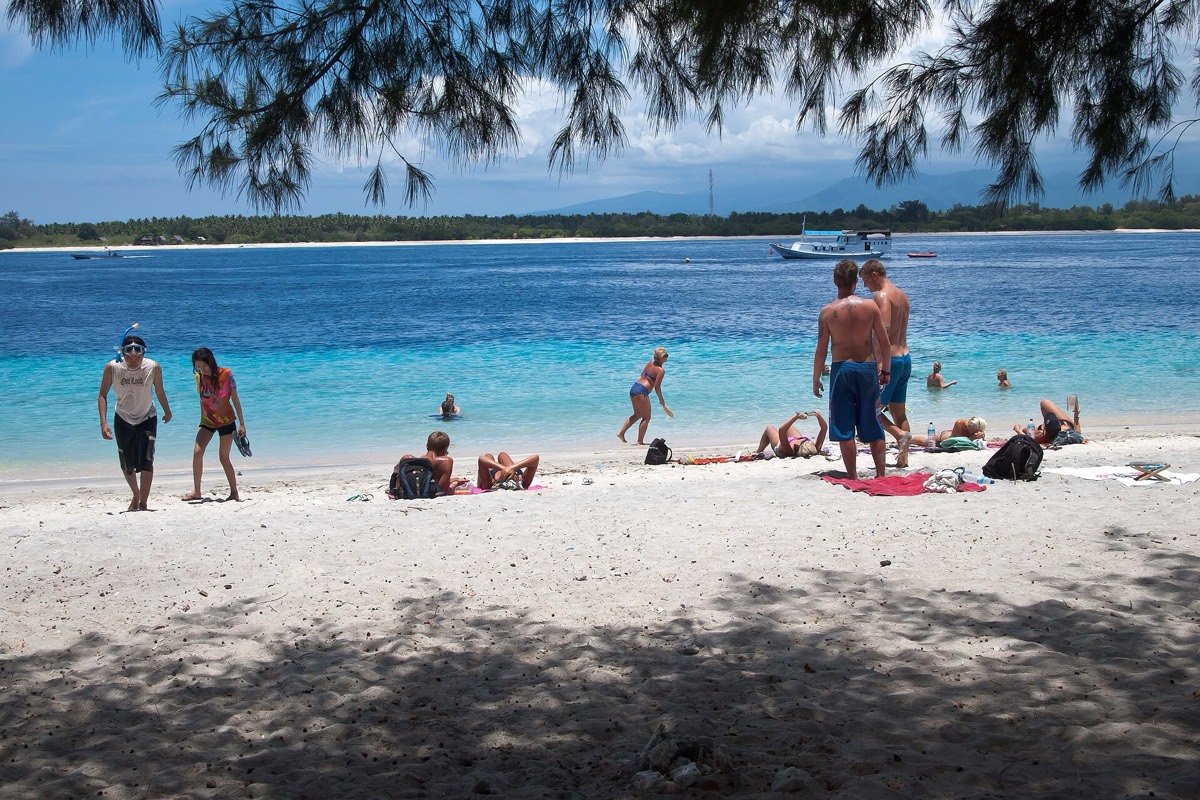
The largest and liveliest Gili is still small enough to circle on a rented bicycle between breakfast and lunch, with coral just off the beach the whole way round.

- Area
- The Gilis
- Start from
- Gili Trawangan harbour
- Distance
- about 7 km around the island
- Time needed
- 1 day
- Best season
- All year (calmest seas May – September)
- Difficulty
- Easy
- Transport
- Rented bicycle, on foot, or a cidomo horse cart
- Tickets & rules
- None; a small island levy is sometimes collected on arrival
Why go
There are no cars or motorbikes on Gili Trawangan, and once you have been off the boat for ten minutes you notice what that does to a place. The loudest sounds are bicycle bells, the jingle of cidomo horse carts and waves on the reef. A sandy path runs almost the whole way round the island, about seven kilometres, and it changes character every few hundred metres: dive shops and cafés along the east side, then fishing boats, then long empty stretches where the only shade is a lone sea almond tree.
The water is the reason to come. On the northeast side the reef starts a few metres from the sand, and green turtles graze on the seagrass in the shallows, often within sight of people sipping coffee. Snorkellers drift with the current along the east coast and walk back along the beach, a lazy loop people repeat every day of their stay.
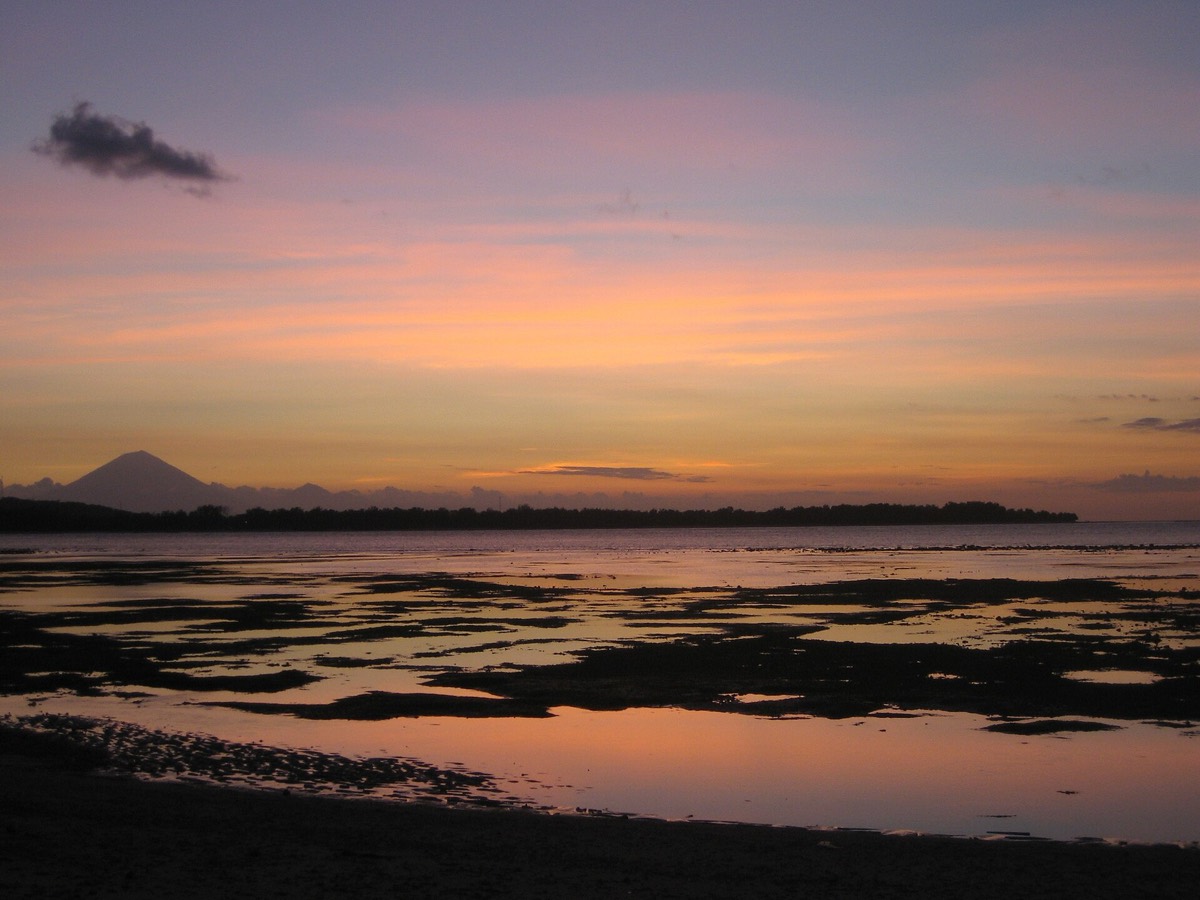
Then there is the west coast at the end of the day. Bali’s Mount Agung stands across the strait, and on clear evenings the sun drops into the sea beside it while the whole island seems to sit on the sand to watch. Swings hang over the water, children play football at the tideline and the sky goes from gold to violet in a quarter of an hour.
The story
For most of the twentieth century the Gilis were barely inhabited. Coconut plantations were laid out here, and in the 1970s settlers, many of Bugis and Sasak origin, came to farm and fish, sometimes with official encouragement. Fresh water was always the problem: it was carried over from Lombok, and even today much of it comes from desalination or pipes under the strait.
Backpackers started arriving in the 1980s, sleeping in simple bungalows run by fishing families. Trawangan grew into the party island of the three, while Meno stayed quiet and Air settled somewhere in between. Dive schools followed, and with them one of the more interesting local stories: the Gili Eco Trust, set up by island businesses and residents, which has spent years installing artificial reef structures, cleaning beaches and caring for the cidomo horses.
On 5 August 2018 a strong earthquake struck north Lombok, and thousands of visitors were evacuated from the Gilis by boat in the following days. Many buildings were damaged, and for a while the island was almost empty. It came back faster than anyone expected, but locals still date things as ‘before the earthquake’ and ‘after’, and you will see repaired walls and new buildings everywhere.
There is also a small hill in the south of the island, the highest point of the Gilis, with remains of a Japanese gun position from the Second World War. It is a short, steep walk and a strange place to find history: from the top you can see all three islands lined up towards Lombok, with Rinjani behind them.

Getting there
Fast boats run from Padang Bai and Serangan on Bali, taking roughly one and a half to two and a half hours depending on the sea; book a day or two ahead in high season and expect delays when the strait is rough. From Lombok, public boats leave from Bangsal harbour near Pemenang and take about half an hour; they sail when full, so mornings are best.
There is no jetty in the usual sense: you step off into knee-deep water, so keep your bag light and shoes in hand. Bicycles can be rented all along the main strip for a modest daily price.
A suggested plan
- Early morningWalk to the east beach for sunrise over Lombok and Rinjani, before the cafés open.
- MorningRent a bicycle and head north, stopping to snorkel with turtles off the northeast corner.
- MiddayContinue around the quieter north and west coast; the sand is soft in places, so push the bike.
- AfternoonClimb the southern hill for the view over the three islands and the old gun position.
- SunsetFind a spot on the west coast to watch the sun set beside Mount Agung.
- EveningDinner at the night market by the harbour, then an early night or the bars, as you prefer.
Where to stay
The east coast near the harbour is convenient but noisy, especially on party nights. For quiet, look for guesthouses on the village lanes inland or along the north and west coasts, where nights are dark and you hear the sea rather than the speakers.
Good to know
- Bicycles with fat tyres cope better with the sandy western stretch.
- Bring cash: there are cash machines, but they sometimes run empty on busy weekends.
- Snorkel gear can be rented from many beach stalls; check the mask fits before paying.
- Ride slowly in the evening: the path is unlit in places and full of pedestrians.
- Currents between the Gilis can be strong. Snorkel with the current along the shore, never out into the channel.
- Be very wary of ‘magic mushroom’ and other drug offers; Indonesian drug laws are extremely strict.
- Avoid cidomo carts where the horse looks exhausted, injured or overloaded.