Gili Air: village lanes and the reef at your door
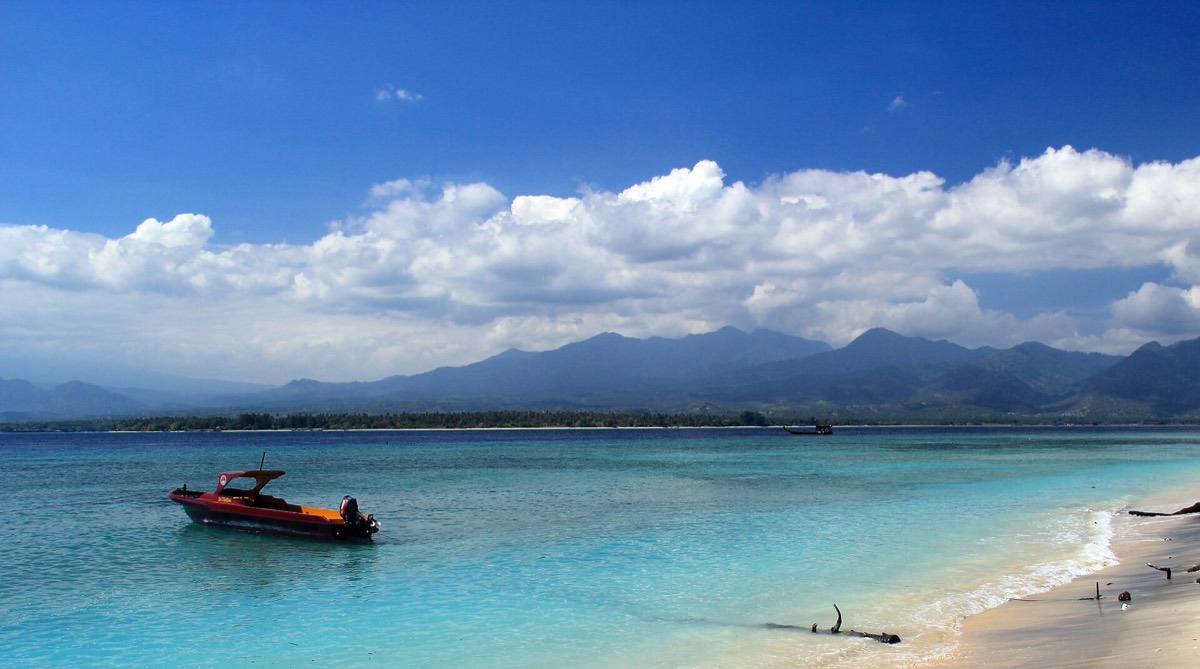
The Gili closest to Lombok has the most village life of the three: goats under coconut palms, a mosque at the centre and coral a short swim from your bungalow.

- Area
- The Gilis
- Start from
- Gili Air harbour
- Distance
- about 5 km around the island
- Time needed
- 1 day
- Best season
- All year (calmest seas May – September)
- Difficulty
- Easy
- Transport
- On foot or by bicycle
- Tickets & rules
- None; dress modestly away from the beach
Why go
Gili Air is the one I go back to. It has enough cafés, warungs and dive shops to be comfortable, but behind the beachfront the island is still a village where people live, go to the mosque, keep goats and dry fish on mats. Walk ten minutes inland and you are among coconut groves, small vegetable plots and children cycling home from school.
The coastal path runs right round the island, about five kilometres, and you can walk it in an hour and a half without hurrying. The east side faces Lombok and Rinjani and gets the sunrise; the north has long, quiet sandbars; the west looks to Bali and gets the sunset. Along the way are dozens of places to stop for a fresh coconut and a swim.
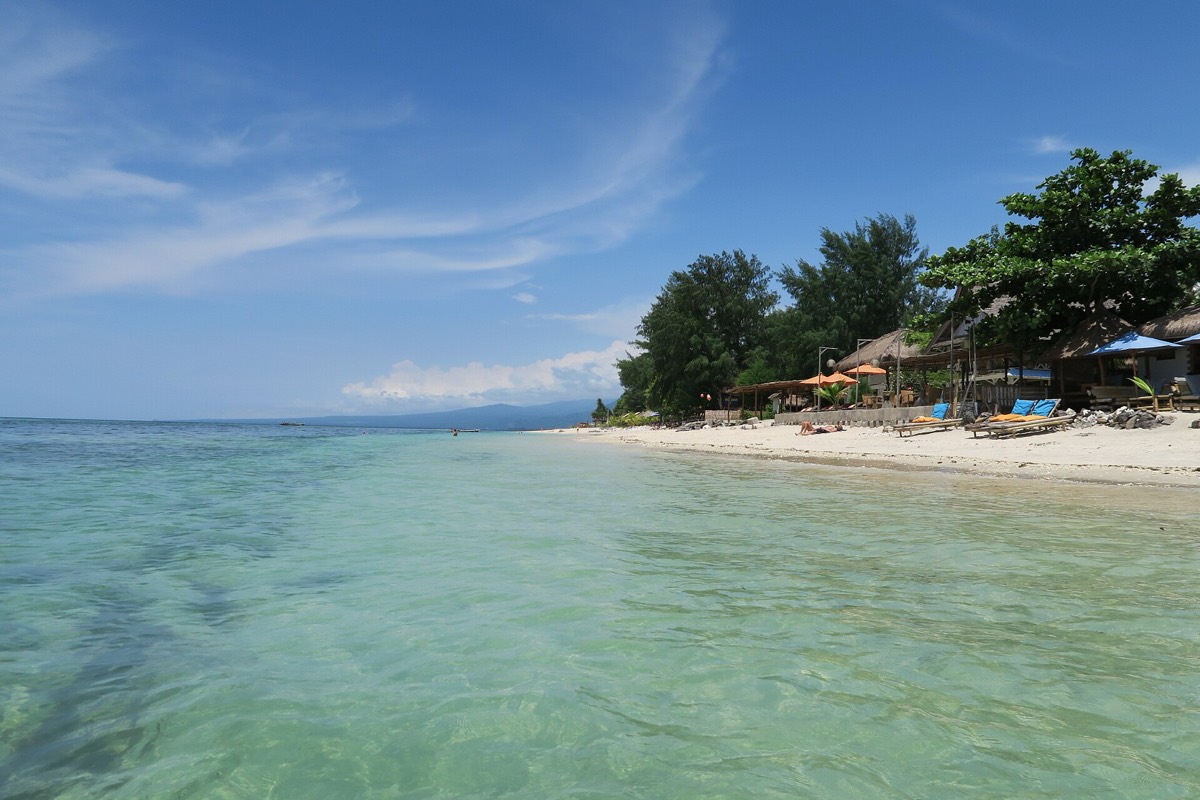
The reef starts very close to shore, especially on the east and northeast sides. Turtles, reef fish and the occasional blacktip reef shark are regular sightings for snorkellers, and the dive sites around the three islands are among the easiest in the region for beginners.
The story
Air means water in Indonesian, and the usual explanation is that Gili Air was the only one of the three islands with a reliable freshwater well. Whether or not that is literally true, it is the one that has been settled longest and has the largest permanent population, mostly Sasak families with roots on the Lombok mainland just across the strait.
Because it is so close to Lombok, about fifteen minutes by boat, life here has always been tied to the mainland. Fishermen sold their catch in Pemenang, children went to school there, and goods came across in small boats. That is still the rhythm today, with construction materials, food and drinking water arriving every morning at the harbour and being loaded onto horse carts.
Like the other Gilis, Air was badly shaken by the 2018 earthquakes, and the mosque and many homes had to be repaired. The rebuilding has given the island a slightly newer look, but the layout of lanes and compounds is the same, and local families still run most of the guesthouses.
Islanders follow customs called awig-awig, local rules agreed by the community. On the Gilis they have covered things like banning motorised vehicles, protecting the reef and limiting behaviour that offends the village. It is a small example of how the islands try to manage tourism on their own terms.

Getting there
Public boats from Bangsal take about fifteen to twenty minutes; fast boats from Bali stop at Air as well as Trawangan. Shared boats link the three Gilis.
Bicycles are easy to rent, but walking is just as good, and the inland lanes are best on foot.
A suggested plan
- SunriseCoffee on the east coast as the sun rises over Rinjani.
- MorningSnorkel the reef off the northeast; join a fun dive or a try-dive if you are curious.
- MiddayWalk the north coast to the sandbars, then cut inland through the village to lunch at a warung.
- AfternoonRead in the shade, swim again, or take a boat to Meno for an hour.
- SunsetWalk round to the west coast and watch the sun set beside Mount Agung.
- EveningGrilled fish on the beach, then a slow walk home under the stars.
Where to stay
Guesthouses and bungalows are scattered all around the coast and through the village. The east side is handy for the harbour and the reef; the west side is quieter and has the sunsets. Look for places run by local families, which still make up a large share of what’s on offer.
Good to know
- Cover up when walking through the village: a sarong or shorts and a T-shirt are fine.
- Many places close early during Ramadan; plan meals accordingly.
- Ask your guesthouse to refill water bottles rather than buying plastic.
- Low tide exposes sharp coral in places; wear reef shoes.
- Sea urchins are common in the shallows; watch where you step.
- Strong currents run in the channel between Air and Meno.
- Sunburn comes fast on the water; wear a rash vest while snorkelling.