Ubud: palace, market and the Monkey Forest
The cultural heart of the island, where a royal palace, a lotus temple and a forest full of macaques sit within one easy walk.

- Area
- Ubud & centre
- Start from
- Ubud
- Distance
- walking distance in town
- Time needed
- 1 day
- Best season
- All year (drier April – October)
- Difficulty
- Easy
- Transport
- On foot; short taxi or scooter rides
- Tickets & rules
- Ticket for the Monkey Forest; sarong for temples
Why go
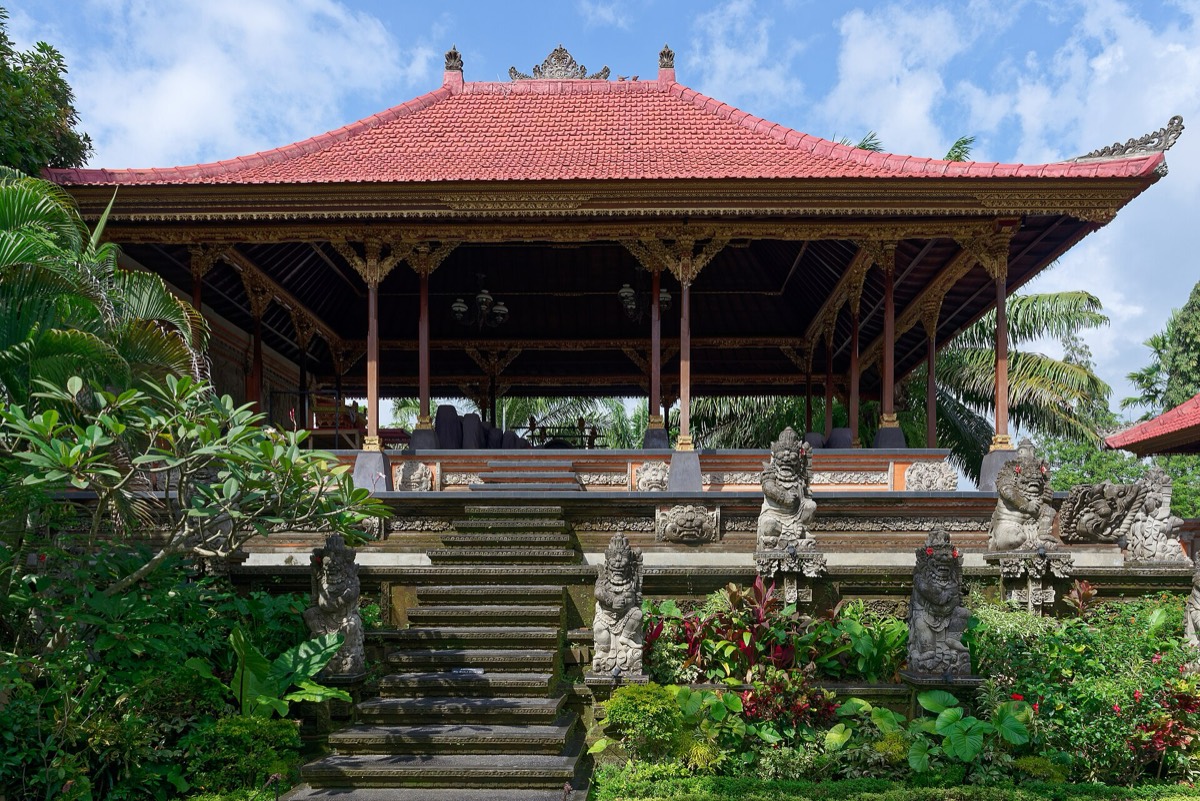
Ubud is busy now, with cafés, yoga studios and traffic on the main roads, but it is still the best place to understand Balinese culture in a single day. The royal palace, Puri Saren, sits right at the central crossroads, and almost every evening there is a dance performance in a temple or palace courtyard somewhere in town.
Across the road, the Ubud market wakes up before dawn with offerings, flowers and fruit for locals; later in the morning it fills with sarongs and souvenirs. A short walk away, Pura Taman Saraswati sits behind a pond full of lotus flowers, dedicated to the goddess of knowledge and the arts.
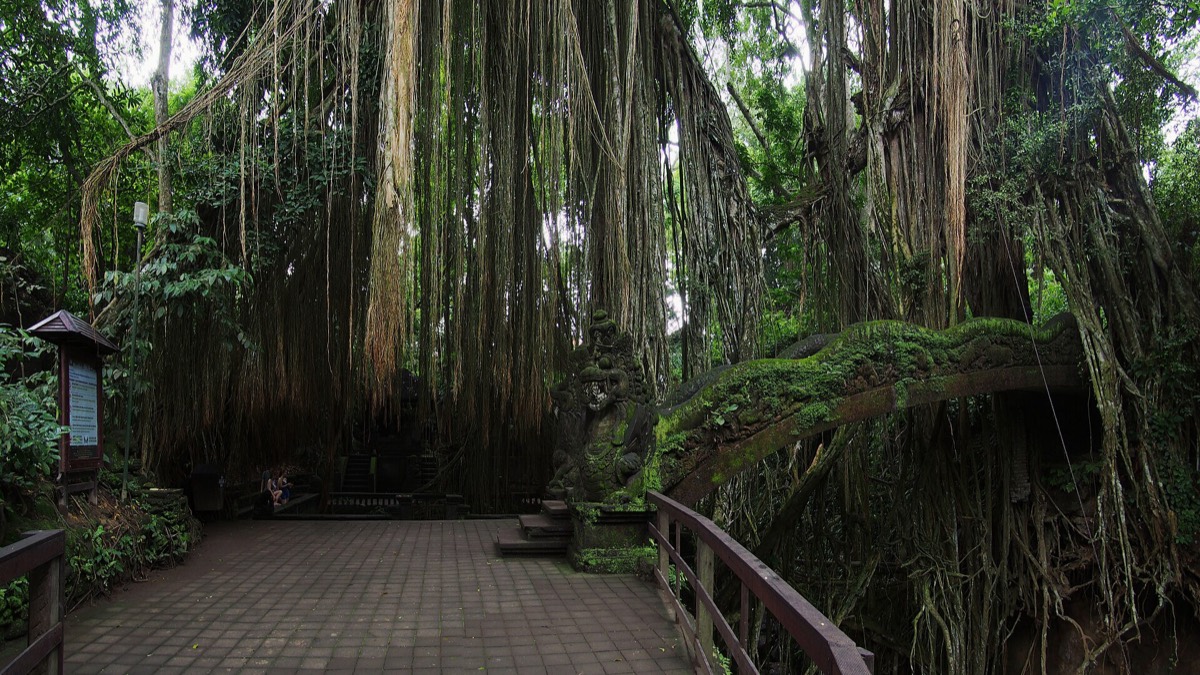
At the bottom of Monkey Forest Road, the Sacred Monkey Forest Sanctuary is a patch of jungle with mossy temples, giant banyan roots and a few hundred long-tailed macaques. It's both enchanting and chaotic, which is exactly how Ubud feels on a good day.
The story
In the 1930s Ubud became a magnet for European artists, most famously the German painter Walter Spies and the Dutch painter Rudolf Bonnet. Together with the local royal family they helped found the Pita Maha artists' association, which encouraged Balinese painters to develop new styles. The museums around town still show that mix of tradition and experiment.
The royal family of Ubud played a key role in this cultural flowering and still sponsors ceremonies and performances today. When a big cremation ceremony takes place in Ubud, the whole town turns out to watch the towering decorated cremation towers being carried through the streets.
Goa Gajah, a short drive away, has a cave entrance carved as a huge demonic face, and bathing pools that were only rediscovered by archaeologists in the twentieth century. Nobody is completely sure of its origins, which adds to its quiet, slightly mysterious atmosphere.

Getting there
Ubud is about an hour or more by car from the airport, depending on traffic. Inside the centre, walking is easiest; pavements are uneven, so watch your step.
Taxis via ride-hailing apps work in most of Bali, but some villages have local transport rules; your driver may ask you to walk a little to a pick-up point.
A suggested plan
- Early morningUbud market while locals shop for offerings, then breakfast nearby.
- MorningPuri Saren and Pura Taman Saraswati before the heat and the crowds.
- Late morningThe Monkey Forest. Keep your things in a closed bag.
- AfternoonA short taxi to Goa Gajah, the 'Elephant Cave', a carved temple cave from roughly the eleventh century.
- EveningA Legong or Barong performance at the palace or a nearby temple.
Where to stay
Ubud has everything from family-run homestays in compounds off the main roads to quiet jungle resorts outside town. Staying in a homestay lets you see daily offerings and family ceremonies up close.
Good to know
- Buy dance tickets from the sellers on the main road or at the venue in the afternoon.
- Bring a sarong and sash, or borrow one at temple entrances.
- Walk the side streets: Jalan Kajeng, with its inscribed paving stones, is a nice escape from traffic.
- Monkeys grab sunglasses, phones and anything that looks like food. Don't feed them and don't stare them down.
- Monkey bites happen; if you're bitten or scratched, clean the wound and see a doctor about rabies risk.