Kep-sur-Mer: ruined villas and the seafront
A slow ride along Kep’s seafront, past the skeletons of 1960s modernist villas reclaimed by banyans, to a small beach and a long promenade made for sunset.

- Area
- Kep
- Start from
- Kep
- Distance
- about 5–6 km on foot or by bicycle
- Time needed
- half a day
- Best season
- November – April; late afternoon light is best
- Difficulty
- Easy
- Transport
- Bicycle, on foot or tuk-tuk
- Tickets & rules
- None; many villas are on private land
Why go
Kep is a strange and beautiful place: a resort town that never quite came back. Along the shore road and on the hillside behind it stand the shells of villas from the 1960s, flat roofs, angular concrete sunshades, open staircases, built when Kep was the most glamorous seaside address in the kingdom. Today many are roofless, with trees growing through their living rooms and cows grazing in their gardens.
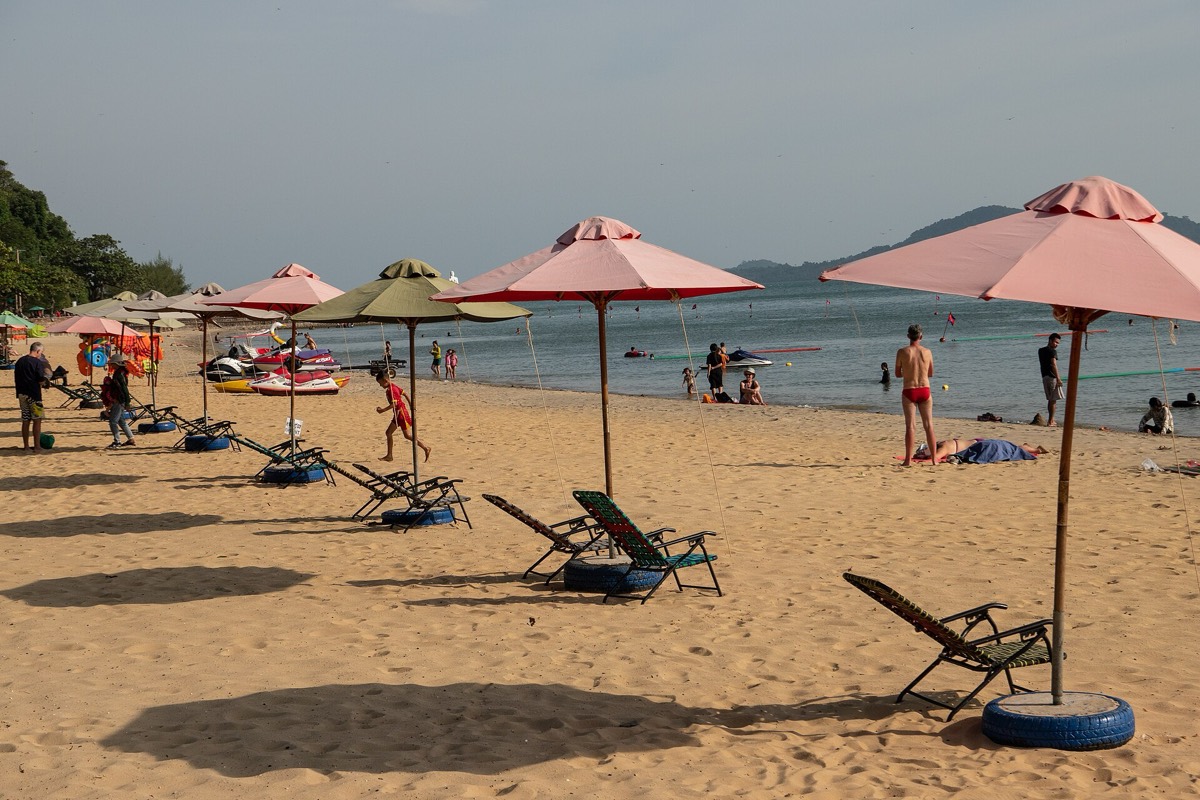
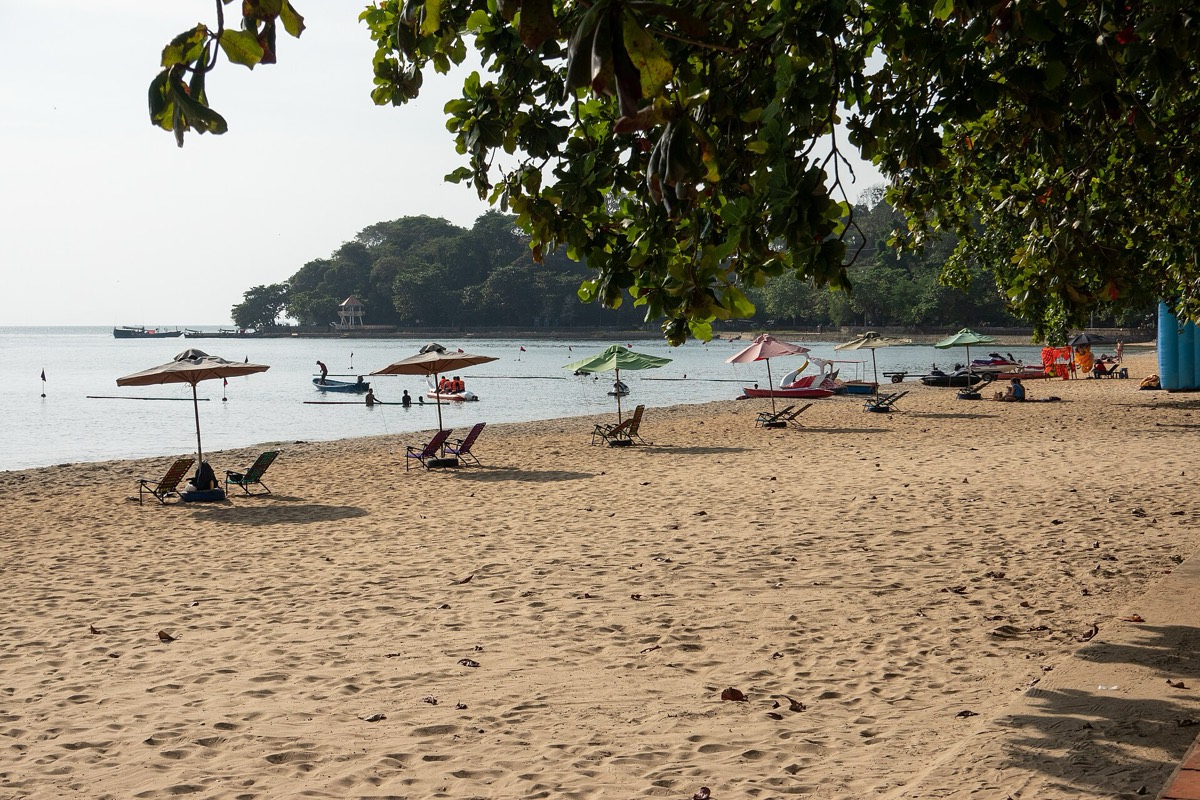
Between them are new guesthouses, small restaurants and a wide seafront promenade where families stroll in the evening and teenagers take photos with the sea behind them. The beach itself is small and slightly grey, but the bay is calm, shallow and lined with casuarina trees.
Cycling slowly along the coast, stopping at the villas, the beach and the promenade, is the best way to feel what Kep was and what it is becoming.
The story
The French founded Kep-sur-Mer in 1908 as a seaside resort for colonial officials, a few hours from Phnom Penh by road. It stayed small until independence, when the 1950s and 1960s brought a building boom. Cambodia’s royal family, politicians and wealthy families built holiday houses here, many in the bold modernist style later called New Khmer Architecture, which blended international modernism with Khmer ideas about climate and space.
Raised floors let air flow underneath, deep overhangs and perforated screens kept out the sun, and many houses opened fully to the sea breeze. In its heyday Kep had a royal residence, a casino, waterskiing and parties that people in Phnom Penh still remember.
Everything ended in the 1970s. Under the Khmer Rouge, Kep was emptied, and in the years of poverty that followed many villas were stripped for materials. Some were later occupied by families who had nowhere else to live.
Since the 2000s Kep has slowly revived, with new resorts and restaurants, but the ruins remain. Some villas have been restored; others have been bought by developers and wait. Wandering among them, it is easy to imagine the music and the cars of sixty years ago.

Getting there
Kep is about 25 km from Kampot. In town, bicycles can be rented from guesthouses; the seafront road is flat and easy. The villas are scattered along the coast road and the hills above it; the crab market lies at one end of the route and the beach at the other.
A suggested plan
- 3:00 pmRent a bicycle and ride along the coast road from the crab market toward the beach.
- 3:45 pmStop at ruined villas visible from the road; look at the concrete screens and staircases.
- 4:30 pmWalk the main beach and the promenade, past the statue of the woman awaiting her fisherman husband.
- 5:30 pmWatch the sunset from the promenade or the pier.
- 6:30 pmDinner in town or back at the crab market.
Where to stay
Kep’s guesthouses and boutique hotels in gardens along the hillside make this a calm base for two or three nights. It is far quieter than Kampot in the evenings.
Good to know
- Visit in the late afternoon when the light on the concrete is warm and golden.
- Bring a zoom lens or just your eyes; many villas are best seen from the road.
- Combine with the crab market for an easy half-day.
- Weekends bring domestic tourists from Phnom Penh; weekdays are very quiet.
- Many ruins are structurally unsafe; don’t climb on roofs or upper floors.
- Some villas are inhabited or privately owned; respect fences and ask before entering.
- Watch for snakes and wasps in overgrown gardens.