Bokor’s forest: Lok Yeay Mao, Five Boats and Popokvil falls
The spiritual side of Bokor: a giant goddess watching over the coast, a pagoda among boat-shaped rocks, and a two-tiered waterfall on the plateau’s streams.

- Area
- Bokor & the river
- Start from
- Kampot
- Distance
- about 45 km each way
- Time needed
- 1 day
- Best season
- June – November for the waterfall; December – April for clearer views
- Difficulty
- Moderate
- Transport
- Scooter, car with driver or a tour
- Tickets & rules
- Possible small park fee; modest dress at pagodas and shrines
Why go
Most people come up Bokor for the colonial ruins, but the mountain has another life that has nothing to do with the French. Cambodians come here to pray. Halfway up the road sits a huge seated statue of Lok Yeay Mao, a protective spirit of travellers and of the southern coast, and families stop to light incense and leave offerings before going higher.
On the plateau, Wat Sampov Pram stands among wind-carved sandstone outcrops that local legend says are the remains of five boats. Behind the pagoda, a ridge drops sharply to the sea, and on a clear day you look straight down onto the coast and across to Phu Quoc.
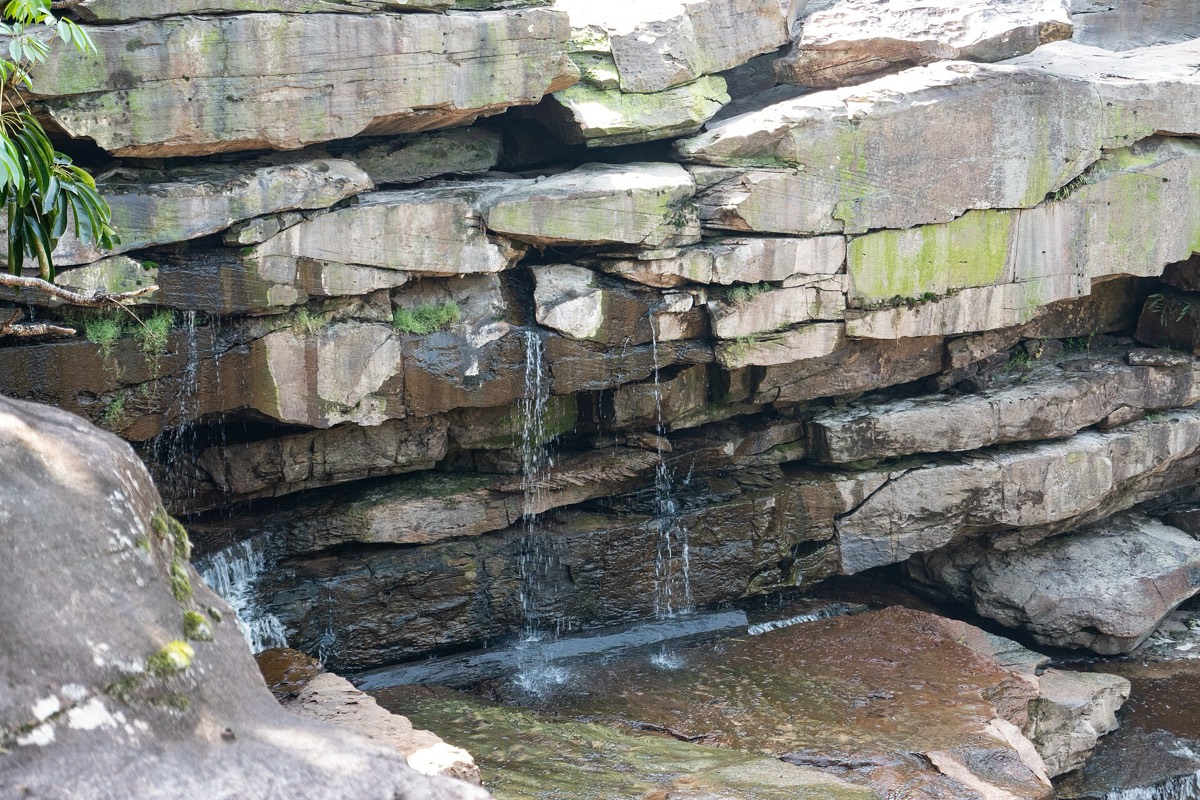
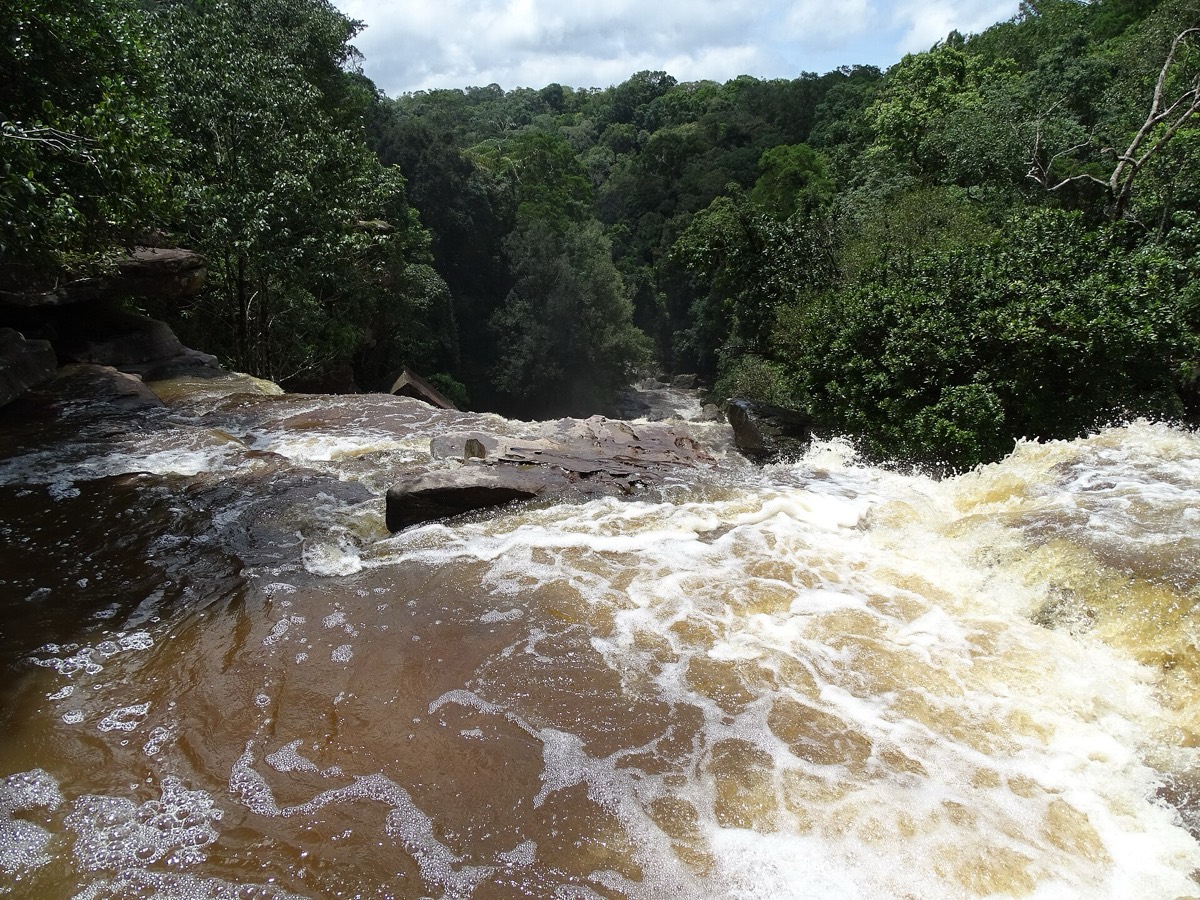
Then there is Popokvil, a waterfall in two tiers on a stream running across the plateau. In the dry season it can be a trickle; in the rains it thunders. Walking there through low, wind-bent forest is one of the nicest short walks on the mountain.
The story
Lok Yeay Mao, Grandmother Mao, is one of the most important neak ta, or guardian spirits, of southern Cambodia. She is said to protect travellers, fishermen and soldiers, and her shrines are found along the roads and coasts of Kampot, Kep and Koh Kong. The large statue on the Bokor road, completed in the early 2010s, made her visible from far away, and drivers sound their horns as they pass in respect.
Wat Sampov Pram dates in its present form from the 1920s, the same era as the hill station. Its name refers to the rocks around it, which, in a story told in different versions, are said to be five boats turned to stone. The pagoda was damaged during the war years and restored afterwards; monks live here, and early-morning chanting carries far in the mist.
The plateau’s forest is unusual. Because of the altitude, wind and poor soils, much of it is a stunted, mossy woodland very different from the tall evergreen forest on the lower slopes. Pitcher plants grow in damp spots, and orchids cling to branches.
The national park still shelters wildlife in its remote parts, including gibbons, hornbills and, according to conservationists, rare cats. You are unlikely to see them from the road, but in the early morning you may hear gibbons singing.

Getting there
Follow the Bokor road from the turn-off west of Kampot. The Lok Yeay Mao statue is on the way up; Wat Sampov Pram and the Popokvil waterfall are signposted on the plateau. A driver or tour makes the day easier, especially in the rainy season when the road is slippery.
The waterfall is reached by a short walk from a parking area; there may be a small fee and a few drink stalls.
A suggested plan
- 7:30 amLeave Kampot; stop at Lok Yeay Mao to see the statue and the offerings.
- 9:00 amWat Sampov Pram and the cliff-edge viewpoint behind it.
- 10:30 amShort walk through the plateau forest to Popokvil waterfall.
- 12:00 pmPicnic or lunch on the plateau.
- 1:30 pmOptional stop at the old church and Palace, then down before the afternoon storms.
Where to stay
Kampot is the natural base. Some travellers combine both Bokor routes in one long day; if you love walking and views, two separate visits in different weather are better.
Good to know
- Cover shoulders and knees at the pagoda and at Lok Yeay Mao’s shrine.
- Bring a small offering of incense or fruit if you want to join locals at the shrine.
- Wear shoes with grip for the wet rocks at the waterfall.
- Ask your guesthouse whether the waterfall is flowing before you go in the dry season.
- Do not swim at the top of the falls or near the edge; currents are strong after rain.
- Leeches appear on forest paths in the wet season; tuck trousers into socks.
- Don’t climb on shrines or sit with your feet pointing toward Buddha images.