Doctor Yersin and the old aquarium: a rainy-day Nha Trang
Two small museums, one about a remarkable scientist who made Nha Trang his home and one full of sea creatures, perfect for a day when the clouds settle on the bay.

- Area
- Nha Trang town
- Start from
- Central Nha Trang
- Distance
- about 6 km between the two museums
- Time needed
- 1 day
- Best season
- All year; ideal in the rainy months
- Difficulty
- Easy
- Transport
- Taxi or ride-hailing
- Tickets & rules
- Small entry tickets at both museums
Why go
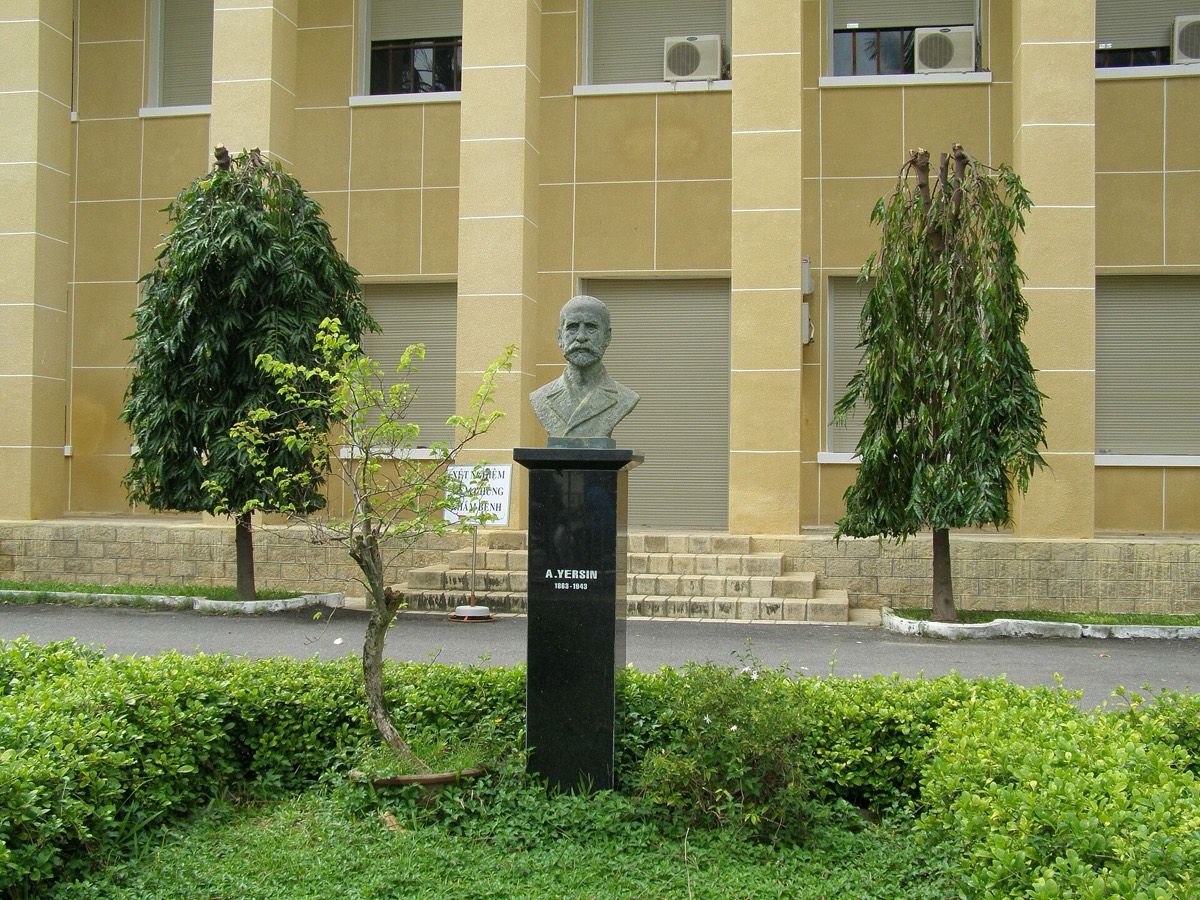
Every city in Vietnam has a street named after Alexandre Yersin, but Nha Trang is where he actually lived. The small museum in the old Pasteur Institute building on the seafront holds his library, his desk, his telescope, maps and a few scientific instruments, and it gives a quiet, human portrait of a man who seems to have preferred fishermen and farmers to official receptions.
The second half of the day takes you south to the port of Cau Da and the Oceanographic Institute, a yellow colonial-era building filled with tanks of reef fish, sea turtles and sharks, and hall after hall of preserved specimens in jars. It feels pleasantly old-fashioned, the opposite of a glossy modern aquarium.
In between, you can watch the boats in Cau Da harbour and walk up to the villas that once belonged to Bao Dai, the last emperor, which now stand in gardens on a headland overlooking the bay.
The story
Alexandre Yersin was born in Switzerland in 1863 and trained under Louis Pasteur in Paris. In 1894, during an epidemic in Hong Kong, he identified the bacterium that causes plague, which today bears his name, Yersinia pestis. But he had already fallen for the coast of Annam, and he made Nha Trang his base, setting up a laboratory here in the mid-1890s.
Yersin was restless. He explored the highlands on foot and horseback, and his reports on the Langbiang plateau led directly to the founding of Dalat as a hill station. He introduced rubber trees and cinchona, the source of quinine, to Vietnam, raised horses and cattle for vaccines, and kept a weather station. Locals called him Ông Năm, ‘Mister Five’, after the five stripes of his rank, and he is buried, at his own wish, on a hillside at Suoi Dau south of the city.
The Oceanographic Institute was founded in the early 1920s, one of the earliest marine research centres in Southeast Asia. Its collection of tens of thousands of specimens has grown over a century of surveys of the South China Sea, and the courtyard holds the skeleton of a large whale, some 18 metres long, that is the favourite of every visiting child.
Bao Dai’s villas were built in the 1920s and 1930s as a seaside retreat for the royal family and later for officials; they are now a hotel and garden, and you can usually walk in for the view.
Getting there
The Yersin museum is on Tran Phu, the beachfront road, inside the Pasteur Institute grounds. The Oceanographic Institute is about 6 km south at Cau Da, near the cable car and boat piers; a taxi takes 15 minutes.
Check opening hours before you go: the Yersin museum keeps office-like hours and may close at lunchtime and on some days of the week.
A suggested plan
- 9:00Yersin museum: his library, instruments and letters.
- 10:30Coffee on the seafront, then a taxi south to Cau Da.
- 11:00Oceanographic Institute: the live tanks first, then the specimen halls.
- 1:00 pmLunch on seafood near the harbour.
- 2:30Bao Dai’s villas on the headland for the view over the bay and the islands.
Where to stay
Any central base works. If you are heading to the islands the next day, staying near the southern end of Tran Phu cuts down on morning travel.
Good to know
- The Yersin museum is small; an hour is plenty, but read the captions, which are full of good detail.
- If you have a car, Yersin’s grave at Suoi Dau is a peaceful detour on the way to the airport.
- The Oceanographic Institute is busiest in the late morning with school groups.
- Combine with the mud baths if the rain continues.
- Some animals at the institute are kept in small tanks; it is a research institution, not a modern sanctuary, and some visitors find that uncomfortable.
- Opening hours change; confirm locally rather than relying on old listings.