Thanh Ha pottery and Kim Bong carpenters
Two craft villages on the edges of Hoi An, one shaping river clay into pots and the other carving wood for houses and boats, both easy to reach by bicycle.

- Area
- Hoi An countryside & coast
- Start from
- Hoi An
- Distance
- about 3 km to Thanh Ha; Kim Bong is across the river
- Time needed
- half a day
- Best season
- All year
- Difficulty
- Easy
- Transport
- Bicycle and a short ferry or bridge
- Tickets & rules
- Small entrance fee for Thanh Ha village and the Terracotta Park
Why go
Most visitors see Hoi An’s crafts only as finished goods in shops. These two villages show where they come from. Thanh Ha, a few kilometres west of the old town, has made pottery from the red clay of the Thu Bon for centuries. Kim Bong, on Cam Kim island just across the river, is the village of carpenters who built and repaired the old town’s houses.
In Thanh Ha, families still work in their front rooms and yards, and an older potter might show you how to throw a pot on a wheel turned by foot or by a helper. Children try their hand at clay whistles shaped like animals. The village also has a Terracotta Park, with small clay models of famous buildings from around the world.
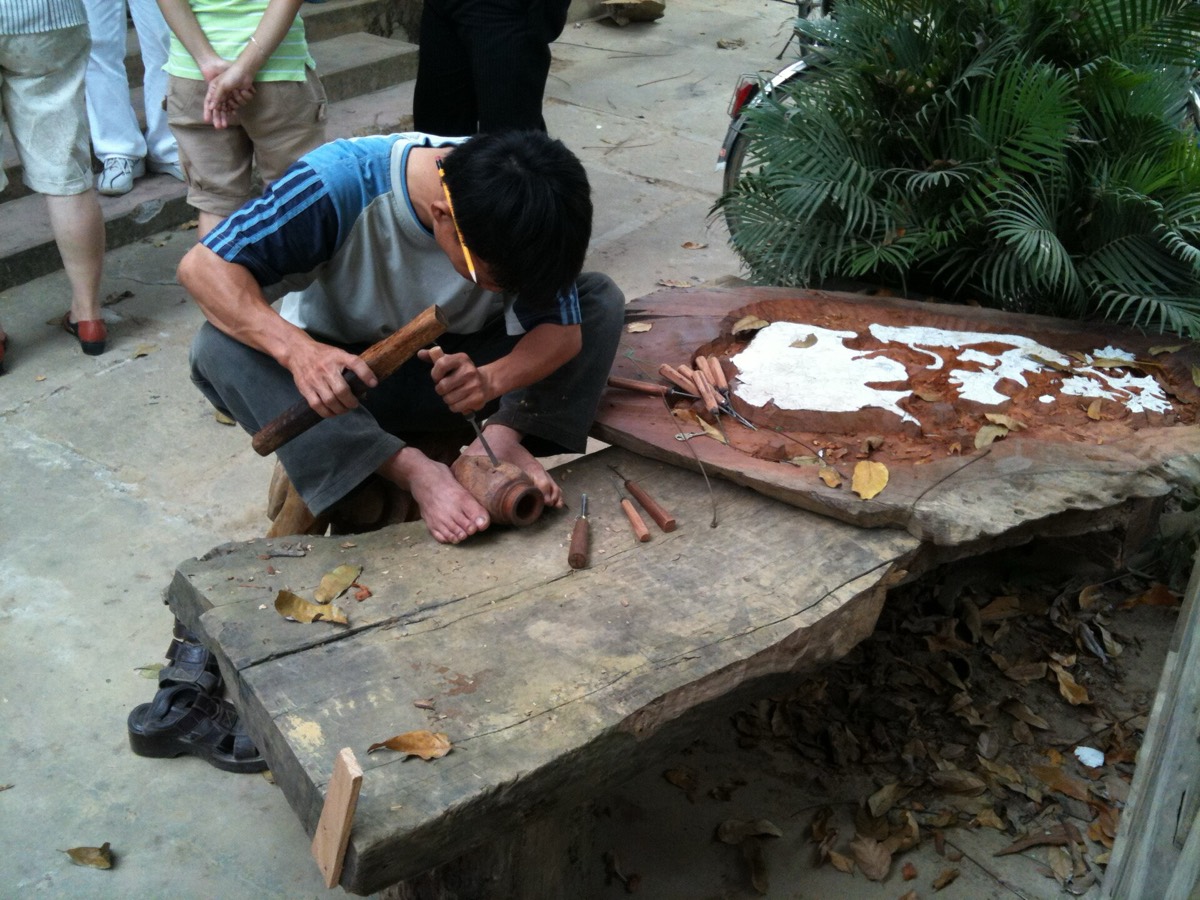
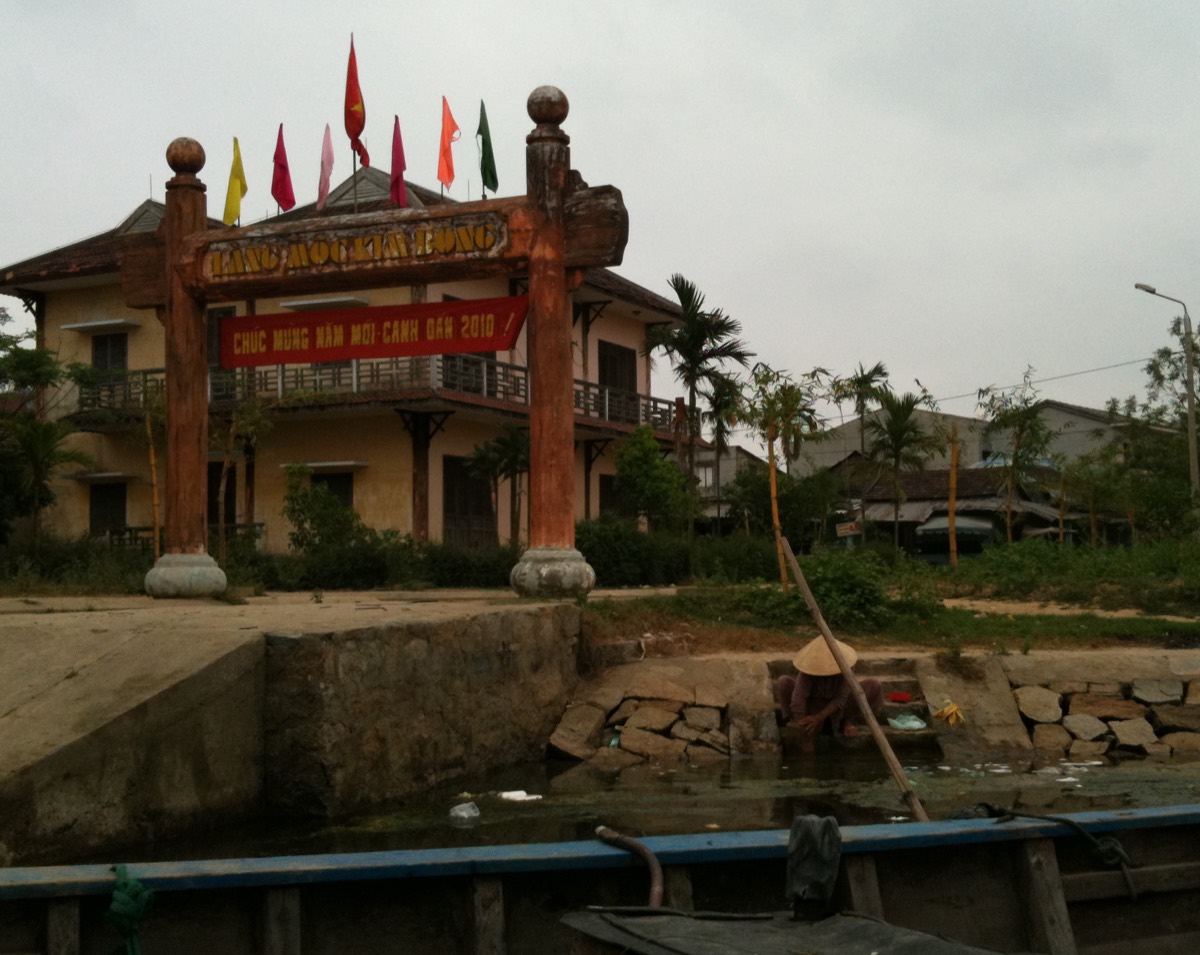
Kim Bong feels even quieter. The bicycle ride across the island goes through banana groves, small boatyards and rice fields. In workshops along the main lane, carpenters shape joists and carve doors with chisels and hand planes, and the sweet smell of sawdust fills the air.
The story
Thanh Ha pottery reached its height in the 16th and 17th centuries, when the port of Hoi An needed jars, bricks and tiles. The village supplied the yin-yang roof tiles you see across the old town. Later, as cheap factory products spread, many families gave up the craft, and by the late 20th century only a handful still worked clay. Tourism has brought it back, at least partly.
The clay is dug from the riverbanks, mixed by hand and shaped without complicated tools. Pieces are fired in simple kilns. The colour, a warm brick red, comes from the iron in the soil.
Kim Bong carpenters were famous across the region. They built Hoi An’s merchant houses with their intricate roof structures, made temple furniture and also built boats. The carving on the old town’s beams, from coiling dragons to bats for good luck, is largely their work.
Today the carpenters make furniture, carved panels and boats for local fishermen, and repair heritage buildings. The restoration of old houses in the town still depends on their skills, and some workshops have trained apprentices for generations within the same family.

Getting there
Thanh Ha is about 3 km west of the old town along Hung Vuong street; cycle or take a taxi. Kim Bong is on Cam Kim island, reached by a bridge from the old town area or by small ferries from the riverbank near the market. Ask locally which crossing is running.
Both villages are flat and easily cycled; a loop of 15–20 km covers both.
A suggested plan
- 7:30Cycle to Thanh Ha and visit a family pottery workshop.
- 9:00The Terracotta Park and a try at the potter’s wheel.
- 10:30Cross to Cam Kim island and cycle through the villages.
- 11:30Watch carpenters at work in Kim Bong, then lunch on the island.
- 13:00Return to Hoi An before the hottest hours.
Where to stay
Stay in Hoi An; homestays on Cam Kim island are an option for those who want rural calm close to town.
Good to know
- Buy small pieces directly from potters; they pack them carefully.
- Carpenters work best in the morning; many rest at midday.
- Ask before taking photos inside a workshop.
- Combine with a fresh coconut from a roadside stall on Cam Kim.
- The roads on Cam Kim are narrow, with motorbikes appearing suddenly from lanes.
- Workshops have sharp tools and wet clay floors; watch where you step.
- Avoid crossing the river during floods.