Cam Thanh: basket boats in the coconut palms
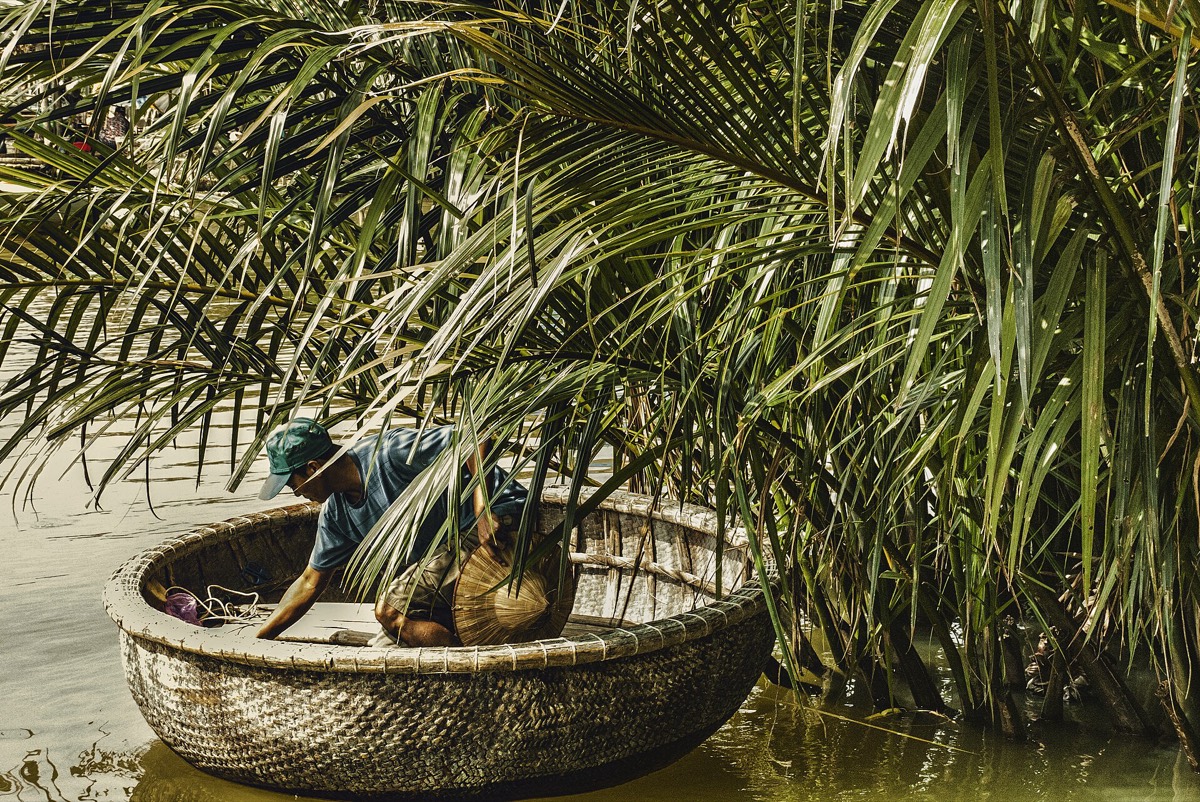
Paddle a round bamboo basket boat through the water-coconut channels east of Hoi An, where fishermen once hid, crabs scuttle in the mud and the palms close overhead.

- Area
- Hoi An countryside & coast
- Start from
- Hoi An
- Distance
- about 5 km each way
- Time needed
- half a day
- Best season
- All year; calmest water February – August
- Difficulty
- Easy
- Transport
- Bicycle or taxi, then a round basket boat
- Tickets & rules
- Fee for the basket boat ride; agree the price first
Why go
East of the old town the land dissolves into water. The Thu Bon spreads into a maze of channels and mudflats where nipa palms, the low ‘water coconut’, grow in thick green walls. The area around Cam Thanh is known locally as the Bay Mau coconut forest, and the way to see it is from a thung chai, a perfectly round boat woven from bamboo and sealed with resin.
The boats are paddled by local fishermen and women who grew up in them. They spin, scull and slip through gaps in the palms that look too narrow, and some will show you how to fish for crabs with a bamboo line and a scrap of bait. You sit low in the boat, close to the water, with the smell of mud and salt and the rattle of palm fronds.
Cycling there is half the pleasure. The road from town runs past rice fields, shrimp ponds and family tombs painted in pastel colours. In the early morning the light on the water is soft and silver, and you share the road with schoolchildren and farmers rather than tour buses.
The story
Basket boats were born, the story goes, from a tax. When the French colonial administration taxed boats in the early 20th century, fishermen are said to have argued that a round basket was not a boat at all. Whether or not that’s true, the round shape has practical advantages: it is cheap to build, hard to capsize and easy to carry up the beach. You still see them stacked on beaches all along the central coast.
The nipa palm forest is a natural defence. Its roots hold the riverbank against floods and storm surges and shelter crabs, fish and shrimp in the brackish water. During the wars of the 20th century, the dense palms also hid local fighters and their boats; older boatmen sometimes point out where they say the hideouts were.
The palms are useful in daily life too. Fronds were traditionally used for thatched roofs and walls, and the sap and young fruit are edible. A few families still cut fronds for roofing, although concrete and metal sheets have replaced most of them.
Tourism changed Cam Thanh quickly. Once a quiet fishing community, it now hosts hundreds of boats on busy days, and some operators stage spinning shows with loud music. Go early, or ask a homestay to arrange a quieter boatman further along the channels, and you still get the peaceful version.
Getting there
Cycle east from the old town along Nguyen Duy Hieu street and then the road toward Cua Dai beach; turn left at signs for Cam Thanh or Bay Mau. It is about 5 km and flat. A taxi or ride-hailing car takes fifteen minutes.
Basket boat operators wait at several landings. Prices vary widely; ask for the price per boat, the duration and whether crab fishing is included.
A suggested plan
- 6:30Cycle out through the rice fields and shrimp ponds.
- 7:30Basket boat through the palm channels, ideally with a quiet boatman.
- 9:00Try crab fishing or a short walk along the village lanes.
- 10:00Coffee in Cam Thanh, then return to town or continue to Cua Dai beach.
Where to stay
Homestays in Cam Thanh village put you right among the paddies and palms. Many offer free bicycles and can arrange a boat with a neighbour, often at a fairer price than at the busy landings.
Good to know
- Ask for a boat without the music show if you want quiet; some operators are happy to oblige.
- Bring a hat and sunscreen: there is little shade on the water.
- Morning light is the most beautiful for photographs.
- Carry cash in small notes.
- Agree on the price and duration before boarding; tips are often expected on top.
- Spinning shows can be rough; hold on, and keep phones in a closed pocket.
- In the flood season the channels can be high and fast-moving; boat trips may be suspended.