A rainy day in Hoi An: museums, workshops and tea
When the monsoon sets in, Hoi An slows down even more: small museums, lantern and tailoring workshops, and long afternoons with tea while rain drums on the roof tiles.

- Area
- Hoi An old town
- Start from
- Hoi An
- Distance
- walking distance
- Time needed
- 1 day
- Best season
- Best in the wet season, September – December
- Difficulty
- Easy
- Transport
- On foot with an umbrella; short taxi rides
- Tickets & rules
- Old town ticket covers several small museums; workshops charge their own fees
Why go
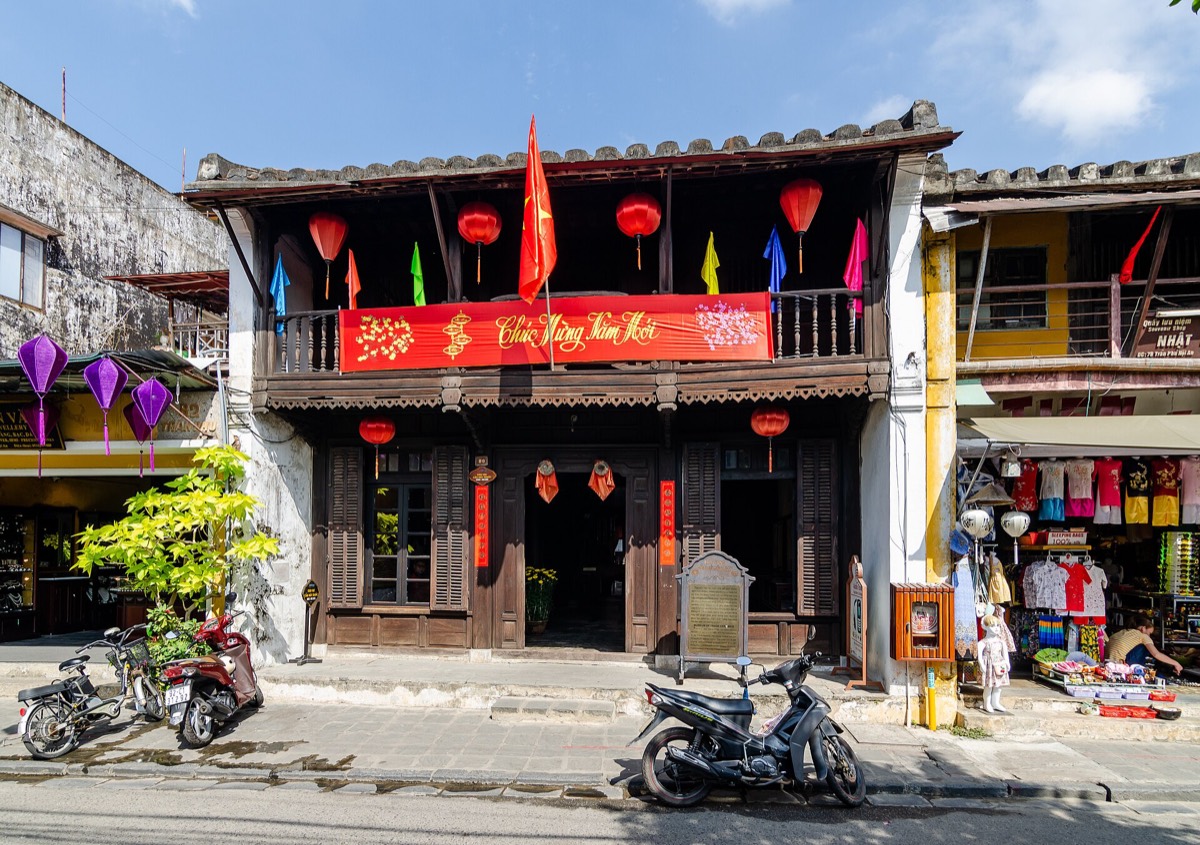
Central Vietnam gets most of its rain between September and December, and when it rains in Hoi An, it really rains. Yet the town is strangely lovely in the wet. The yellow walls go darker, moss glows green on the roof tiles, and the crowds thin out. Locals pull on bright plastic ponchos and carry on.
A rainy day is the right time for the things you might skip under sunshine: the small museums tucked inside old houses, a lantern-making class, an hour at a tailor’s choosing fabric, or a cooking lesson in a covered kitchen. Most of them are within a few minutes’ walk of each other, so you hop from shelter to shelter.
It is also the time to sit. Find a café on the upper floor of an old house with a balcony over the street, order a pot of tea or a hot coffee with condensed milk, and watch the rain fill the lanes. It is one of my favourite memories of Hoi An, and it cost almost nothing.
The story
Hoi An’s museums are small but specific. The Museum of Trade Ceramics, in a restored wooden house, shows shards of Chinese, Japanese, Persian and Vietnamese pottery found in and around the town, some pulled from shipwrecks off the Cham Islands. Together they map the trade routes that made Hoi An rich.
The Museum of Sa Huynh Culture goes much further back. The Sa Huynh people lived along this coast more than 2,000 years ago and buried their dead in large clay jars, sometimes with jewellery of glass and stone. Their culture is thought to be connected to the later Cham kingdoms whose temples stand at My Son.
Tailoring is the town’s most famous modern trade. Hoi An was a cloth market for centuries, and in the 1990s backpackers discovered they could have a suit, a dress or a winter coat made to measure in a day or two. Today there are hundreds of tailors, from tiny family workshops to large showrooms. Quality varies a lot; the good ones insist on several fittings.
Lantern-making workshops teach the basic technique: a bamboo frame bent into ribs, silk cut into panels, glue applied by hand. It takes an hour or two, and you leave with a folded lantern that fits into a suitcase, a better souvenir than anything bought at the market.

Getting there
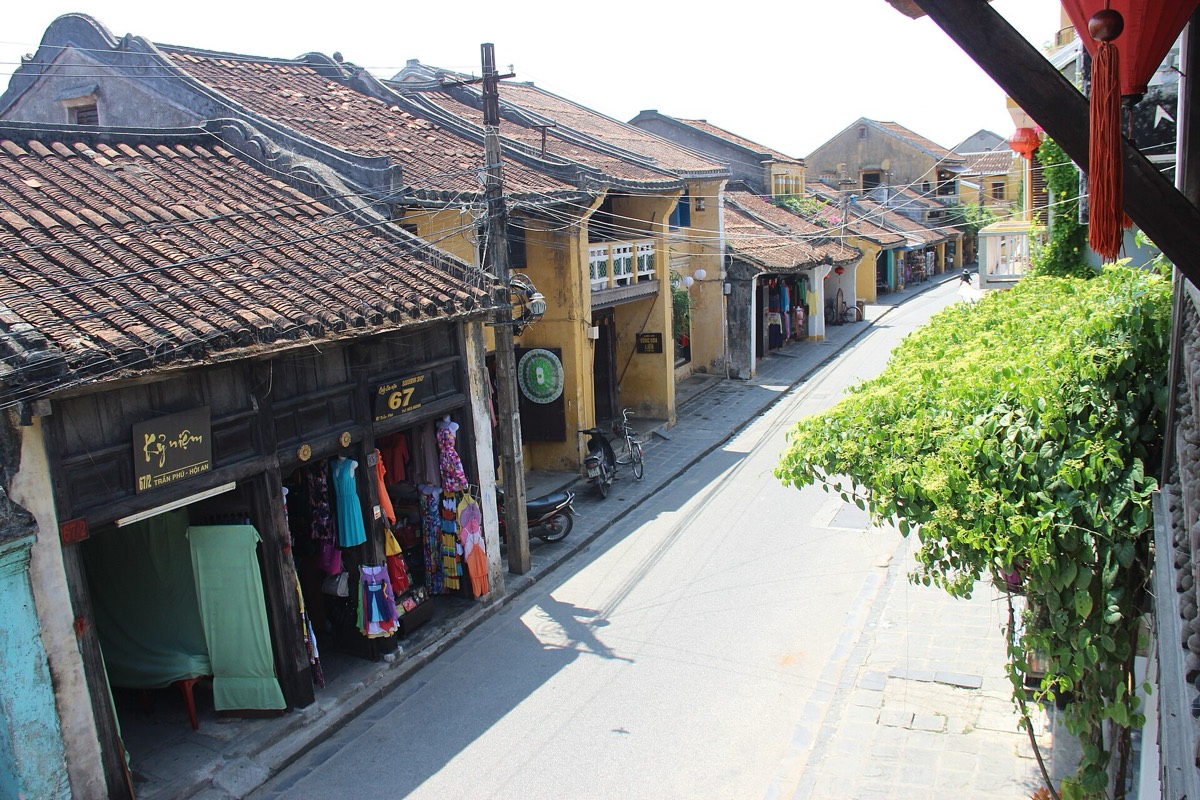
Walk with a good umbrella or poncho. If the river overflows, the lanes closest to Bach Dang street flood first; locals then move around by boat, and you should stay on higher streets such as Phan Chu Trinh.
Ride-hailing cars and taxis can drop you at the edge of the old town.
A suggested plan
- MorningMuseum of Trade Ceramics and the Museum of Sa Huynh Culture.
- Late morningA tailoring fitting or a browse through fabric shops.
- LunchA hot bowl of mi Quang or cao lau at the central market.
- AfternoonA lantern-making class or a cooking lesson.
- Late afternoonTea or coffee on a balcony over the lanes while the rain falls.
Where to stay
In the wet season, choose accommodation slightly away from the riverbank, ideally on raised ground, and ask your host about flooding history before you book.
Good to know
- Order tailored clothes early in your stay to allow for two or three fittings.
- Bring sandals that can get wet; shoes take days to dry in the humidity.
- Many museums are covered by the old town ticket; keep it in a plastic bag.
- Rain usually comes in bursts; plan outdoor stretches for the breaks.
- October and November can bring typhoons and serious floods; follow local warnings and do not walk through moving water.
- Some tailors use pushy sales tactics; agree on price, fabric and delivery date in writing.
- Wet tiles and stone steps are slippery, especially at temple entrances.