A Saigon street-food walk
Banh mi at the counter, broken rice under a tarp, a plate of fresh spring rolls and a glass of sugarcane juice: Saigon tasted one stall at a time.

- Area
- Food & nights
- Start from
- District 1 / District 3
- Distance
- walking distance, plus short Grab rides
- Time needed
- half a day or an evening
- Best season
- All year; evenings are most atmospheric
- Difficulty
- Easy
- Transport
- On foot and by Grab or motorbike taxi
- Tickets & rules
- None
Why go
Saigon eats on the street, all day and all night, and the best food in the city is often served on a plastic stool beside the traffic. Southern cooking is known for its sweetness, its huge plates of herbs and its love of coconut, lime and chilli. A food walk is the fastest way to understand all that, and the cheapest.
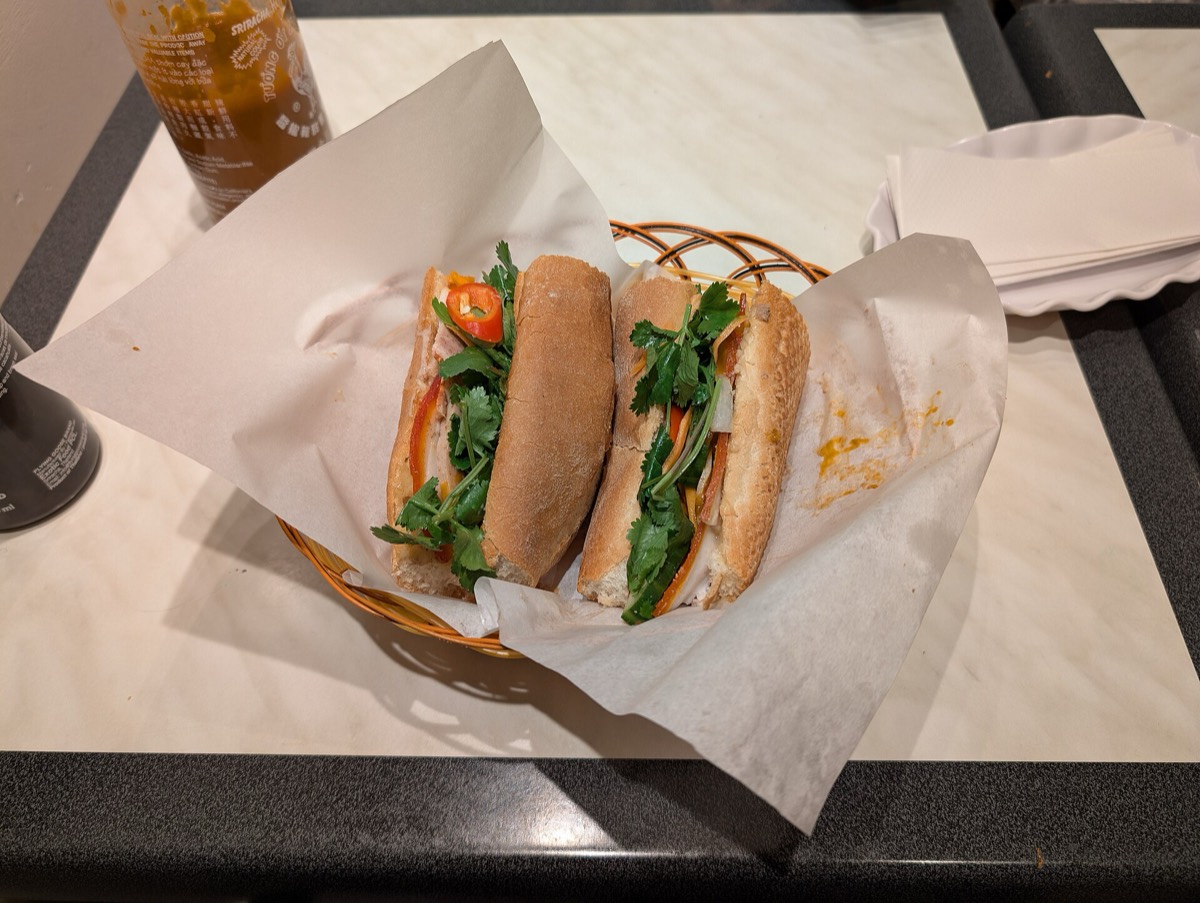
Start with a banh mi, the crusty baguette filled with pâté, cold cuts, pickled carrot and daikon, coriander and chilli. Move on to com tam, broken rice with a grilled pork chop, a slice of egg meatloaf and a little bowl of fish sauce. Try bun thit nuong, cold rice noodles with grilled pork and herbs, or a bowl of hu tieu, a clear noodle soup brought by Chinese and Cambodian influences.
Finish with sweets: che in glasses, layered with beans, coconut milk and jelly.
The story
The banh mi was born in the colonial era, when baguettes arrived with the French. Over time, Vietnamese bakers made the bread lighter and crisper, using rice flour in some recipes, and the fillings became entirely local. Saigon is often called the home of the classic version, and some bakeries have been making them for decades.
Com tam was once a poor man’s dish: broken rice grains, left over after milling, were cheaper than whole ones and sold to labourers. Today it is the city’s favourite lunch, eaten by everyone from students to bankers.
Hu tieu Nam Vang, literally Phnom Penh noodles, shows how food travels across borders. It came to Saigon through Chinese communities in Cambodia and became a southern staple, served with pork, shrimp and quail eggs in a clear, slightly sweet broth.
Many of the city’s best stalls are run by the same families for two or three generations, often specialising in a single dish. When you find a stall that sells only one thing, and it is full, sit down.
Getting there
Start in District 1 or District 3; the best food streets are scattered, so short Grab rides between them help. Many hotels and guesthouses can recommend local stalls near you, and food tours run by students are a good way to start if you’re hesitant.
A suggested plan
- StartA banh mi at a busy bakery counter.
- Second stopCom tam with grilled pork chop and egg.
- Third stopFresh spring rolls or bun thit nuong in a District 3 alley.
- DrinkA glass of sugarcane juice with lime or a fresh coconut.
- DessertChe or a flan with coffee caramel to finish.
Where to stay
District 1, 3 and 4 all have excellent street food within walking distance. District 3 is particularly good for local eateries in quiet residential streets.
Good to know
- Follow the crowds: a busy stall means fresh food and fast turnover.
- Most stalls specialise in one dish; just point and smile.
- Carry tissues; napkins are not always provided.
- Ask for less sugar in drinks if southern sweetness is too much.
- Check prices before ordering in tourist areas; some stalls have special prices for foreigners.
- Ice in cities is usually made from purified water, but if your stomach is sensitive, take it slowly.
- Beware of motorbikes parking on the pavement next to your stool.