Chau Doc, Sam Mountain and the Tra Su forest
A border town on the Hau River, a holy mountain of pilgrims and a flooded forest where boats push through a carpet of bright green duckweed.

- Area
- Mekong Delta
- Start from
- District 1
- Distance
- about 250 km west
- Time needed
- 2–3 days
- Best season
- Tra Su is greenest and fullest from September to November, during the flood season
- Difficulty
- Easy
- Transport
- Bus or car to Chau Doc, then local boats and taxis
- Tickets & rules
- Entry fees for Tra Su forest and some temples
Why go
Chau Doc, near the Cambodian border, feels like a different delta. The town is a mix of Vietnamese, Khmer, Cham and Chinese communities, with mosques, pagodas and temples side by side. Along the river, houses float on rafts above fish farms, and you can visit one to see the fish being fed from below the floorboards.
Sam Mountain, just outside town, is one of the most important pilgrimage sites in southern Vietnam, crowded with pagodas and temples, with views over rice fields to Cambodia from the top.
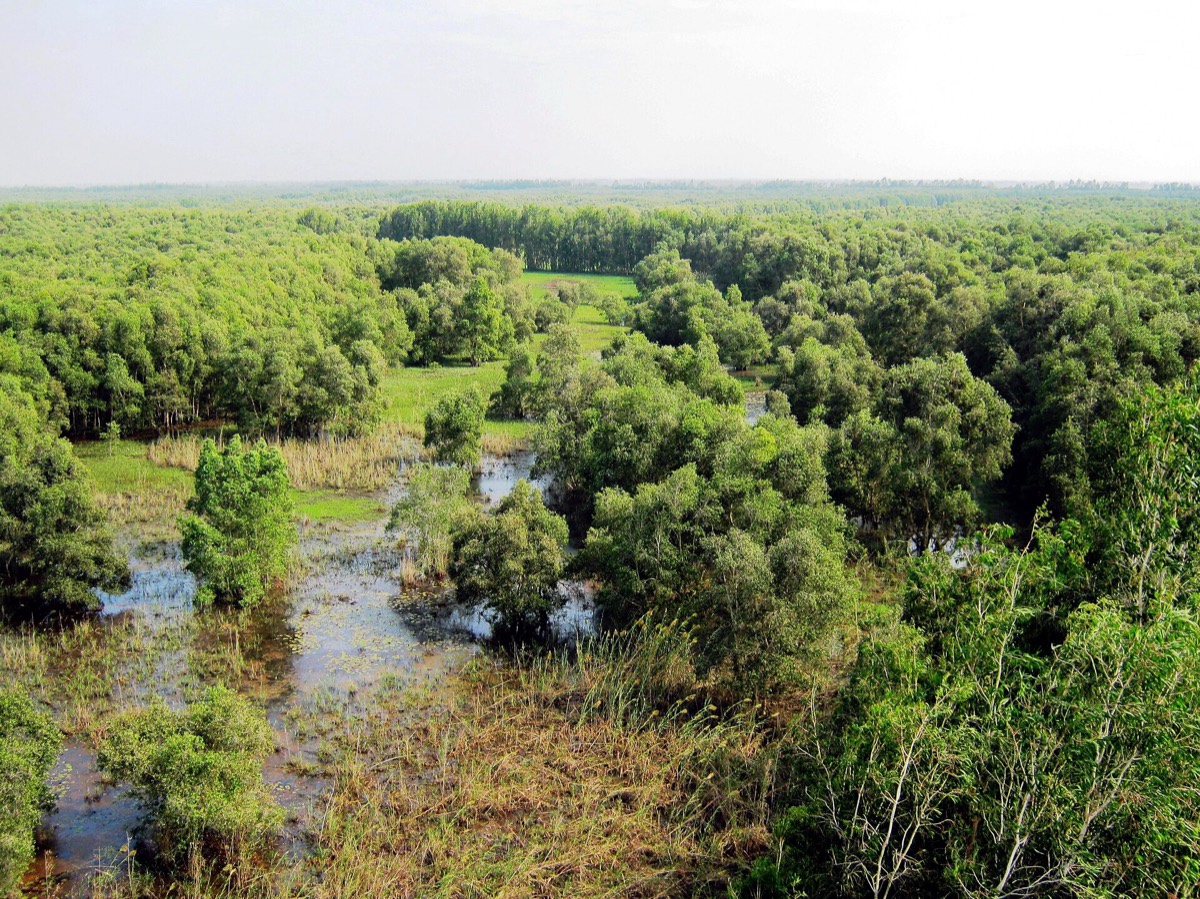
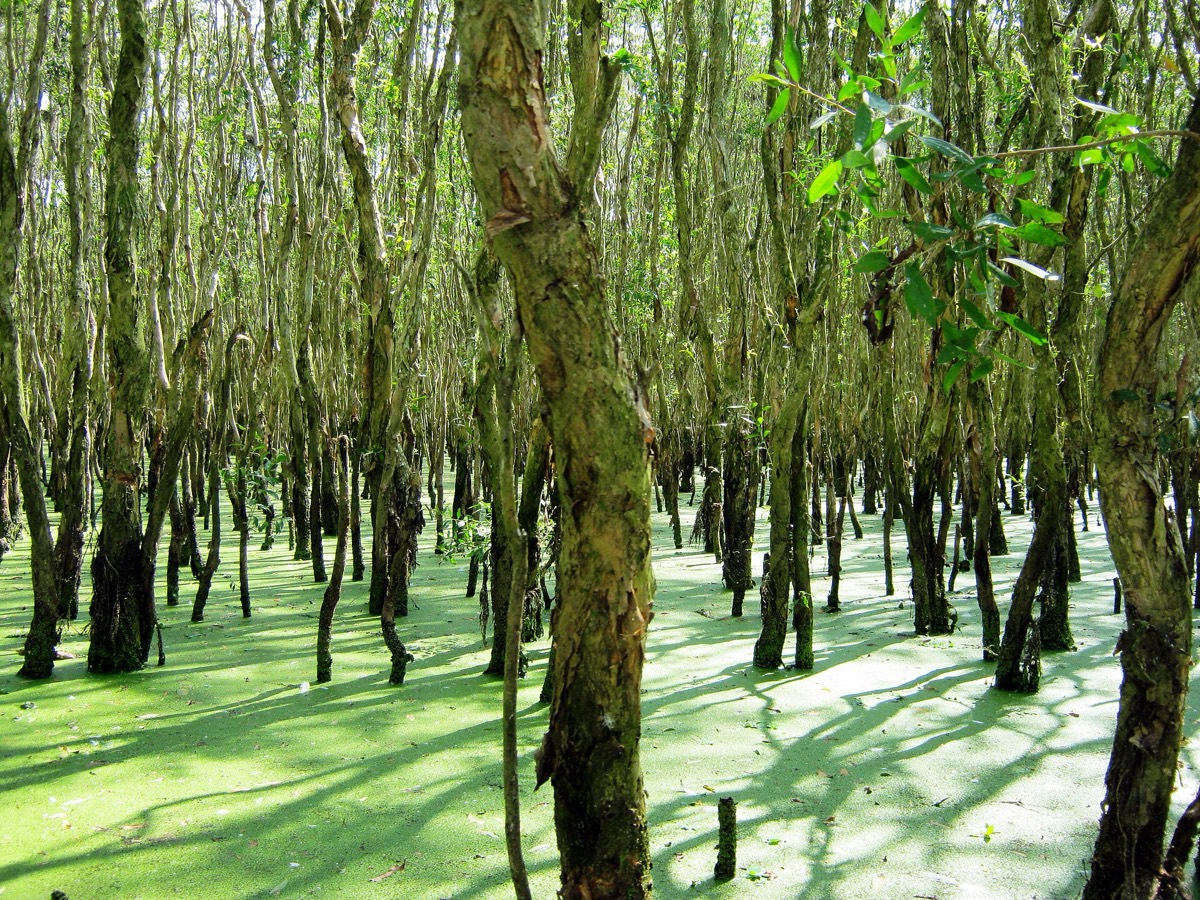
But the highlight for many travellers is the Tra Su melaleuca forest, about thirty kilometres away. Small motorboats and rowing boats glide along channels covered in a vivid green layer of duckweed, under the white trunks of melaleuca trees, with storks, herons and cormorants overhead.
The story
Chau Doc grew as a border and trading town, and its mixture of cultures reflects centuries of movement across the delta. The Cham villages on the river, with their wooden houses on stilts and their mosques, are home to a Muslim community whose ancestors came from the old kingdom of Champa further north.
The Temple of Ba Chua Xu, the Lady of the Realm, at the foot of Sam Mountain, is the centre of a popular cult. According to legend, a statue of the Lady was found on the mountain and could only be carried down by young women. Her festival, in the fourth lunar month, attracts huge crowds of pilgrims from all over the south.
The Tra Su forest is a protected wetland of melaleuca, or paperbark trees, which thrive in the flooded, acidic soils of the delta. It is an important bird sanctuary, especially during the annual flood season.
The flood season, roughly from August to November, transforms the whole region. Fields become lakes, fishing nets appear everywhere, and families harvest fish and water lilies that bloom across the flooded land.

Getting there
Buses run from Saigon to Chau Doc in about six to seven hours; some travellers break the journey in Can Tho. From Chau Doc, take a taxi or motorbike to Tra Su forest, about forty-five minutes away. Boat trips in the forest are arranged at the entrance.
A suggested plan
- Day 1Travel to Chau Doc; evening walk along the riverfront.
- Day 2 morningBoat to the floating fish farms and the Cham village.
- Day 2 afternoonClimb or drive up Sam Mountain for sunset, visiting the Ba Chua Xu temple.
- Day 3 morningEarly trip to the Tra Su forest by boat.
- Day 3 afternoonReturn to Saigon or continue to Can Tho.
Where to stay
Chau Doc has simple hotels and a few riverside places with views of the river; staying overnight lets you enjoy quiet mornings on the water.
Good to know
- Bring binoculars for birdwatching in Tra Su.
- Visit early in the morning for the best light and the most birds.
- Dress modestly when visiting mosques and temples.
- Try the local fish sauce and fermented fish dishes, a Chau Doc speciality.
- Sun and heat on the open water are intense; bring a hat and water.
- Mosquitoes are numerous in the forest; use repellent.
- During festivals, accommodation fills up quickly; book ahead.