Can Tho and the Cai Rang floating market
Rise before dawn to watch boats piled with pineapples and pumpkins trade on the river, then explore the canals and orchards of the Mekong Delta’s biggest city.


- Area
- Mekong Delta
- Start from
- District 1
- Distance
- about 170 km south-west
- Time needed
- 2 days
- Best season
- All year; the floating market is best between 5 and 7 am
- Difficulty
- Easy
- Transport
- Bus or car to Can Tho, then a boat to the market
- Tickets & rules
- Boat hire; no permits
Why go
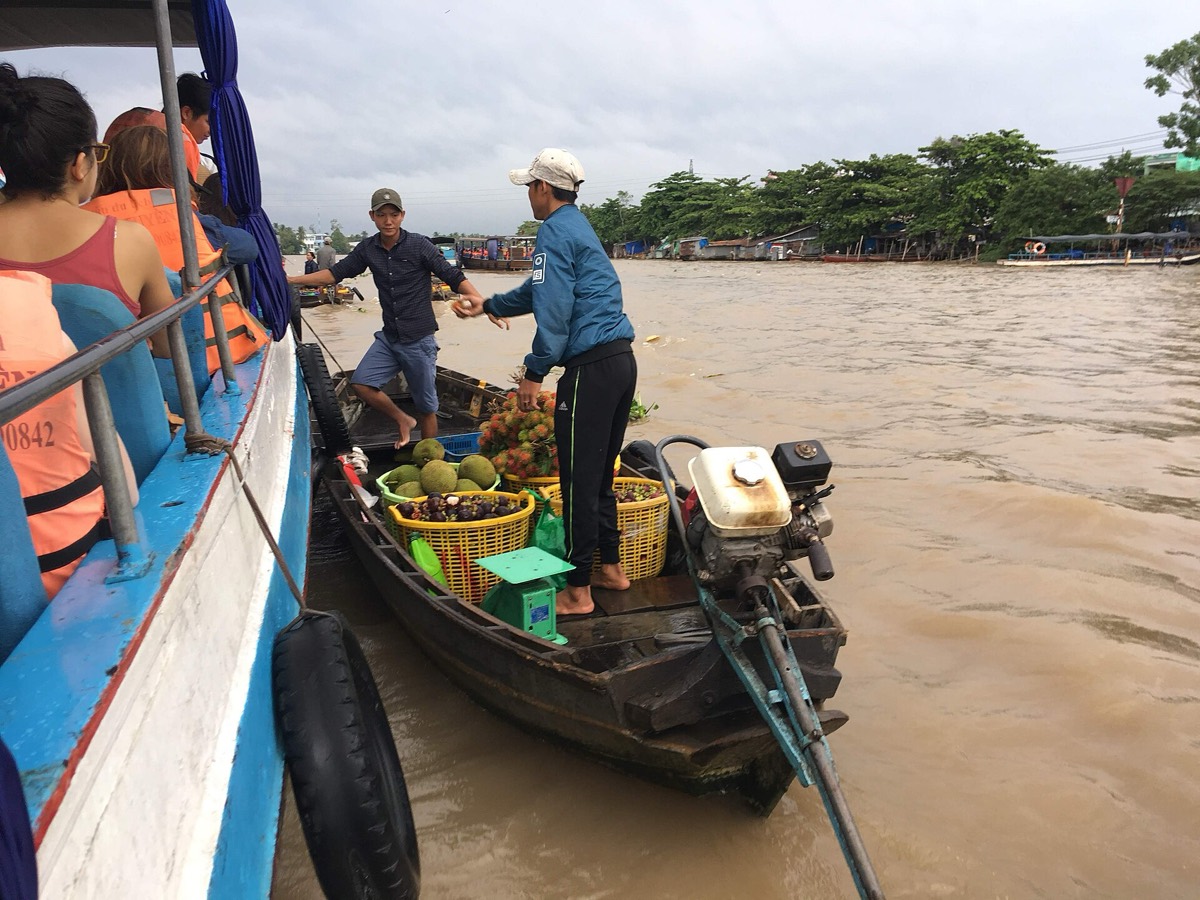
Can Tho is the unofficial capital of the Mekong Delta, a lively riverside city where life still revolves around water. Its great attraction is the Cai Rang floating market, held on the Can Tho River every morning from dawn. Large boats loaded with fruit and vegetables anchor in the middle of the river, and smaller boats come to buy from them.
Each boat ties a sample of what it sells, a watermelon, a bunch of onions, a pineapple, to a tall bamboo pole, so buyers can see from a distance. Breakfast is served from boats too: a woman will row up with a pot of noodle soup and hand you a bowl across the gunwales, followed by a coffee.
After the market, the boat can carry you deeper into the smaller canals, past orchards, rice noodle workshops and stilt houses.
The story
Floating markets grew naturally in the delta, where roads were few and canals many. Farmers brought their produce by boat to the junctions of big rivers, and wholesale traders carried it on to towns and cities.
Cai Rang has been shrinking as roads and bridges improve and more trade moves to land, but it remains the largest and most famous floating market in the delta. Locals worry about its future, and efforts are being made to preserve it.
Can Tho grew rich on rice and river trade. The Binh Thuy ancient house, built in the late nineteenth century by a wealthy local family, blends French and Vietnamese styles and has appeared in several films.
The Can Tho bridge, opened in 2010, was a huge step for the region. Before it, everyone travelling to Can Tho from Saigon had to cross the wide Hau River by ferry, often waiting hours in the queue.

Getting there
Buses run frequently from Saigon’s Mien Tay bus station to Can Tho in around three and a half to four hours. Boats to Cai Rang can be arranged at Ninh Kieu wharf in the city centre, or through your hotel, usually leaving around 5 am.
A suggested plan
- Day 1 morningTravel from Saigon to Can Tho.
- Day 1 afternoonVisit the Binh Thuy ancient house and stroll along Ninh Kieu wharf.
- Day 1 eveningDinner and the night market by the river.
- Day 2, 5:00Boat to Cai Rang floating market; breakfast on the water.
- Day 2, late morningExplore smaller canals, a rice noodle workshop and orchards; return to Saigon in the afternoon.
Where to stay
Stay near Ninh Kieu wharf for easy access to boats and the riverside promenade, or in a garden homestay outside the city for a more rural experience.
Good to know
- Book your boat the evening before and agree on the route and price.
- Smaller boats are more flexible and can enter narrow canals.
- Bring a light jacket for the early morning on the water.
- Try hu tieu noodle soup on the boat for breakfast.
- The market is mostly over by 8 or 9 am; go early.
- Wear a life jacket if offered, especially with children.
- Agree on the price clearly to avoid disputes at the end.