The Street of Harmony and Little India
On a single street, a church, a Chinese temple, a Hindu shrine and a mosque have stood side by side for two centuries, ringed by spice shops and Tamil music.

- Area
- George Town
- Start from
- Fort Cornwallis, George Town
- Distance
- about 3 km on foot
- Time needed
- half a day
- Best season
- All year; Deepavali and Chinese New Year are spectacular
- Difficulty
- Easy
- Transport
- On foot
- Tickets & rules
- Modest dress at temples and the mosque; small entry fee at Fort Cornwallis
Why go
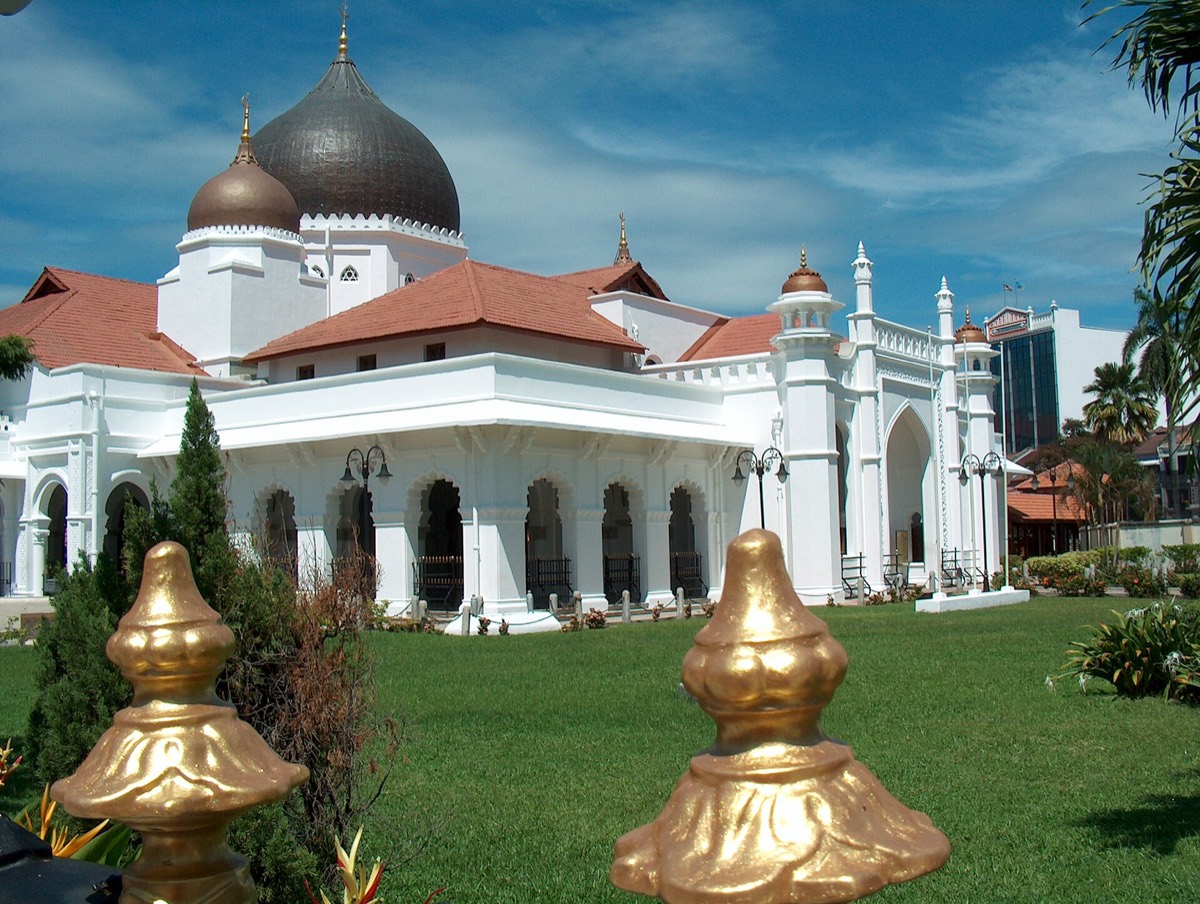
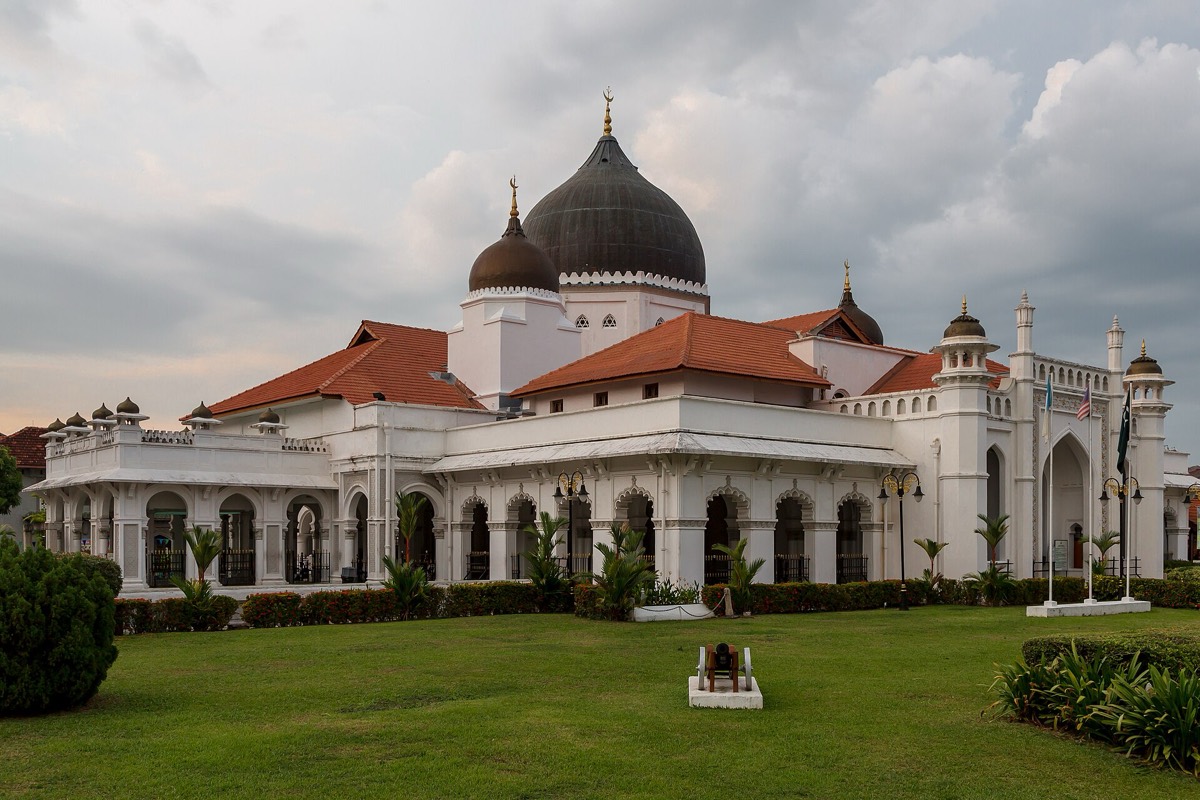
Jalan Masjid Kapitan Keling, still called Pitt Street by older residents, is the clearest picture of how George Town grew. Walk it from north to south and you pass St George’s Church, the Goddess of Mercy Temple, the Sri Mahamariamman Temple and the Kapitan Keling Mosque, all within a few hundred metres. Locals call it the Street of Harmony.
Around it lies Little India, with spice shops, garland makers, sari stores and blasting Tamil film songs. Banana-leaf lunches here are cheap and generous.
Starting at Fort Cornwallis and the old Esplanade gives the walk a beginning, a sense of the place where the town was first founded.
The story
In 1786 Captain Francis Light of the British East India Company landed on this cape and established a trading post, the first British settlement in Malaya. Legend says he fired silver coins from a cannon into the jungle to encourage his labourers to clear it. Fort Cornwallis, built on the landing spot, was first a wooden stockade and later rebuilt in stone.
Light declared Penang a free port and invited everyone to settle, which is how the Chinese, Indians, Malays, Acehnese, Armenians, Jews and Europeans came to share this narrow peninsula. Each community was given land for its place of worship close to the others.
St George’s Church, completed in 1818, is one of the oldest Anglican churches in Southeast Asia. The Goddess of Mercy Temple dates from around 1800 and is perpetually wreathed in incense. The Sri Mahamariamman, with its towering gopuram crowded with deities, was founded in the 1830s, and the Kapitan Keling Mosque was established by Indian Muslim traders around 1801.
Penang’s Indian Muslim community gave the island one of its signature foods, nasi kandar, named for the pole (kandar) on which hawkers once carried rice and curries through the streets.

Getting there
Fort Cornwallis is on the northeast tip of George Town, at the end of Light Street. Walk west along Light Street and south down Jalan Masjid Kapitan Keling.
Little India fills the lanes around Lebuh Pasar, Lebuh Queen and Lebuh King, just east of the mosque.
A suggested plan
- 8:30Walk the walls of Fort Cornwallis and look out from the Esplanade.
- 9:30St George’s Church, then the Goddess of Mercy Temple.
- 10:30Sri Mahamariamman Temple and the spice shops of Little India.
- 11:30Kapitan Keling Mosque (outside prayer times).
- 12:30Banana-leaf lunch or nasi kandar in Little India.
Where to stay
Little India and the area around Lebuh Chulia are lively and central; the quieter lanes near Muntri Street are a five-minute walk away.
Good to know
- Remove your shoes at the Hindu temple and the mosque; robes are often provided at the mosque for visitors.
- Eat with your right hand at banana-leaf restaurants, or ask for a spoon; nobody minds.
- During Thaipusam and Deepavali Little India is packed and magical.
- The old clock tower by the fort was a gift for Queen Victoria’s jubilee.
- Avoid visiting the mosque during Friday prayers.
- Little India’s traffic is chaotic; cross with care.