Khoo Kongsi and the clan houses of the Five Big Clans
Behind a narrow lane lies the most extravagant clan temple in Malaysia, a riot of gilded carving and ceramic dragons built by Hokkien families who ruled George Town’s trade.

- Area
- George Town
- Start from
- Cannon Square, George Town
- Distance
- walking distance, about 2 km
- Time needed
- half a day
- Best season
- All year; mornings are quieter
- Difficulty
- Easy
- Transport
- On foot within the heritage zone
- Tickets & rules
- Entry fee at Khoo Kongsi (around RM 10–20, check current price); small fees or donations at other clan houses
Why go
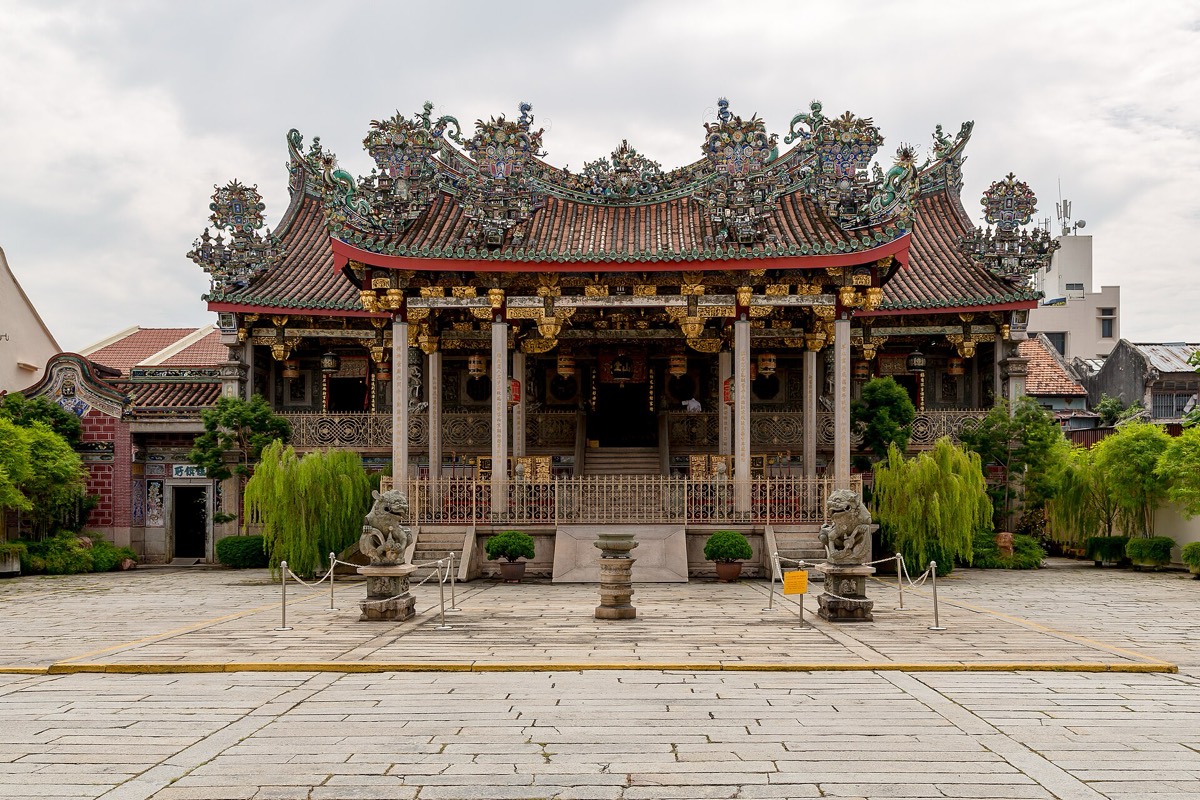
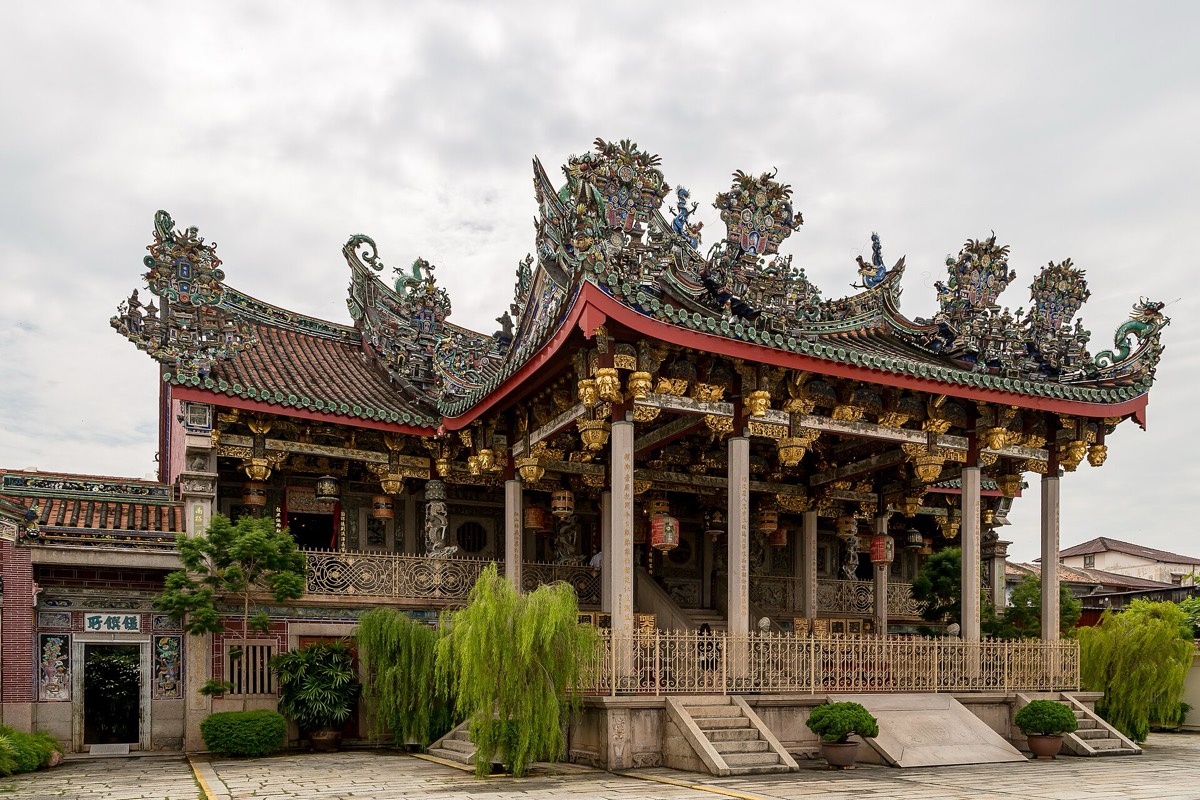
You approach Khoo Kongsi through a tunnel-like passage off Cannon Street, and then the square opens and the temple appears all at once: a sweeping roof crowded with porcelain figures, granite pillars wrapped in dragons, every beam and bracket gilded and painted. It’s one of the most astonishing buildings in Southeast Asia, and few people expect it.
Inside, the ancestral hall is lined with tablets naming generations of Khoos, along with the achievements of their sons: scholars, officials, doctors and lawyers. It feels less like a museum than a family album carved in wood.
Nearby, smaller clan houses of the Cheah, Yap, Tan, Lim and Yeoh families are quieter and often free. Walking between them gives you a sense of how this town was really organised.
The story
The kongsi were clan associations formed by migrants from the same village or surname in southern China. The Khoo clan came from Sin Kang, a village in Fujian, and from the 1830s it pooled money to buy land, build a temple and look after its members: housing the newly arrived, paying for funerals, settling disputes, educating children.
The temple you see today is the clan’s second attempt. The first grand version, finished at the end of the 19th century, burned soon after completion; some said it was too magnificent, rivalling the emperor’s palace, and that the gods were displeased. The rebuilt hall, completed in the early 20th century, is only a little more modest.
In the 19th century the Five Big Clans of Penang, the Khoo, Cheah, Yeoh, Lim and Tan, controlled much of the trade in tin, rice, opium and shipping. They were also woven into the secret societies whose rivalries spilled into open street fighting during the Penang Riots of 1867.
Cannon Square itself is said to be named after a crater left by a cannonball fired from Fort Cornwallis during an early siege. It’s a lovely legend, and like many George Town stories, nobody can quite prove or disprove it.

Getting there
Khoo Kongsi is on Cannon Square, reached through a narrow lane from Cannon Street or Armenian Street. It’s a ten-minute walk from most heritage-zone guesthouses.
The Cheah Kongsi is on Armenian Street, the Yap Kongsi on Armenian Street near Chulia, and the Lim and Tan clan jetties and temples lie down towards Weld Quay.
A suggested plan
- 9:00Enter Khoo Kongsi as it opens; spend an hour in the main hall, the theatre stage and the small museum below.
- 10:15Walk to the Cheah Kongsi on Armenian Street, one of the oldest clan associations in Penang.
- 11:00Visit the Yap Kongsi and its small temple, painted in bright red and green.
- 12:00Lunch at a nearby hawker stall or kopitiam.
- AfternoonContinue down to Weld Quay to see the clan jetties, which follow the same family logic on water.
Where to stay
Stay in the heritage core around Armenian Street, Cannon Street or Lebuh Acheh, where several clan houses are literally around the corner.
Good to know
- Take time on the stone floor of the courtyard: the roofline photographs best from the far corner.
- Look for the small portrait figures in the carvings, including a few Sikh guards, a nod to Penang’s mixed population.
- The kongsi sometimes host weddings, cultural shows or clan ceremonies. If something is happening, keep a respectful distance.
- Opening hours change on festival days; check before going.
- Behave as you would in a temple: speak softly, don’t touch the altars and ask before photographing people praying.
- Stone floors can be slippery after rain.