Mahsuri: the tomb, the curse and the burnt rice
A quiet white tomb among paddy fields tells the island’s most famous story: a wronged woman, white blood and a curse that lasted seven generations.

- Area
- Mountains & rice country
- Start from
- Kampung Mawat, near Pantai Cenang
- Distance
- about 12 km from Pantai Cenang
- Time needed
- half a day
- Best season
- All year
- Difficulty
- Easy
- Transport
- Car, scooter or taxi
- Tickets & rules
- Entrance fee at the Mahsuri complex; dress modestly
Why go
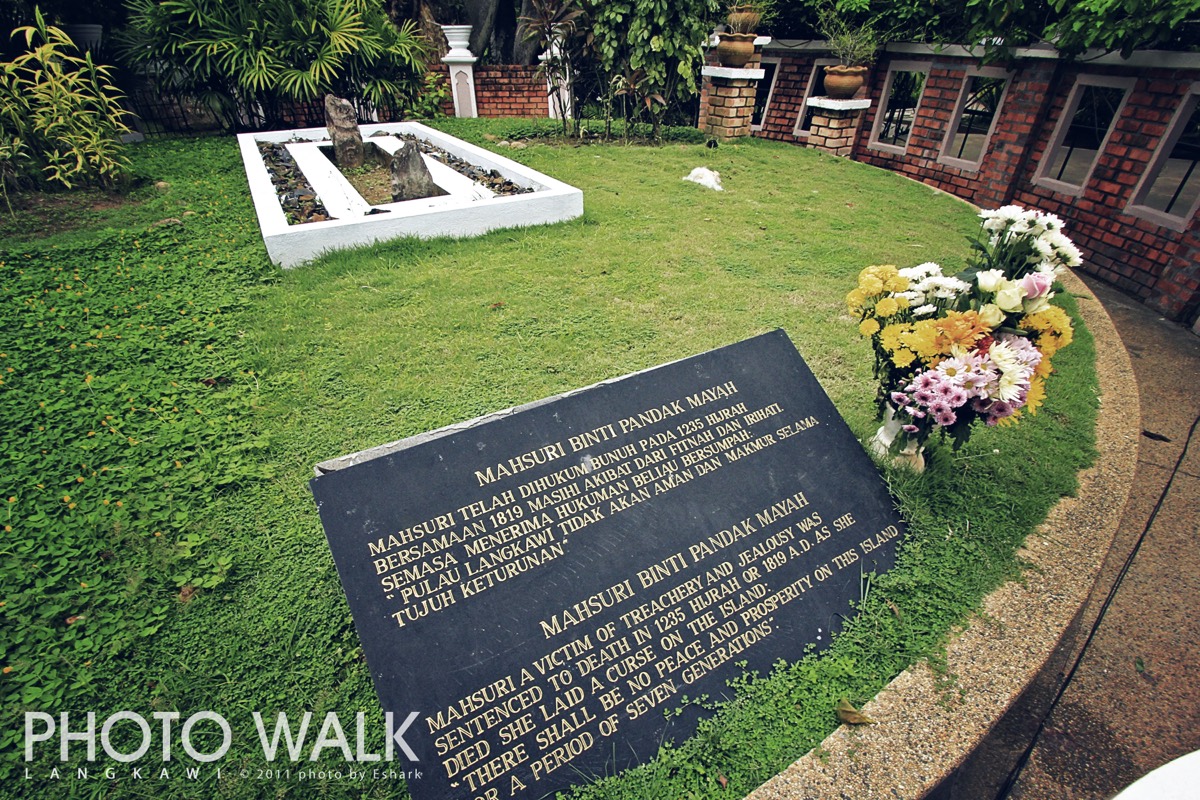
Every visitor to Langkawi eventually hears the story of Mahsuri, and the place to hear it properly is her tomb at Kampung Mawat, in the rice country north of Pantai Cenang. The white marble grave sits in a small garden, surrounded by a restored traditional house, a well and a small museum.
The setting is calm and green, with flowering trees and the occasional rooster wandering through. Many Malaysian visitors come here almost as pilgrims, and you will see families reading the panels slowly and speaking in low voices at the grave.
A short drive away is Padang Matsirat, the field of burnt rice, linked to another chapter of the island’s history. Together they make a good half-day that explains a lot about how Langkawi sees itself.
The story
Mahsuri was a young woman of the late eighteenth century, famous for her beauty, married to a warrior named Wan Darus. While he was away at war, she was accused of adultery with a travelling poet, Deramang, by a jealous relative. Despite her pleas of innocence, she was sentenced to death.
According to the legend, the executioners could not kill her until she told them to use her family’s kris. When the blade struck, white blood flowed from the wound, a sign of her innocence. With her dying breath she cursed Langkawi with seven generations of bad luck.
In the decades that followed, the island suffered invasions from Siam and periods of poverty. At Padang Matsirat, villagers are said to have burned their rice stores in 1821 to keep them from the invaders, and after heavy rain blackened grains still sometimes surface in the fields.
Langkawi’s fortunes changed in the late 1980s, when it became a duty-free island and tourism grew quickly. Many locals connect the turnaround to the end of the seventh generation, and a family in Thailand claiming descent from Mahsuri has visited the tomb to great public interest.
Getting there
The tomb is in Kampung Mawat, about 20 minutes by car from Pantai Cenang and 30 minutes from Kuah. Signs point the way from the main road.
Padang Matsirat is about 10 minutes further, toward the airport. A taxi for both is easy to arrange.
A suggested plan
- MorningVisit the Mahsuri tomb complex and read the story panels.
- Mid-morningLook around the traditional house and well.
- Late morningDrive to Padang Matsirat and the burnt rice site.
- LunchEat at a village stall nearby.
- AfternoonContinue to the rice plains or back to Pantai Cenang.
Where to stay
Pantai Cenang is closest. Kuah is fine with a short drive.
Good to know
- Dress modestly: shoulders and knees covered.
- Go early when it is quieter and cooler.
- Allow time to read the panels; they tell the story well.
- Some guides combine this with rice fields and craft visits.
- Treat the tomb as a sacred place; keep voices low.
- Avoid the hottest midday hours; the site has limited shade.