By Bicycle through the Western Villages
A slow ride across the river and into the valley of rice paddies, Hmong and Lao villages, karst towers and quiet caves.

- Area
- Vang Vieng river
- Start from
- Vang Vieng town
- Distance
- about 15–25 km round trip
- Time needed
- 1 day
- Best season
- November – February is coolest; the rice is green from July to October
- Difficulty
- Moderate
- Transport
- Rented bicycle or mountain bike
- Tickets & rules
- Small fees for bridges, caves and some viewpoints
Why go
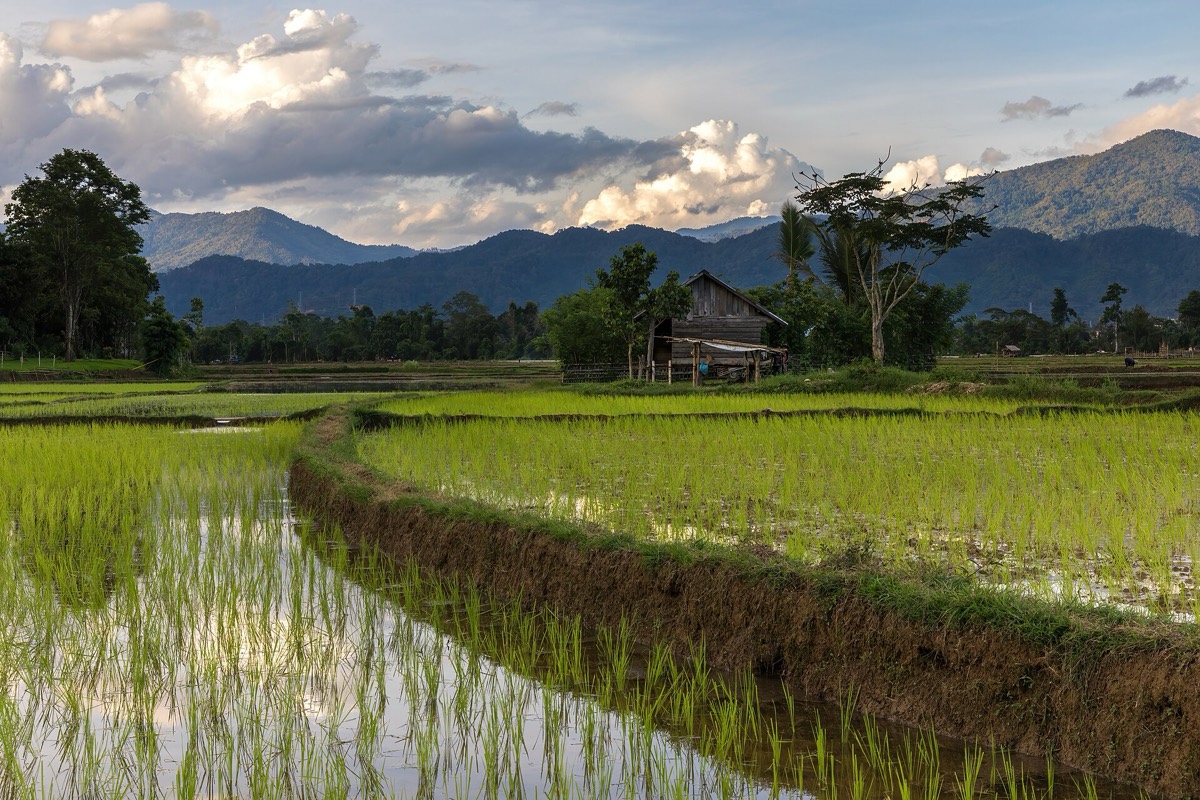
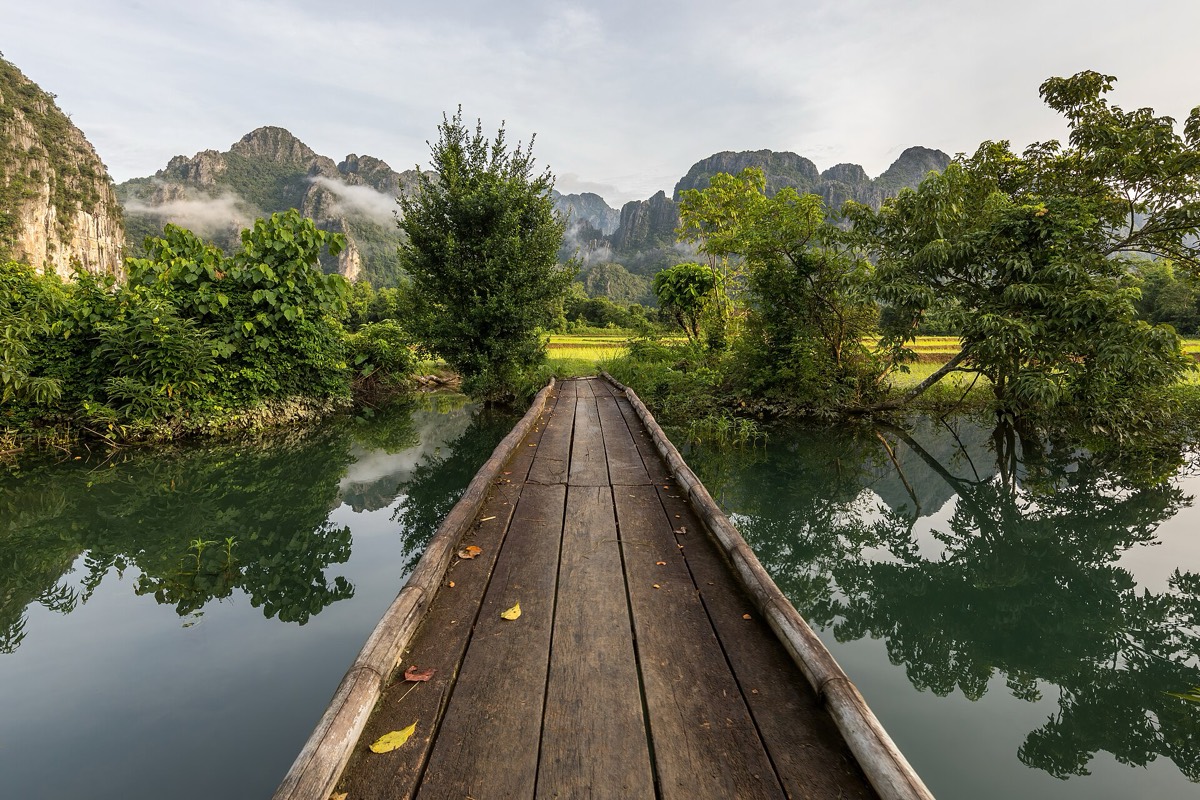
Cross the river from Vang Vieng and the town falls away almost at once. A dusty road winds west through rice paddies, past wooden houses on stilts, small village shops and schools, with the karst cliffs always close on either side.
On a bicycle you move at the perfect speed for this landscape: slow enough to wave to children, stop for a coconut and peek into a village temple, but fast enough to cover the distance to the lagoons and back in a day.
The ride is mostly flat, with a few short hills and some rough, potholed patches. It is not a race; the joy is in stopping, wandering down side tracks and taking photos of the buffalo in the mud.
The story
The valley west of the Nam Song is home to several villages, some Lao and some Hmong, a people who originally migrated from southern China and live mainly in the uplands of northern Laos. Hmong women often wear distinctive embroidered clothing, especially during the New Year festivities in December.
Many of these villages moved down from the hills to the valley over recent decades, drawn by roads, schools and markets. The arrival of tourism has brought new opportunities, from small guesthouses to roadside stalls selling drinks at the lagoons.
The road west is also the route to the famous Blue Lagoons and a string of caves, and in the high season it can be busy with buggies, motorbikes and minivans. On a bicycle, early in the morning, you will still find long stretches of quiet.
Rice farming sets the rhythm of village life. Planting begins with the rains around June and July, the fields turn bright green through August and September, and harvest follows in October and November, when the paddies turn gold and families work together to cut and thresh the rice by hand.

Getting there
Rent a bicycle or mountain bike in town; many guesthouses have them. Cross the river by one of the bridges and follow the road west towards the Blue Lagoon area.
The road is rough in places, so a mountain bike with gears is more comfortable than a simple town bike.
A suggested plan
- 7:30Rent a bike, cross the toll bridge and ride west while the air is still cool.
- 8:30Stop in a village to look at the stilt houses and the small temple.
- 10:00Ride on to the Blue Lagoon area for a swim and a rest in the shade.
- 12:30Lunch at a simple stall, then explore a side track through the paddies.
- 15:00Return slowly to town, timing the ride to arrive for sunset.
Where to stay
Stay near the river in Vang Vieng, ideally on the western bank, so you can start the ride without crossing the town.
Good to know
- Check the brakes, tyres and chain before you leave, and ask for a lock.
- Carry plenty of water and sunscreen; there is little shade on the open stretches.
- Small shops in villages sell cold drinks and snacks.
- Say sabaidee to people you pass; a smile goes a long way.
- Buggies and motorbikes can kick up dust and drive fast on narrow roads; keep to the side.
- Stay on roads and paths; do not wander off into fields where unexploded ordnance may still lie in rural Laos.
- Do not photograph people, especially children, without asking first.