Along the Nam Khan and Across the Bamboo Bridge
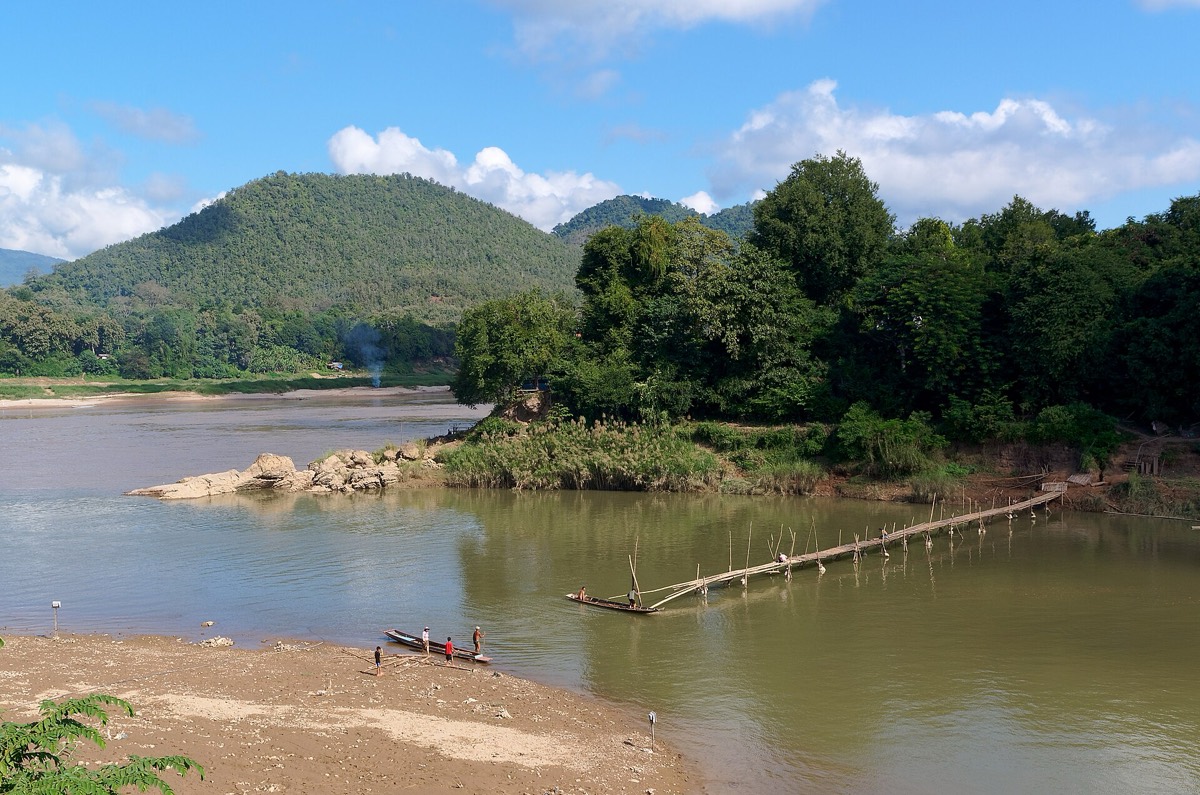
A gentle loop along the quieter river of the peninsula, across a handmade bamboo bridge that is rebuilt every dry season and washed away every monsoon.

- Area
- Mekong & Nam Khan
- Start from
- Old town, Nam Khan side
- Distance
- about 5 km loop on foot
- Time needed
- half a day
- Best season
- Dry season, roughly November – May, when the bamboo bridge stands
- Difficulty
- Easy
- Transport
- On foot
- Tickets & rules
- Small toll to cross the bamboo bridge
Why go
The Mekong gets the sunsets, but the Nam Khan is the river I spend most time beside. It is smaller, greener and more intimate, curling around the eastern side of the peninsula between steep banks planted with vegetable gardens. In the dry months children swim in it, fishermen cast nets from narrow boats and the far bank is close enough to hear roosters on the other side.
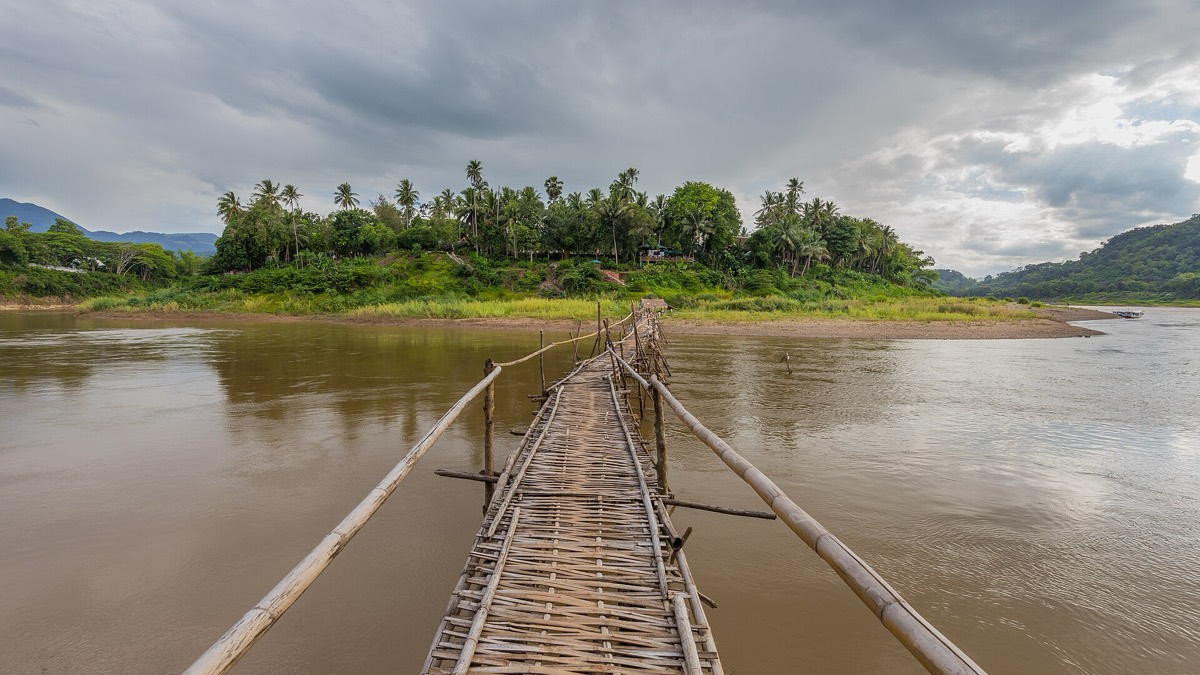
The highlight is the bamboo bridge, a swaying footbridge woven by local families each year after the rains drop. Walking across it, with the planks flexing underfoot and the water glinting between them, is a small pleasure that feels absurdly adventurous for something so short.
On the far side, lanes lead through a quiet neighbourhood of wooden houses and small temples, and you can loop back over the old steel bridge, shared by pedestrians and scooters, to finish at a riverside café at the tip of the peninsula.
The story
Bridges over the Nam Khan have always been temporary. Before the modern road bridges, the only crossings were by boat or by bamboo footbridges built in the dry season and abandoned when the monsoon floods came, usually around June. The tradition survives because it is practical: bamboo is everywhere, the families who build the bridge collect a small toll, and next year’s floods will take it away anyway.
The older steel bridge upstream dates from the mid-twentieth century and, with its narrow deck of planks, has a reputation for being slightly nerve-racking on a scooter. It is still in use for motorbikes, bicycles and people on foot, while cars use a newer bridge further south.
The riverbanks themselves tell how the town eats. When the water falls, families plant terraced gardens of morning glory, lettuce, spring onions, chilli and herbs on the exposed silt, watering them by hand. A favourite Luang Prabang snack, khai paen, is made from a green river weed harvested in the Nam Khan in the dry season, pressed into sheets with sesame and garlic and dried in the sun on bamboo racks you may spot along the lanes.
Down at the confluence, the two rivers meet in a visible line, the Nam Khan’s clearer water slipping into the muddy Mekong. It was this junction, easy to defend and rich in fish, that drew the first settlers to the peninsula long before the kingdom of Lane Xang was founded.

Getting there
Start from the riverside road on the Nam Khan side of the old town, behind Mount Phousi. The bamboo bridge is usually set up between the middle of the peninsula and the tip, and its position can change slightly from year to year; ask your guesthouse.
In the rainy season, when the bamboo bridge is gone, use the old steel bridge to make the same loop.
A suggested plan
- 8:00Walk the Nam Khan riverside road from the south end of the old town, watching the gardens being tended.
- 9:00Cross the bamboo bridge, pay the small toll and wander the lanes on the far bank.
- 10:00Follow the far bank upstream and return over the old steel bridge.
- 10:45Walk to the confluence below Wat Xieng Thong and sit by the meeting of the rivers.
- Late afternoonCome back to a riverside terrace as the light turns gold on the water.
Where to stay
The guesthouses on the Nam Khan side of the peninsula have views of the river and the bridge and are quieter than the main street.
Good to know
- Look for sheets of khai paen drying in the sun, and try it fried as a snack with jeow bong chilli paste.
- The bamboo bridge is lit at night by some families; check it is open before planning an evening crossing.
- Carry small kip notes for the toll.
- The bamboo planks can be slippery after rain; hold the rail and take it slowly.
- Swimming in the river is not advised during the rainy season when the current is strong and the water muddy.