Chomphet: Temples on the Far Bank of the Mekong
A short boat ride across the Mekong leads to a sleepy district of hilltop temples, faded murals and village paths that most visitors never see.

- Area
- Mekong & Nam Khan
- Start from
- Ferry landing below Wat Xieng Thong
- Distance
- short ferry crossing, then about 3 km on foot
- Time needed
- half a day
- Best season
- November – April, dry season
- Difficulty
- Easy to moderate
- Transport
- Small passenger ferry or hired boat
- Tickets & rules
- Small entry tickets at some temples; modest dress
Why go
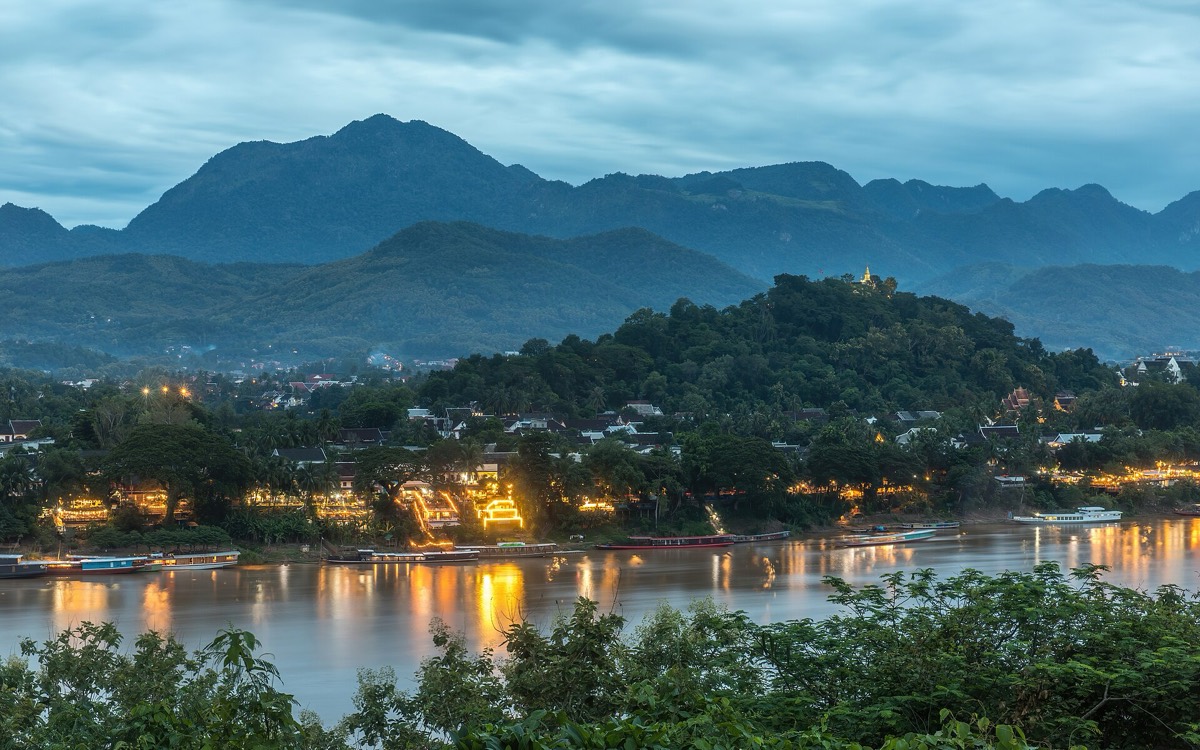
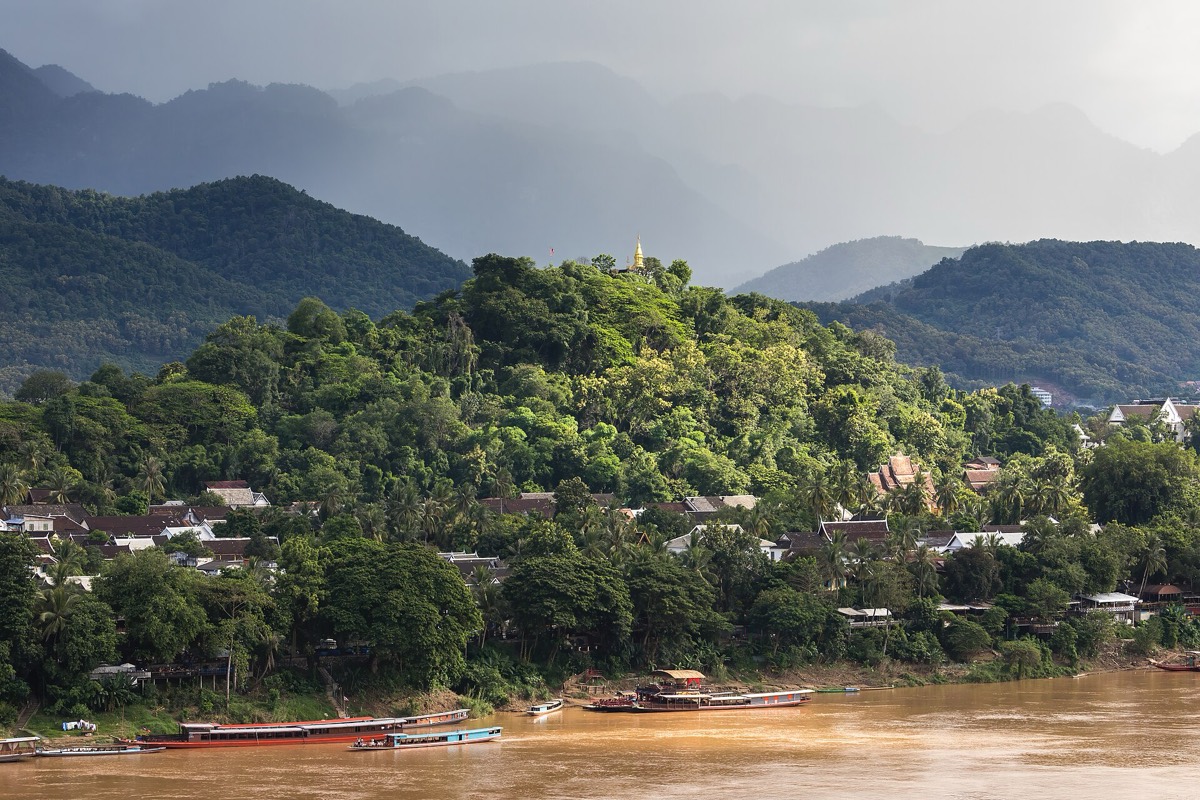
From the old town you can see the far bank of the Mekong all day, a line of forested hills dotted with golden spires, and yet very few visitors cross. That is the reason to go. Chomphet district feels like the Luang Prabang of decades ago, with dirt paths, chickens, children cycling to school and temples where you may be the only visitor all morning.
The walk links several monasteries along the riverbank and up into the hills. The views back across the river to the old town, with Phousi’s golden stupa rising above the trees, are some of the best in the area.
It is also an easy escape on a day when town feels busy. The ferry ride takes only a few minutes, but by the time you step off on the far side the pace of life has slowed noticeably.
The story
Wat Long Khun, near the landing, was traditionally the place where a new Lao king would spend a few days in retreat before his coronation, crossing back to the city by boat to be crowned. Its veranda and inner walls carry old painted murals of Buddhist tales, some faded and peeling, which have been partly conserved with outside help.
Behind it lies Tham Sakkalin, a small limestone cave once used for meditation and full of old Buddha images; bring a torch. Further up the hill, Wat Chomphet, built in the late nineteenth century, stands on a hilltop above the river and is reached by a long staircase. It is no longer an active monastery, but the views from its terrace across to the town at sunset are memorable.
The district is named after this hilltop temple. The villages along the bank, among them Ban Xieng Maen, were for centuries part of the same world as the royal town, supplying it with rice, fish and labour, and the river was never a boundary, more a street that everyone crossed.
Further downstream lies Ban Chan, a village known for its pottery. Its potters have for generations made large unglazed jars and pots from the river clay, fired in simple kilns; if you have a little more time, ask a boatman to take you there.

Getting there
Small public ferries cross from the landing on the Mekong side of the old town, below and near Wat Xieng Thong, several times a day, mainly for locals and their scooters. Alternatively, negotiate with one of the boatmen along the Mekong bank for a return trip, which also allows you to visit Ban Chan.
Agree the price, the stops and the time of return before you set off.
A suggested plan
- 8:30Take a ferry across from the old-town landing and walk up to Wat Long Khun.
- 9:15Visit the murals, then follow the path to the Tham Sakkalin cave with a torch.
- 10:15Climb the stairs to Wat Chomphet for the view back across the river.
- 11:30Walk through Ban Xieng Maen, or take a boat downstream to the potters of Ban Chan.
- 13:00Return by ferry for lunch in town.
Where to stay
Stay in the old town and do this as a half-day trip; there are only a handful of simple guesthouses on the Chomphet side.
Good to know
- Bring a torch for the cave and water for the climb to Wat Chomphet.
- Ferries become rarer in the late afternoon; check the last crossing time before you set off.
- Small donations are appreciated where there is no ticket.
- Ferries can be crowded and the Mekong current strong; sit down and keep your bag on your lap.
- Some paths are steep and muddy in the rains; wear sturdy shoes.